Editor’s Note
**Editor’s Note:** This article highlights the remarkable achievement of Class III D from Metelli High School, whose goldsmith artistry earned top honors at the prestigious national and European competition “Goldsmith Art and Training” in Jesi. Their success underscores the enduring value of craftsmanship and creative education.
When the Lady of the Camellias Becomes Jewelry: Metelli Students ‘Champions’ of Goldsmith Art
Class III D won the prestigious national and European competition “Goldsmith Art and Training,” awarded in Jesi.
e.b.
07 September 2019 22:32
Uncontainable joy and satisfaction for an award that attracted the best young goldsmiths at national and European level, and saw the students of Class III D of the Metelli High School beat the competition. The 4th National and European Competition “At the Court of Frederick. Goldsmith Art and Training,” an initiative also promoted and disseminated by the MIUR (Ministry of Education, Universities and Research), was awarded in Jesi on Thursday. Each year, the competition launches a theme that students from high schools and art institutes specializing in goldsmith art must draw inspiration from to create an original collection of jewelry suitable for the contemporary woman.
The 2019 edition saw students engage with the theme “Violetta, Margherita and the Camellias,” inspired by the story of Dumas’ Lady of the Camellias and Verdi’s La Traviata.
The institutes selected for the competition, after sending their design materials to the jury, were seven: in addition to our Metelli High School, those that presented their prototypes included Luca da Penne-Mario Fiori of Penne (Abruzzo); the D’Adda Institute of Varallo Sesia (Piedmont); Mannucci of Jesi (Marche); Benvenuto Cellini of Valenza (Piedmont); Guttuso of Bagheria (Sicily); and Mercuri of Ciampino (Lazio).
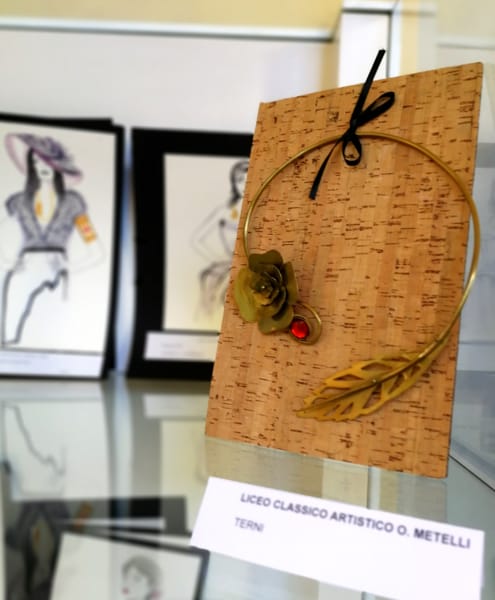
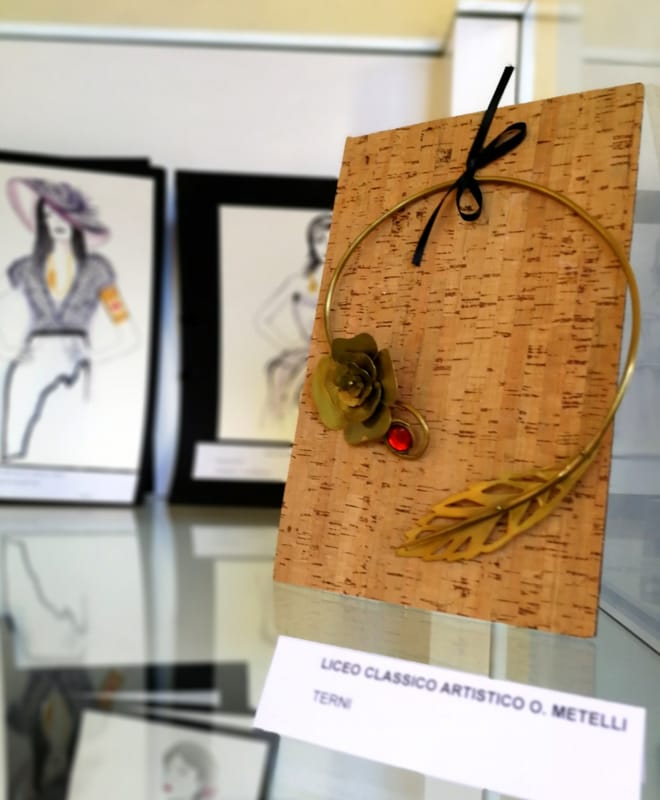
The Metelli students’ jewelry, ten sets consisting mainly of necklaces and bracelets, were shipped on August 22 and were on display at the Archaeological Museum of Jesi until September 5.
The victory, of course, was the icing on the cake, also because the Metelli students not only won first prize but also received recognition for the best project presentation, as well as the emotion of seeing their creations on the models who were the protagonists of the event’s final fashion show. “A thank you goes, of course, to the school principal, Professor Roberta Bambini, who always encouraged us to participate in these initiatives, and to the laboratory colleague Pasquale Verdone, and, of course, to the students, who are truly exceptional,” concludes the teacher: “I have already had the opportunity to say that they are rough diamonds that we must allow to shine.” The prize of 900 euros will be invested in equipment for the high school’s goldsmith art laboratory, to continue working more and better.
Gallery
TerniToday is also on Mobile!
Download the App to stay always updated.
© Reproduction reserved