Editor’s Note
The EU’s new Anti-Money Laundering regulation tightens oversight on luxury goods and high-value transactions, targeting both the sector and newly wealthy individuals with stricter thresholds.
The European Union has approved a new Anti-Money Laundering regulation targeting the luxury sector and newly wealthy individuals, imposing stricter controls on high-value transactions involving jewelry, precious metals, luxury cars, yachts, and aircraft.
– Precious stones and metals: threshold at 10,000 euros
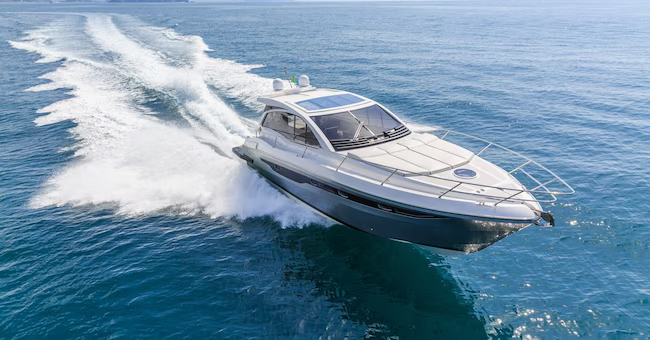
– Yachts and aircraft: threshold at 7.5 million euros
– New super-rich: assets from 50 million euros
The regulation, approved last Tuesday by the Strasbourg Parliament and set to become law across the EU, aims to close the many channels for recycling dirty money by targeting the most popular practices.
Real estate agents and other professionals in the sector will now be subject to preventive checks as obligated entities across the Union when acting as intermediaries in real estate sales, as well as in rental contracts where the monthly rent is equal to or greater than 10,000 euros, regardless of the payment method.
The obligation for adequate verification also applies at the EU level to those who trade in precious stones and metals, or who otherwise deal with “high-value goods.” What the European legislator means by “luxury” is clarified directly by the rules: jewelry, goldsmith, or watchmaking items from 10,000 euros upwards, while the list of precious metals includes “gold, silver, platinum, iridium, osmium, palladium, rhodium, ruthenium,” and the stones relevant for anti-money laundering will be “diamonds, rubies, and sapphires.”
Even more interesting – and unprecedented – are the value limits that require reporting the purchase of means of transport, provided they are not transactions on instrumental means (for business purposes): these include cars and motorcycles (“motor vehicles”) bought for at least 250,000 euros, boats and yachts (“vessels”) purchased at a price of “at least 7,500,000 euros”; the same “critical” valuation applies to pleasure aircraft.
If the purchase goes through a credit intermediary, or financial entities offering services related to the purchase or transfer of ownership, it will be their responsibility to report the transactions carried out for their clients to the anti-money laundering financial intelligence units.
As for the use of cash, “people who trade goods or provide services may accept or make a cash payment up to an amount of 10,000 euros, regardless of whether the transaction is carried out with a single operation or with several operations that appear linked.”
Also interesting is the implicit definition of new and suspicious rich, i.e., those who “in a business relationship identified as high risk” want to manage assets of at least 5 million euros: this is a client “who overall holds assets with a value of at least 50 million euros in financial, investable, or real estate assets, or a combination thereof, excluding their private residence.”
For clients of this type, the verification required of the obligated entity is a sort of third degree.