Editor’s Note
**Editor’s Note:** Gem Tech Jewelry’s unprecedented Valentine’s Day sale, offering items at cost with discounts of 50% or more, marks a historic move for the 46-year-old LA retailer. We examine the implications of this bold strategy.
Gem Tech Jewelry is holding an unprecedented sale for Valentine’s Day. Necklaces, rings, and bracelets are being offered at cost with discounts of 50% or more.
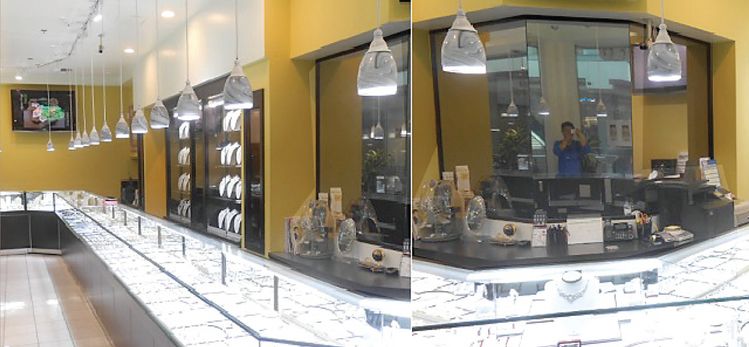
Gem Tech Jewelry (CEO: Andrew Lee), a leading jewelry store in LA’s Koreatown, has opened its jewelry vault wide. In celebration of its 46th anniversary and Valentine’s Day, the store is selling its inventory at the largest discounts in 46 years.
The ongoing sale at Gem Tech lives up to its ‘unprecedented’ title. For decades since its opening, Gem Tech has maintained consistent pricing. While most jewelry shops do not disclose product prices, Gem Tech displays prices for all items 365 days a year. This means there is no room for hidden markups unknown to customers.
This makes the current sale even more noteworthy. Discounted price tags are attached to already publicly listed prices. CEO Andrew Lee stated that, true to the word ‘unprecedented,’ they are offering items at cost.
The sale offers substantial value. For example, a 1-part necklace priced at $600 is now $290; a 2-part necklace at $800 is $390; a 3-part necklace at $1,800 is $690; a 5-part necklace at $2,800 is $1,300; and a 1-carat necklace is drastically reduced from $8,000 to $3,990. Rings with ten 3-point diamonds are $6,990, and ten 5-point diamonds are $13,990. Bracelets with 9 carats of 2-point diamonds are on sale for $9,500. Various diamond earrings are 50% off. Necklaces come with a chain, and those with 5-point diamonds or larger include a certificate.
Gem Tech maintains a rich stock of high-quality jewelry, including diamonds, opals, sapphires, emeralds, and pearls. As a wholesale specialist handling large volumes, it is a major player in the jewelry industry. It also has the expertise to directly source rare gems from global suppliers.
All types of jewelry available at luxury stores like Tiffany can be purchased at Gem Tech. The store also offers custom work, matching gems to luxury accessories, resulting in high customer satisfaction in both cost and quality.
Gem Tech has locations on the 2nd floor of the Koreatown Galleria and the 2nd floor of the 6th Street City Center. The sale is ongoing at both stores simultaneously.
▶ Galleria Store: 3250 W Olympic Blvd #207 LA (323) 733-2221
▶ City Center Store: 3500 W 6th St #219 LA (213) 380-5353