Editor’s Note
This article explores the jewelry industry’s shift toward sustainability and ethical practices, set against the backdrop of escalating climate crises like the 2023 Hawaii wildfires. It highlights how environmental concerns are reshaping luxury markets.
Jewelry for the environment is an undeniable trend. Beyond aesthetics, jewelry houses are moving toward a sustainable and ethical future with warm-hearted steps.
As science and technology advance and human convenience increases, the Earth is losing its self-cleaning ability, leading to various disasters. Sporadic wildfires around the globe are one example. The massive wildfire in Hawaii in 2023 was diagnosed to be caused by ‘climate change.’ When rain stops and temperatures soar, drought occurs, creating an environment where the atmosphere strips moisture from soil and plants, making them highly flammable. Climate scientists analyzed that “dry weather combined with strong winds further fueled the fire.” At a time when global interest in climate change is intense, sustainability and ethical awareness have emerged as major issues for many people. This is only natural. Here are jewelry brands that are taking steps toward a sustainable future while maintaining a balanced ecosystem.
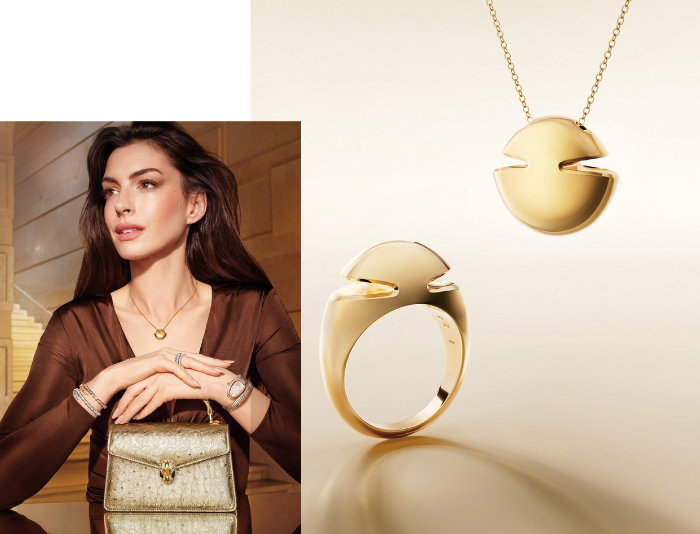
Bulgari has activated its CSR department to improve energy performance in manufacturing sites and boutiques, paying close attention to carbon dioxide emissions across all areas.
The Italian luxury brand Bulgari recognized the challenges facing the world and activated its CSR (Corporate Social Responsibility) department to ensure all living beings on Earth can enjoy a clean environment. It improves energy performance in manufacturing sites and boutiques, and expands its scope to product transportation, procurement, and purchasing, keeping a sharp eye on carbon dioxide emissions from all sectors. Furthermore, since January 2022, the brand announced that its entire jewelry line is made using 100% ethically sourced gold. It also complies with the ‘Kimberley Process,’ an international certification system that blocks conflict diamonds, also known as blood diamonds, from the supply chain. This protects diamond mining workers who are forcibly mobilized to fund wars.
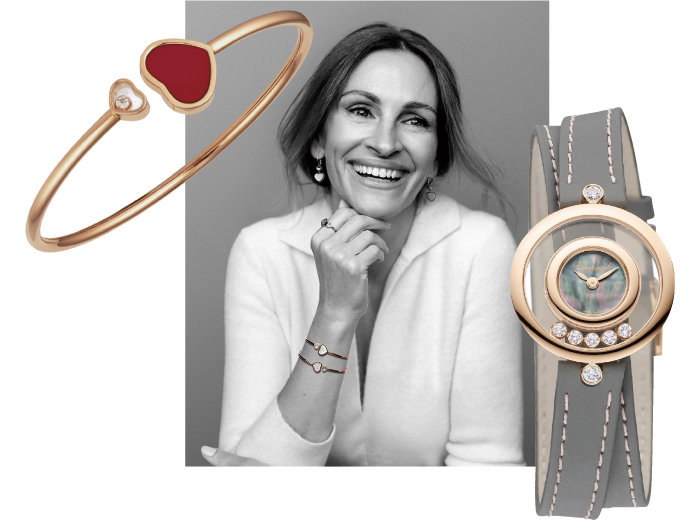
Since July 2018, Chopard has been using ethically mined certified gold in all its watches and jewelry, while also leading the way in discovering sustainable materials. For example, it developed ‘Lucent Steel,’ an alloy containing 70% recycled materials. Lucent Steel is made from recycled metals at a state-of-the-art workshop in Austria.
According to the ISSF (International Stainless Steel Forum), Chopard is expected to significantly reduce steel-related carbon dioxide emissions by joining the ‘SteelZero Project’ of the non-profit organization The Climate Group.
Tasaki strives to coexist with nature by cultivating bivalve shellfish that help improve water quality and planting trees after mining gemstones.
Tasaki also handles diamond rough sourced from peaceful, conflict-free countries. After mining gemstones, it restores forests by replanting trees and responsibly processes dust generated during polishing. Tasaki’s main material, pearls, is not only made into top quality but also ensures a continuous supply by cultivating bivalve shellfish that help improve water quality, coexisting with nature. Furthermore, it is actively developing various methods to raise strong shellfish capable of withstanding the mortality of juvenile shellfish.
Based on the philosophy of the ‘Sunny Side of Life’ collection, Piaget has partnered with ‘SolarAid,’ an NGO that supplies solar energy to energy-poor countries such as Malawi, Uganda, and Zambia. It also manages its supply chain more transparently by requiring all suppliers to sign the ‘Group Supplier Code of Conduct Agreement,’ which includes 39 principles covering responsible supply, labor practices, human rights, environment, sustainable development, testing, and compliance.
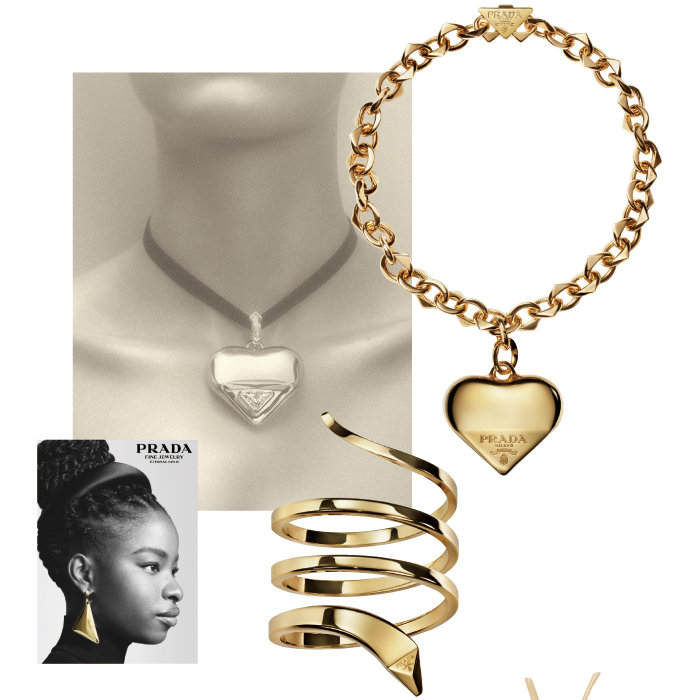
Prada’s ‘Eternal Gold’ collection uses gold obtained from recycled precious metals or industrial waste.
Not only traditional jewelry houses but also fashion houses that have recently expanded into fine jewelry are joining the good cause of reducing carbon emissions. Prada introduced the ‘Eternal Gold’ collection using 100% certified recycled gold. Prada’s recycled gold is extracted from consumers’ used precious metals or industrial waste through strict due diligence, selecting only eligible materials. This is an effort to reduce environmental pollution and human rights issues caused by mining new gold. Additionally, while diamond origin tracking is generally only possible for gemstones over 0.5 carats, Prada has expanded this concept to all sizes of gemstones for the first time. It strictly and transparently manages the entire manufacturing process, from mining to cutting, setting, and polishing.
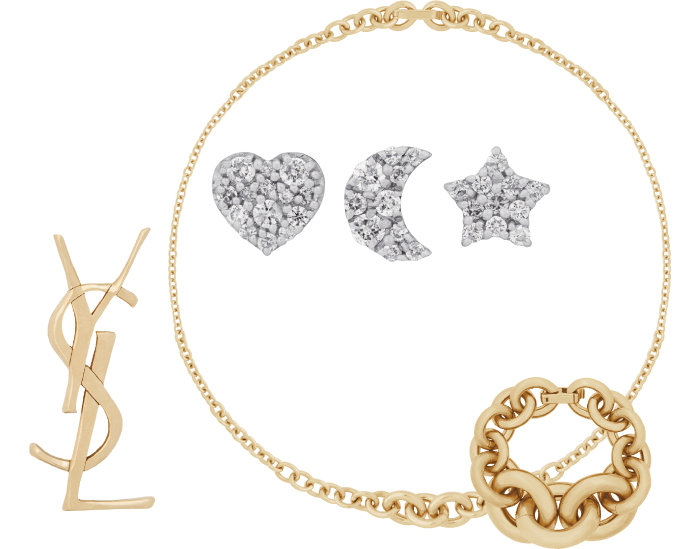
Saint Laurent complies with the ‘Kimberley Process,’ an international certification system that blocks blood diamonds from the supply chain.
Last May, Saint Laurent’s first fine jewelry collection used ethically selected gold, diamonds, and other materials. The fine jewelry collection reinterprets the house’s sustainable direction established by founder Yves Saint Laurent and the Parisian mood through Anthony Vaccarello’s unique vision. Saint Laurent uses gold obtained from various industrial wastes and only handles diamonds supplied in accordance with the Kimberley Process, a multilateral trade system aimed at preventing conflict diamonds from entering the market.
Based on the philosophy of the ‘Sunny Side of Life’ collection, Piaget has partnered with ‘SolarAid,’ an NGO that supplies solar energy to energy-poor countries.
Like this, jewelry houses are actively investing in coexistence between people and the environment, building on their rich heritage and continuing an interesting vision. Aren’t they the faith and hope that can solve the survival issues we face? The steps of luxury houses designing a sustainable and ethical future are dazzling.