Editor’s Note
This article examines the strategic merger that created LVMH, tracing how Bernard Arnault’s ambitious vision transformed a simple alliance into a luxury empire that reshaped the global industry.

Ambitious, strategic, and sometimes ruthless, Bernard Arnault transformed a simple merger into an industrial revolution. How did this French house redraw the global map of luxury? A look back at a journey where elegance masks an implacable strategy.
The story of LVMH begins in 1987, when Louis Vuitton, an icon of luxury leather goods founded in 1854, decided to merge with Moët Hennessy, a renowned wine and spirits conglomerate. This marriage of convenience between artisanal luxury and prestigious wines was not a quiet union.
The merger was orchestrated by Bernard Arnault, a French entrepreneur as ambitious as he was determined, who did not hesitate to use bold takeover tactics to secure a prime position within the group.
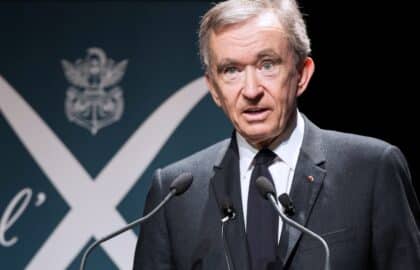
With Bernard Arnault taking the helm of LVMH in 1989, the group took on a whole new dimension. Within a few years, Arnault imposed an unprecedented acquisition strategy, redefining luxury standards and brand management.
His ambition was clear: to transform LVMH into a global empire, bringing together the most prestigious luxury houses. By diversifying acquisitions across fashion, jewelry, watchmaking, and cosmetics, he built a unique conglomerate. Under his leadership, LVMH is not just an entity that is growing; it is an engine of transformation for the entire industry, as inspiring as it is intimidating.
Bernard Arnault quickly made a name for himself with his ability to spot brands with potential and integrate them into LVMH. From the 1990s to today, the group has multiplied its acquisitions, targeting iconic houses like Céline, Givenchy, Kenzo, and more recently Tiffany & Co. These acquisitions are not simple buyouts: each brand retains its own identity while benefiting from LVMH’s firepower to accelerate its international development.
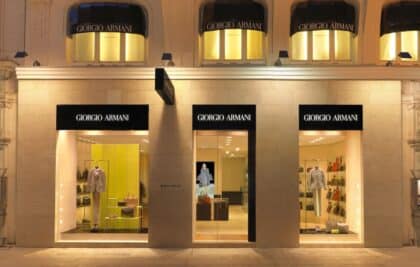
The group knows how to combine the creative independence of brands with streamlined management of commercial and logistical aspects.
LVMH’s strength lies in its ability to diversify its portfolio without diluting its luxury image. By also establishing itself in hospitality (Cheval Blanc, Belmond) and retail (Le Bon Marché, Sephora), LVMH now covers the entire luxury consumption experience. Present in more than 70 countries with a portfolio of 75 brands, the group has become a global player.
Its breakthrough in Asia in the 1990s made it one of the first to capture the rise of the luxury market in that region. Today, Asia represents a strategic share of its revenue, a success linked to its adaptability and a fine understanding of local cultures.
Alongside its rapid expansion, LVMH must contend with growing expectations regarding sustainability. As a leader, it faces criticism over its environmental footprint. The group launched the “Life 360” program in 2021, aiming to reduce this footprint by 2030.
While these commitments mark a turning point, the challenge remains significant to align luxury with sustainability.