Editor’s Note
This ground report from India’s carpet belt reveals the human cost of trade tensions, where abstract tariffs translate into lost livelihoods and desperate survival strategies. As global economic policies reshape local markets, artisans like Harishchand embody the fragile intersection of craft, commerce, and crisis.
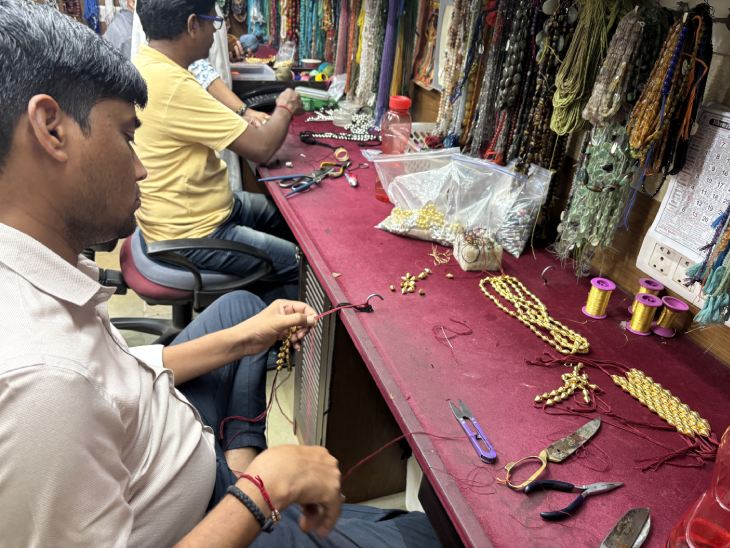
American tariffs are forcing carpet artisans to set up stalls for survival. Textile orders worth ₹2000 crore are on hold, putting 600,000 jobs at risk.
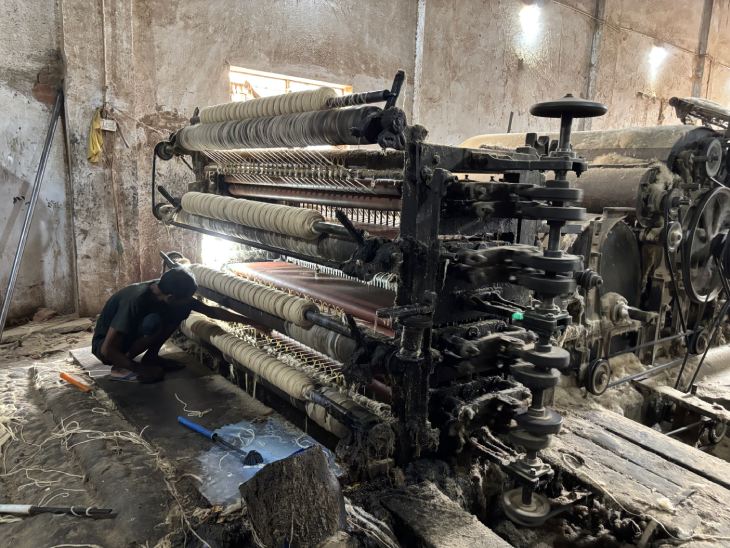
Harishchand, an old carpet artisan from Aurai Tehsil, had been weaving carpets for 10 years. On 18 August, he was laid off. At the time, he was in Lucknow seeking treatment for his son and urgently needed money. Now, he sells bananas in Bhadohi market to survive.
Asif, a gemstone carver in Johari Bazaar, fears losing his job too.
On 27 August, the US imposed a 50% tariff on Indian goods. With exports hit, production has slowed, and thousands of jobs are now at risk. Former RBI Governor Urjit Patel says 55% of Indian exports to the US are affected, with textile orders worth ₹2,000 crore already on hold.
In Bhadohi, the carpet capital of Uttar Pradesh, the impact is severe. Ijaz Ahmed, a daily-wage weaver, lost his job after mills closed.
Roshan Kumar of Kaka Textiles adds,
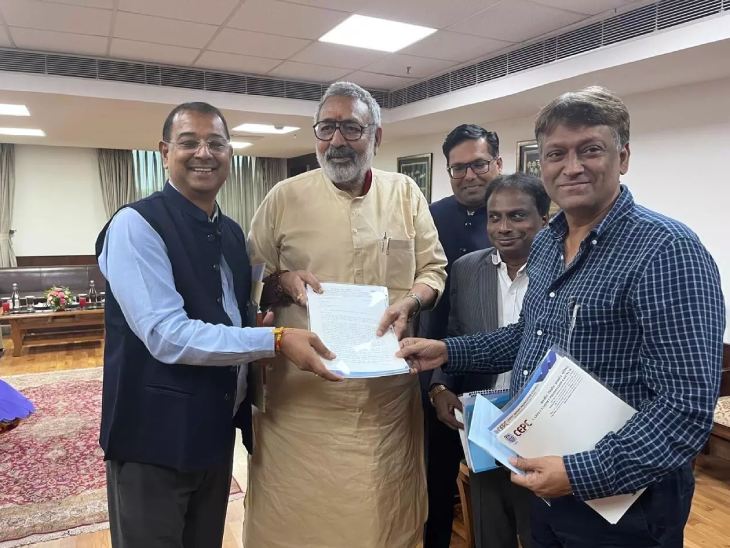
According to the All India Carpet Manufacturers Association (AICMA), India exports carpets worth ₹17,000 crore annually, with Bhadohi-Mirzapur contributing 60%. Nearly two million people depend on this sector, and 600,000 jobs face immediate risk due to the tariff.
Piyush Barnwal, Secretary of AICMA and member of the Carpet Export Promotion Council (CEPC), likens the tariff hike to an “industrial pandemic.”
October to December is the peak export season, as orders shipped in October are sold abroad during Christmas. “Imposing a 50% tariff before this season could cause losses of ₹6,000 crore,” Piyush warns.
With 98% of the industry dependent on exports, the slowdown is already visible. The US first raised tariffs by 25% on 30 July, and carpet orders have been falling since.
Bhadohi’s carpet industry depends heavily on exports, with 70% sent to the US alone. A 10% tariff in April had already strained the sector. On 30 July, tariffs rose to 25%, and on 27 August to 50%, forcing small factories to shut and large exporters to lay off staff or cut wages.
At Kaka-Overseas Limited, which exports entirely to the US, Executive Director Yadavendra Roy calls the tariff hike a “tariff bomb” and the industry’s biggest tragedy.
Amjad Ahmed, director of Rugs Texture, adds,
Bhadohi MLA Zahid Beg warns,
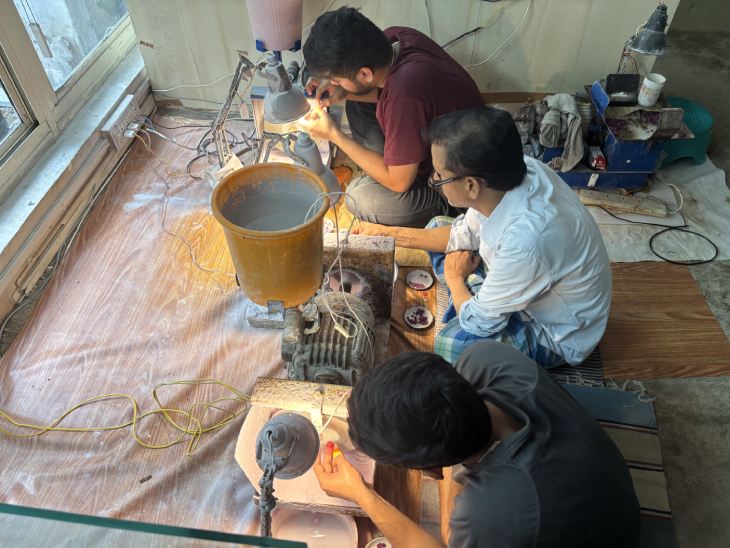
In Jaipur, artisans face similar fears. Asif Khan, a gemstone carver with 35 years’ experience, continues shaping colourful stones into jewels but admits,
Asif says,
With skill and effort, he earns about ₹25,000 a month.
He explains that US Christmas orders usually start in July, with production peaking by September–October. “Now, after the new tariffs, orders are being cancelled,” he says.
Jaipur is the world’s largest hub for gems and jewellery, where emeralds, rubies, and sapphires are cut and polished. Its Sitapura SEZ hosts hundreds of workshops, employing around 100,000 people.
India is a major supplier to the US. In FY24, India’s gem and jewellery exports stood at $32.85 billion, with the US buying $9.95 billion (₹8,759 crore), or 30.28%. By 2024, this rose to $11.58 billion (₹10,194 crore), making up nearly 13% of US imports worth $89.12 billion.
More than 50% of the gems and jewellery products exported from Jaipur are exported only to America.
Rajeev Arora, President of the Federation of Rajasthan Exporters Association, says the impact of US tariffs is immediate.