Editor’s Note
This article examines the complex environmental impacts of a 2016 sapphire mining rush in a protected Madagascar forest, highlighting the urgent need for better understanding of artisanal mining in biodiverse regions.
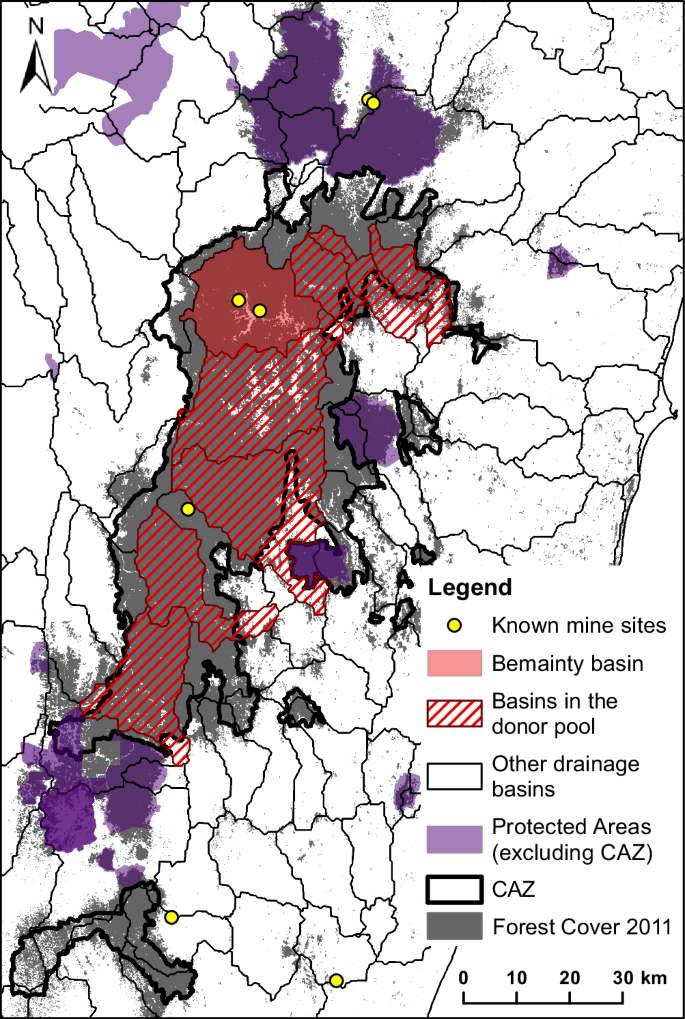
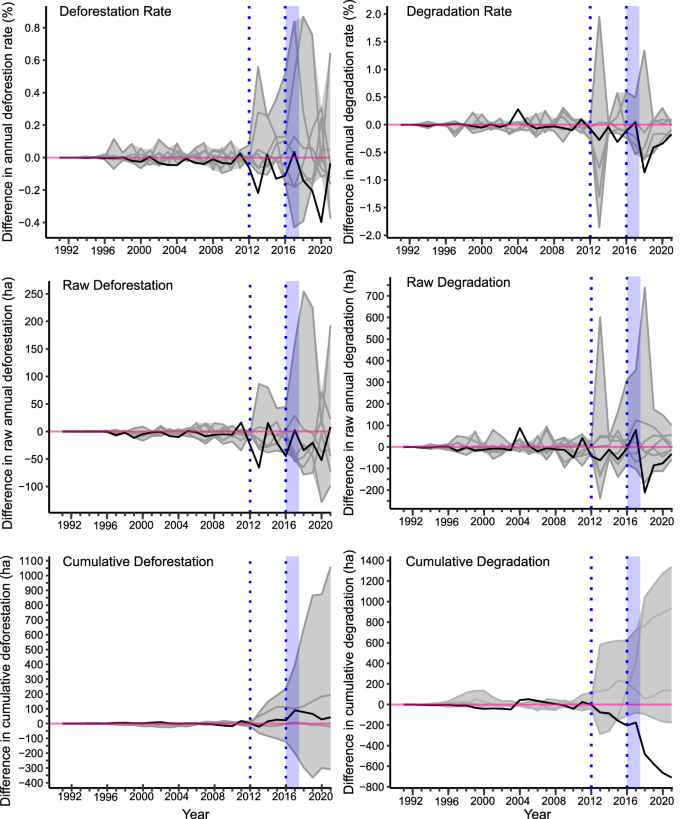
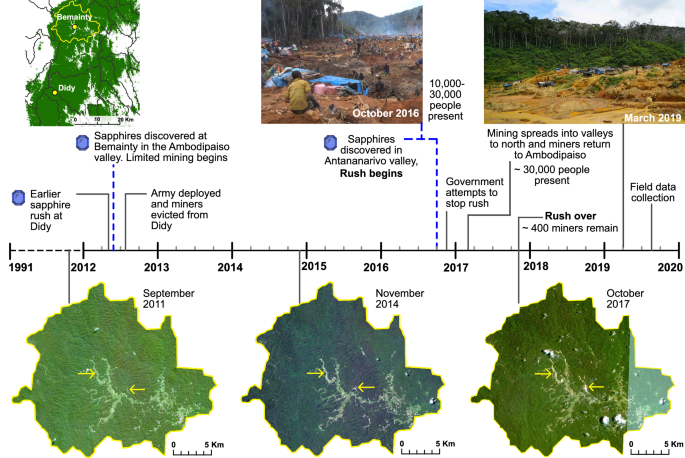
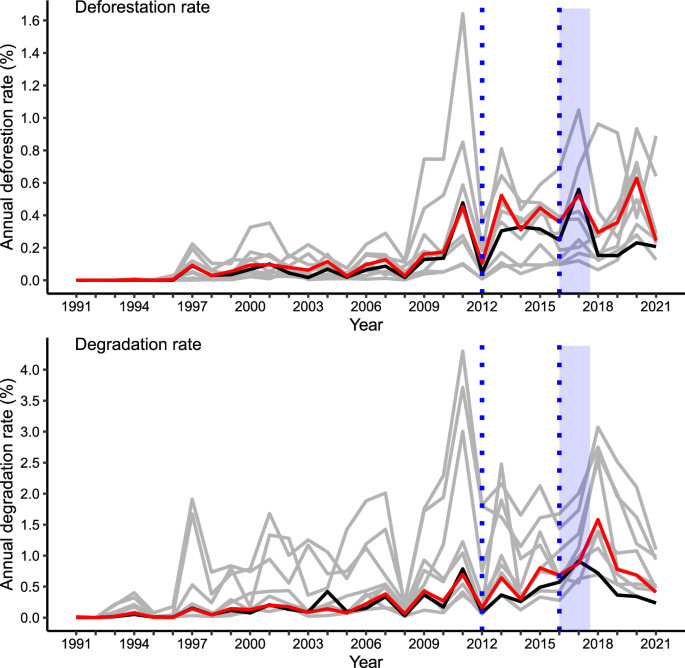
Artisanal and small-scale mining is an important livelihood activity in many biodiversity hotspots. There is substantial international concern about the negative impact of artisanal and small-scale mining on biodiversity, yet in most places this remains poorly understood. We explore the impacts of a high-profile mining rush: the 2016 sapphire rush at Bemainty, Eastern Madagascar, where tens of thousands of miners descended on a protected forest. Media coverage claimed the rush caused hundreds of hectares of deforestation and threatened lemur populations. Using the synthetic control method to estimate counterfactual outcomes, we find no evidence that mining increased forest loss or degradation. Supported by informal interviews and a lemur survey, we argue that mining at Bemainty had limited impacts on the surrounding forest, relative to other threats. Our results highlight the heterogeneity of environmental impacts from artisanal and small-scale mining and emphasize the need for more robust evaluations to inform context-specific policies.
Artisanal and small-scale mining (ASM) is a mostly informal, labour-intensive form of mining with limited use of machinery. A globally important livelihood activity, ASM supports an estimated 45 million people in 80 low and middle-income countries. Much ASM occurs in places that are also hotspots of biodiversity, such as the Amazon, West and Southern Africa, Madagascar, and Indonesia. Where ASM occurs in areas of high biodiversity, there can be substantial trade-offs between mining and conservation. Yet, in most places, the impacts of ASM on biodiversity have not been robustly quantified.
ASM can impact biodiversity in a variety of ways. It can lead to habitat loss and deforestation as miners clear land for mining and harvest wood for fuel or construction materials. Artisanal and small-scale gold mining can release toxic chemicals used in mineral processing, including mercury and cyanide, into the air and water. Mining, sediment panning, and releasing tailings along waterways can increase erosion and river siltation, impacting water quality and therefore freshwater biodiversity. ASM can also generate indirect impacts. By driving large numbers of people into remote areas ASM can increase other forms of natural resource exploitation such as logging, farming and bushmeat hunting, potentially increasing the risk of zoonotic disease transmission. Increased bushmeat hunting has been documented in several ASM sites and linked to population declines of primates in Madagascar and other large-bodied species in the Democratic Republic of Congo.
Much of the evidence of ASM-related deforestation comes from descriptive accounts from case studies. Quantitative evidence is limited and mostly focussed on artisanal gold mining in the Amazon and Ghana, where mining is extensive, uses environmentally damaging mercury, and is therefore particularly impactful. These studies use satellite imagery or secondary forest change data to quantify deforestation in known ASM areas. The most extensive analysis, quantifying deforestation around 21 ASM sites in 12 countries, found that the rate of forest loss within a 5 km buffer zone varied between 0.1% and 46%. However, none of these studies use counterfactual methods to estimate the impacts of mining relative to alternative land uses.
Artisanal and small-scale mining rushes occur when the discovery of a high-value mineral deposit (typically gold or gemstones) sparks a rapid, uncontrolled movement of people into an area to mine. People may travel from different regions, or even countries, to take part. Mining activity typically peaks within a few months or years then declines rapidly as the deposit becomes depleted, although some limited mining may continue long-term. The discovery of a new deposit elsewhere or the intervention of law enforcement agents will often cut short the evolution of a mining rush. The size of a mining rush and lack of regulation mean the collective impacts can be serious.
Madagascar is a hotspot for both minerals and biodiversity. The ASM sector has grown rapidly over the past 30 years to become the second most important rural livelihood after agriculture, supporting an estimated half a million people. The rapid expansion of ASM across the island was sparked by a series of discoveries of high-value ruby and sapphire deposits. These discoveries triggered rushes, where thousands of people from across the island moved to the area to mine.