Editor’s Note
This article highlights a transformative initiative led by University of Queensland researcher Lynda Lawson, which is empowering women sapphire miners in Madagascar through education and training. By focusing on financial autonomy and independence, the project offers a hopeful model for addressing deep-seated poverty and gender inequality in artisanal mining communities.
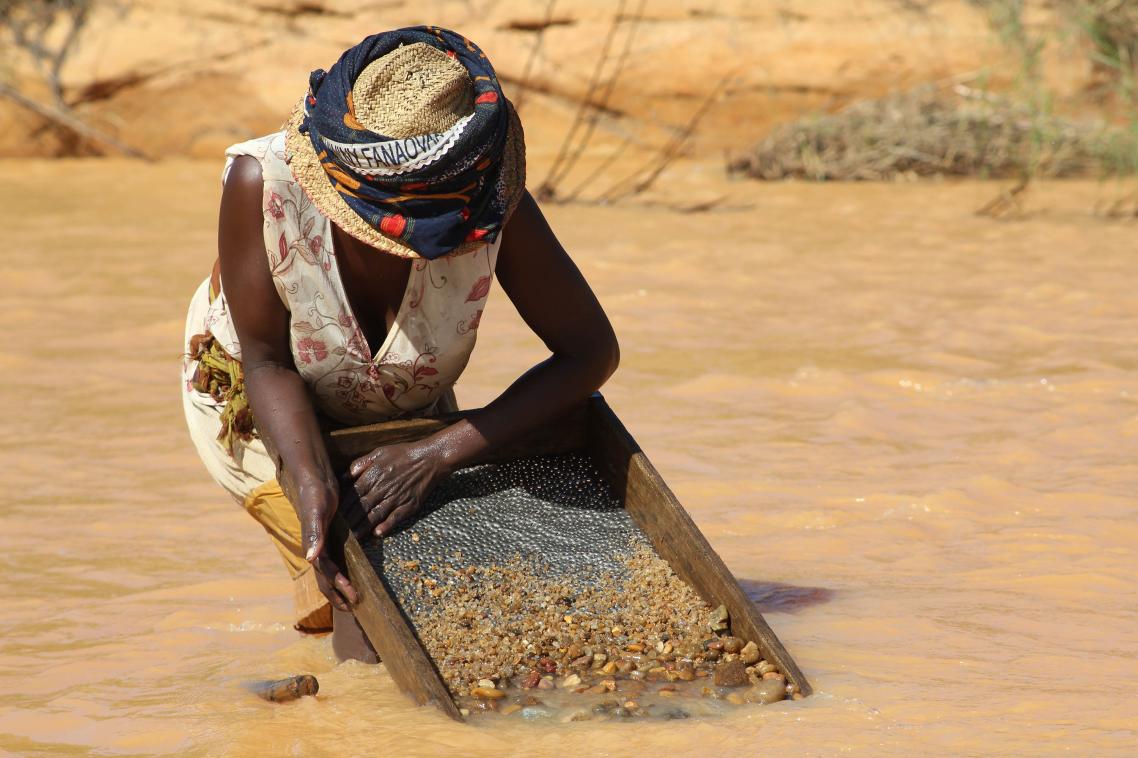
Female sapphire miners in Madagascar are among the nation’s hardest workers and poorest people, but their future is looking brighter, thanks to University of Queensland research.
PhD student Lynda Lawson has led the development of training and resources to improve the independence and financial autonomy of women sapphire miners.
Ms Lawson has spent the past four years working with the women to document and analyse their lives, focusing on the pathways, opportunities and challenges in the sapphire industry.
Her work has attracted the attention of German development agency Deutsche Gesellschaft für Internationale Zusammenarbeit GmbH (GIZ), which asked her to complete a baseline study on women working in the south-west sapphire fields.

Ms Lawson saw an opportunity for the women to add value to the stones they found, and created a basic field gemmology course with UQ geology graduate and gemmologist Charles Lawson.
Ms Lawson is now working on a suite of online materials to be used anywhere and a project focussing on health and safety issues related to cutting gems.
She recognises there are many challenges to overcome, but is hopeful for the women’s future.
Ms Lawson’s latest work is undertaken through the Gemstones and Sustainable Development Knowledge Hub, a collaboration between UQ, University of Delaware and Lausanne University and funded by The Tiffany & Co. Foundation.
