Editor’s Note
Digital Core REIT’s latest results highlight the powerful tailwind from the AI boom, driving exceptional revenue growth across its global data centre portfolio. Yet the figures also reveal a key challenge: while property income soars, rising financing costs are significantly constraining distributable returns to investors. This underscores the complex financial dynamics at play even in a high-growth sector.

Digital Core REIT manages US$1.7 billion in assets across 11 freehold data centres spanning the United States, Canada, Germany, and Japan.
The REIT delivered impressive top-line growth in the first nine months of 2025 (9M2025), with gross revenue surging 83.9% year on year (YoY) to US$132.4 million and net property income jumping 49.6% to US$67.7 million.
However, higher financing costs from acquisitions limited distributable income growth to just 1.9%, reaching US$35.2 million.
Digital Core REIT capitalises on explosive AI demand, particularly in Northern Virginia where vacancy rates hit a record 0.3%.
Its purpose-built facilities attract hyperscale customers deploying AI infrastructure, with regional wholesale pricing climbing to US$225 per kilowatt monthly.
The REIT is redeveloping 8217 Linton Hall in Northern Virginia (valued at US$243.1 million), positioning for future AI-driven growth.
It also expanded its Japanese footprint, acquiring an additional 20% stake in Digital Osaka 3 for US$86.7 million in March 2025.
Portfolio occupancy remains robust at 98.0% for in-service properties as at 30 September 2025.
The REIT maintains financial discipline with conservative leverage at 38.5% and US$431 million in debt headroom.
Management repurchased 1.8 million units at US$0.565 average, achieving 0.1% DPU accretion.
Trading at US$0.495 – a steep 39% discount to net asset value – Digital Core REIT offers an attractive distribution yield of 7.3%, making it compelling for income investors seeking exposure to the AI megatrend.
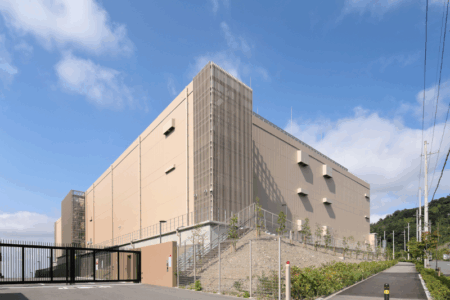
QAF Limited operates as a food manufacturer and distributor across Southeast Asia and Australia, with core segments in Bakery, Distribution & Warehousing, and a 50% stake in Malaysian joint venture Gardenia Bakeries (KL).
The company faced significant headwinds in the first half of 2025 (1H2025), with revenue slipping 1% YoY to S$306.1 million amid softer consumer sentiment.
Profit attributable to owners plummeted 69% to S$3.9 million, hammered by foreign currency translation losses of S$3.0 million (mainly from Australian dollar movements), a 10% rise in operating lease costs, and non-cash impairments totalling S$2.5 million.
Despite earnings pressure, QAF’s fortress balance sheet remains its standout feature.
The company holds net cash of S$162.4 million – comprising S$188.6 million in cash against just S$6.9 million in debt (excluding lease liabilities).
This financial strength enabled QAF to maintain its interim dividend at S$0.01 per share for 1H2025, while free cash flow actually improved 13% to S$11.5 million.
Management expects near-term challenges from high operating costs and weak consumer demand but plans to leverage product mix adjustments and operational improvements to defend margins.
At S$0.885, QAF offers a resilient 5.6% dividend yield backed by exceptional balance sheet strength.
Singapore’s largest public transport operator runs approximately 200 bus services with 3,400 buses alongside the North East Line and Downtown Line rail networks, serving millions of passengers daily.
Third quarter 2025 (3Q2025) results reflected operational challenges, with revenue declining 2.4% YoY to S$386.5 million and profit after tax falling 20.6% to S$14.5 million.
The performance was impacted by losing the Jurong West bus package from September 2024, which drove an S$11.2 million drop in bus service fees alongside reduced fuel indexation.
While bus operations face headwinds – including the upcoming loss of the Tampines package in July 2026 – SBS Transit’s rail network demonstrates remarkable resilience.
Average daily ridership on the North East Line surged 3.8% YoY to 625,000 passengers, while the Downtown Line grew 1.4% to 490,000.
This steady rail growth, combined with S$1.5 million higher advertising income, helps cushion bus segment pressures.
The company maintains financial strength with S$349.2 million in cash and short-term deposits, supporting its dividend sustainability despite operational transitions.
No dividends were declared in this quarterly update, as dividend announcements typically accompany half-yearly or full-year results.
Trading at S$3.20, SBS Transit offers an attractive trailing dividend yield of 7.4% (excluding special dividends), appealing for income investors seeking defensive transport exposure.
Just as HUNTR/X battles demons while maintaining stellar performances, these three Singapore stocks prove exceptional yields can coexist with operational resilience.
All three significantly outpace the STI’s 3.9% yield: Digital Core REIT capitalising on AI-driven data centre demand, SBS Transit supported by growing rail ridership despite bus headwinds, and QAF backed by S$162.4 million net cash.
While higher yields reflect risks such as refinancing pressures, contract losses, and margin compression respectively, their income streams remain compelling.
For income-focused investors seeking hidden gems.
