Editor’s Note
This travelogue offers a glimpse into Chanthaburi’s rich past as a historic gemstone hub and trading port, inviting readers to explore its heritage beyond its modern coastal appeal.

Following a peaceful trip to Koh Mak recently, I returned to the mainland and, like many other travellers, made the most of my time exploring the historic town of Chanthaburi on the way back to Bangkok. A pleasant day trip took me back to the days when Chanthaburi was a significant gemstone supplier and marine trading port before becoming a popular resort town on the coast of the Gulf of Thailand.
Just a one-hour drive from Trat, the Cathedral of Immaculate Conception stands on the banks of the Chanthaburi River as a testament to it being a cultural melting pot, in which Thais, Chinese migrants, and Vietnamese Christians have coexisted in harmony for generations.
Back in the reign of King Sanphet IX, a group of 130 Vietnamese refugees, fleeing Christian persecution in Vietnam, landed in Chanthaburi and joined hands with Bishop Hurt Tolantino to build the first church in 1730. It was then relocated to the current location and restored many times between 1752 and 1906 before it became a cathedral.
Recognised for its classy neo-Gothic architecture, this cathedral sports two colossal bell towers and the ceiling is shaped to resemble Noah’s ark, allowing worshippers to picture a journey to heaven. The walls are adorned with stained glass windows depicting the life of Jesus.
Inside, a beautiful statue of the Virgin Mary is encrusted with more than 200,000 sapphires, while its base is made of silver and ornamented with gold and many other gemstones.

Leaving the house of worship, I strolled down a narrow alley to see a towering 100-year-old sapodilla tree as a lengthy wall of street art helped pedestrians navigate to Baan Sam Miti by Ajarn Somkiet. Sitting at the end of the alley, this three-storey art gallery catches the eye of tourists with its colourful exhibition of three-dimensional paintings, without any charge.
Behind the entrance, there’s a mystical wall that transports visitors back to the early Rattanakosin period when the Cathedral of the Immaculate Conception was embraced with lush landscapes and a few colonial buildings.
On the 2nd floor, it’s like entering the realm of fantasy where the Frog Prince springs from a fairytale book and a dolphin swims in the ocean. There’s a group of giant mammoths, tigers, giraffes, and hornbills roaming around Khao Khitchakut National Park, and a purple lavender field.
To find something to fill my tummy for a late lunch, I crossed Niramol Bridge, which has become a popular vantage point to admire a beautiful view of the Chanthaburi River, which was previously a significant route of transportation before the arrival of roads.
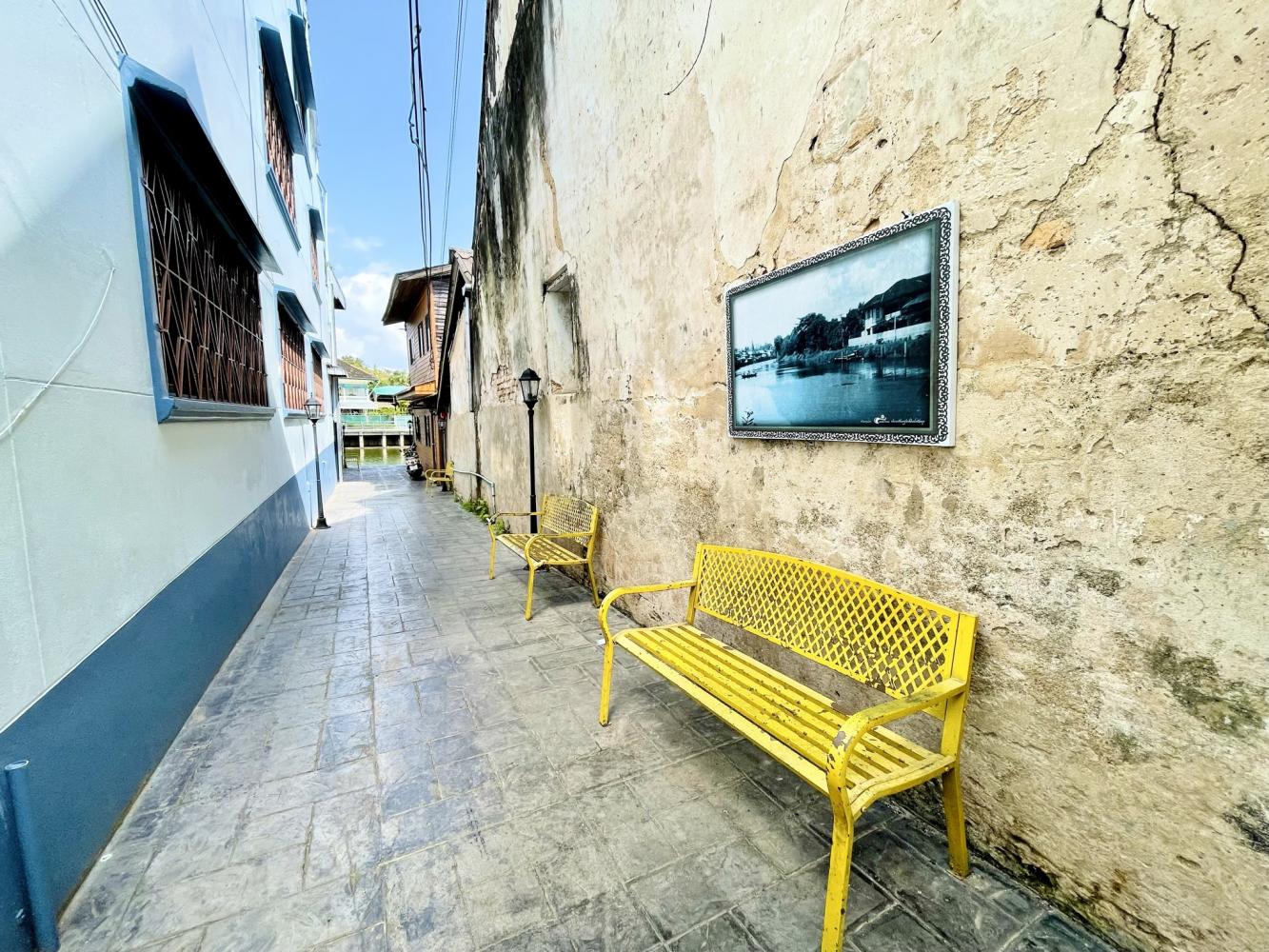
The Chanthaboon waterside community stands on the opposite side of the banks, and a local bakery serves as a receptionist, greeting guests with a wide selection of local sweets, while a map on the wall shows the locations of interesting tourist sites, popular food shops, and trendy cafés to hang out.
This was my second visit — five years after my first — and I noticed a difference in the mood when there were fewer visitors on weekdays. The vivid street art on the walls had faded with time and some shops were closed. There was no crowd in front of the scenic setting for photos.

Stretching 1km along the west bank of the Chanthaburi River, this community was established in the reign of King Narai as a home for Thai farmers, Chinese merchants, and Vietnamese migrants.
Formerly known as Yan Tha Luang, it expanded from a local market into an important trading hub in the 19th century, making it a meeting point for both Thai and international dealers in wild goods, spice, gemstones, jewellery, fishing, metal, and handicrafts.
Thanks to the advent of Chanthaburi’s first road, this neighbourhood turned towards modernity and the transportation and retail business. However, life has its ups and downs.
To bring the community back to life, local residents set up the Chanthaboon Waterfront Community Development Committee in 2009 and turned it into a tourist attraction in order to conserve the cultural legacy for future generations.
Walking down the narrow lanes, visitors can find a row of old wood and brick shophouses, Sino-Portuguese buildings, colonial mansions, local museums, Chinese shrines, and temples that merge Thai, Chinese, and European architectural styles.
One of the highlights is House 69, where Khun Anusorn Sombat and his family lived before turning their home into the Chanthaboon Learning Centre on weekends. Inside, it displays striking illustrations of century-old buildings to depict unique patterns and decorative elements that are a mixture of wood and brick to trace history. Unfortunately, it’s temporarily closed due to concerns about the Covid-19 pandemic.
Not far away, the 150-year residence of Luang Rajamaitri has been transformed into a boutique hotel. It won an Award of Merit at the 2015 Unesco Asia‐Pacific Awards for Cultural Heritage Conservation. It offers 10 classic rooms decorated with antiques to depict the way of local life and the beauty of culture, making it a living museum.
Pilgrims can pray for luck, wealth, and protection at Tua Lao Eia which is home to Cai Shen (God of Fortune), Chao Pho Suea, and the local god. Next door is a holy Guan Yin shrine, where local residents will assemble throughout the Chinese New Year and Vegetarian Festival.