Editor’s Note
In this piece, we explore how Shanghai-based jewelry designers Yezi Zhou and Ke Li are adapting to shifting consumer tastes by launching a new, more delicate brand, Sale e Pepe, alongside their established label Olio e Aceto.
I met jewelry designer Yezi Zhou in her dedicated space within Shanghai’s Room Room showroom, during Shanghai Fashion Week (SHFW). She and her business partner, fellow designer Ke Li, are fresh from a trip to Georgia and Armenia. They love to travel, which is perhaps why, despite being raised in China’s Zhejiang and Heilongjiang province, respectively, their jewelry brands are named after Italian food: Olio e Aceto and Sale e Pepe.
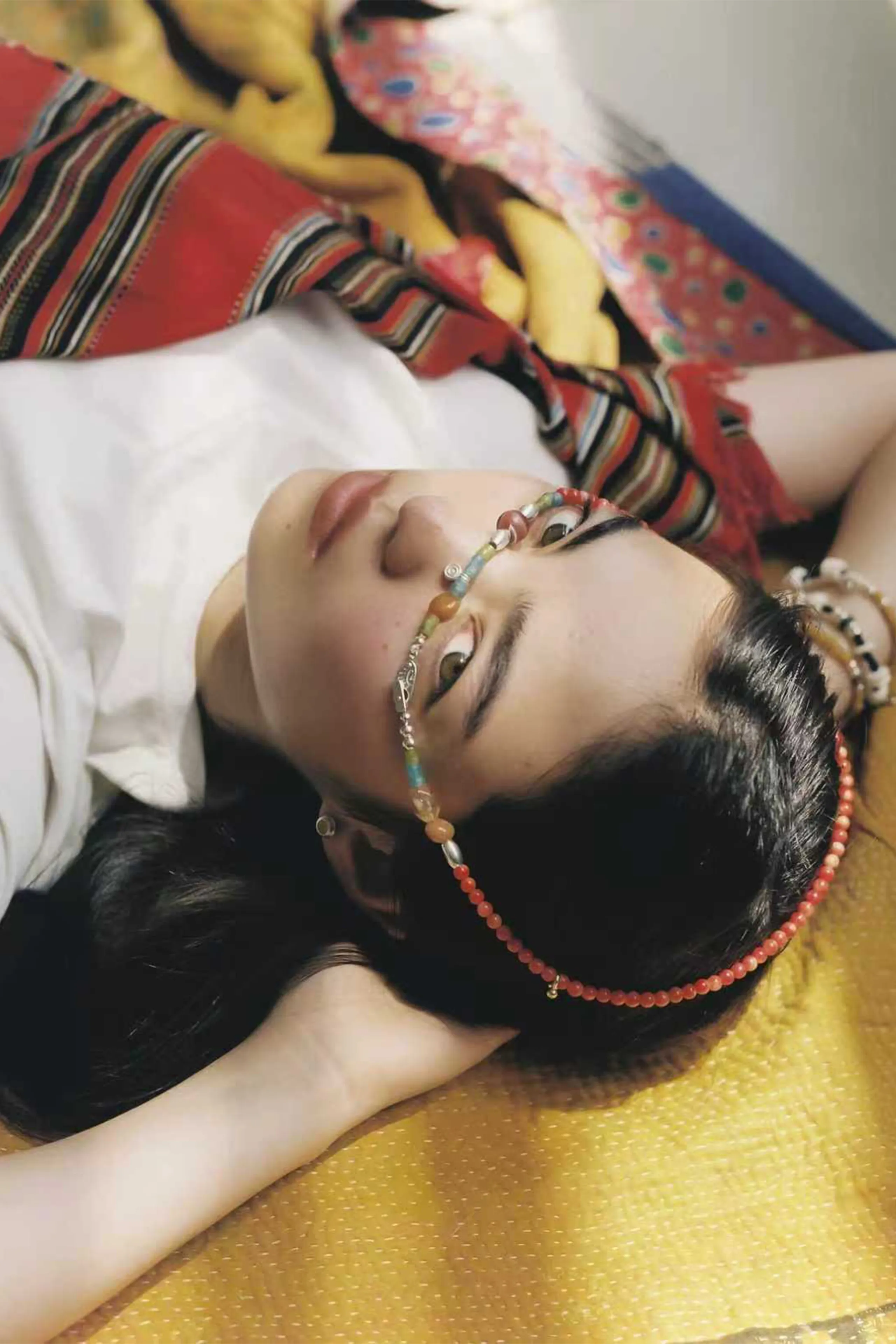
Olio e Aceto — the first label, launched in 2019 — built a steady client base for its classic silver and pearl pieces, with 30 stockists across China and Europe. But last year, the founders noticed a shift in what local jewelry buyers and consumers were looking for. They decided to launch Sale e Pepe, which swapped Olio e Aceto’s chunky silhouettes for dainty, spiritual styles, with engravings to represent certain emotions, red stones, leather straps and charms. In its first year, Sale e Pepe is already outpacing their first born in terms of sales, with around 30 Chinese stockists for Spring/Summer 2026.
Sale e Pepe’s SS26 collection is inspired by Armenian vineyards, with juicy red stones resembling tiny grapes. They will include postcards in the packaging when orders go out next year.

During SHFW, this design pivot to spiritual or traditional jewelry becomes a familiar tale. The Chinese luxury jewelry market has soared over the last five years, driven by the “Guochao” (or “China chic”) movement, which celebrates Chinese heritage and encourages locals to buy into domestic brands. China’s luxury jewelry market, which incorporates fine and costume offerings, grew 46% to $7 billion from 2020 to 2025, with a combined annual growth rate of 7.1%, despite rising costs in gold and silver following Trump’s tariffs. In response to market growth, showrooms like Not Showroom and Tube Showroom, which underpin the city’s fashion week, are upping their jewelry games. Not Showroom displayed eight jewelry brands this season, up from five for FW25, while Tube Showroom dedicated an entire room to its growing cohort of jewelry labels, to make it easier for buyers.
In the big leagues, as brands from Cartier to Van Cleef & Arpels meet regional headwinds, domestic jewelry labels are soaring. Key players include Chow Tai Fook ($11.6 billion), Lao Feng Xiang ($6.8 billion), Chow Tai Seng ($1.9 billion) and Luk Fook ($1.8 billion), with revenue figures based on data from Visible Alpha. The majority of these labels favor more classic designs, but relative newcomer Laopu — launched in 2016 — has disrupted the market, blending 24-karat gold and diamonds with silhouettes and patterns inspired by Chinese tradition. The brand is projected by Morgan Stanley to reach $2.8 billion in sales by 2025. (For comparison, Cartier is expected to reach $1.5 billion in the same period.)
Laopu, like many newer Chinese labels launched in the last decade, has leaned into craft and traditional styles. And across brand showrooms during SHFW, it became clear that spiritual, traditional or playful jewelry is thriving, as it allows Chinese consumers to escape from the economic downturn of the last few years.
Pieces retail from RMB 800 to 2,000 (approximately $110 to $275), designed in Tokyo and then produced in Guangzhou, a local manufacturing hub that vastly reduces import and export costs for the brand’s vast Chinese store network. The challenge is, as brands get wise to the trends in nomadic, traditional jewelry, the space is becoming saturated, says Jello.

Another label, Hui Hui, creates pendants made with horse hair, which also ascribe to the nomadic trend, has secured 80 stockists in just two years, a testament to the popularity of the style.
While the “Guochao” movement is influencing the market, part of the shift to more traditional jewelry made from leather, string and beads is financial for designers. The price of silver has risen significantly. En Sage started out making the majority of its products in silver, but amid rising costs, the founder pivoted to alternative materials. Several brands I spoke with also employed this strategy to cope with climbing silver prices.
The story is similar for jewelry designer Niang Niang, who founded her label Empress 47 in 2014. She started out making jewelry inspired by Eastern and Western gothic architecture, with heavy silver and earth stones. But as trends changed and silver prices climbed, Niang is moving further toward traditional styles and silhouettes, with a greater focus on the East, the founder says, as that’s “what buyers are looking for”. For SS26, she added symbols that mean light, daintily engraved into necklaces, which were popular because of the story behind them. But as she looks to more traditional silhouettes, she has to balance her design ideals with the rising cost of silver, like her peers.
