Editor’s Note
De Beers’ diamond stockpile has reached a 15-year high of $2 billion, reflecting a challenging market environment. The company faces a dual challenge of sluggish post-pandemic demand recovery—particularly in China—and growing competition from lab-grown alternatives. This inventory level signals significant pressure on the traditional diamond industry’s pricing and sales strategies.
World’s largest diamond producer De Beers is holding its largest diamond inventory since the 2008 financial crisis. The company is struggling to recover post-pandemic demand as diamond demand in China declines and competition from synthetic diamonds intensifies.
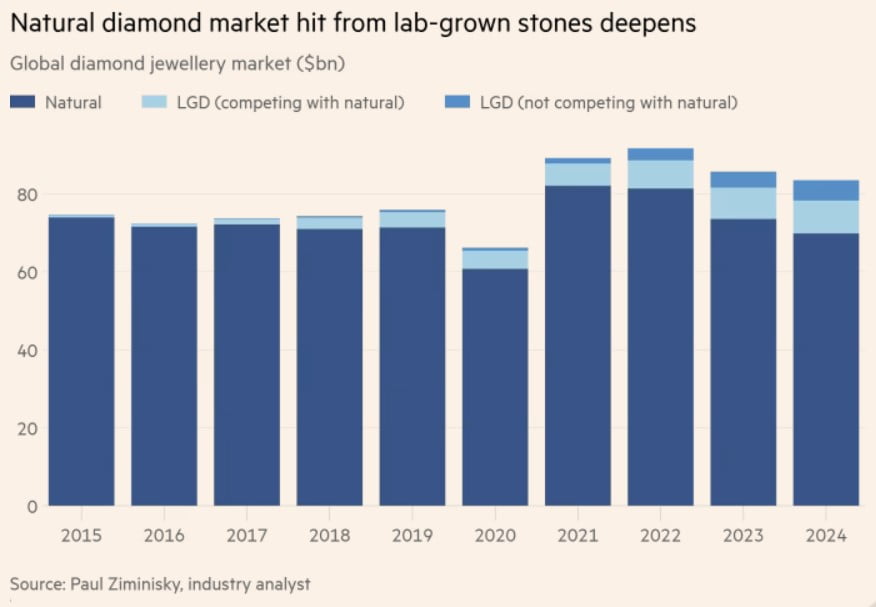
According to a Financial Times report on the 26th, De Beers’ inventory has remained at around $2 billion this year. Sales in the first half of the year fell approximately 22% year-on-year to $2.2 billion. De Beers is a global diamond jewelry company with annual sales of $80 billion and employs about 20,000 people.
As weak demand persisted, De Beers cut its mine production by 20% compared to last year.
This demand slump occurred even as production and sales from competitor Russia’s Alrosa have contracted. Alrosa is under sanctions from G7 nations due to Russia’s invasion of Ukraine.
Anglo American, De Beers’ parent company, has announced plans to spin off De Beers as an independent company or pursue an IPO. However, concerns exist that this could also be complicated due to deteriorating market conditions.

Weakness in the Chinese market is cited as a major factor impacting De Beers this year. Chinese jewelry firms, which typically imported diamonds, have begun exporting polished diamonds to reduce their own inventories.
Competition from synthetic diamonds is also intensifying. In the United States, the world’s largest diamond market, synthetic diamonds, priced at about one-twentieth of natural diamonds, are gaining competitiveness and now account for half of sales.

De Beers has recently relaunched a large-scale marketing campaign emphasizing ‘natural diamonds’ to restore its brand value. It plans to strengthen investment in its retail division, including expanding its global store count from the current 40 to 100 by 2025.