Editor’s Note
**Editor’s Note:** This piece highlights the intersection of athletic precision and personal expression at the 2026 Winter Olympics, where U.S. figure skaters and a Paralympian wore custom jewelry by designer Sonia Hou—adding a personal touch of sparkle and good luck to their performances.
Under the bright lights of the 2026 Winter Olympics, every detail mattered for figure skaters—from the precision of their landings to the sparkle of their costumes. For some U.S. athletes, that sparkle included jewelry designed by Sonia Hou, shimmering with every turn.
U.S. figure skaters Ellie Kam, Emily Chan, Christina Carreira, Emilea Zingas, along with Paralympian Dani Aravich, donned Hou’s (’04, computer information systems) “good luck” jewelry in Italy, including earrings in various shapes and necklaces that featured the Italian horn and hand pendants as a nod to the country’s culture.
The 2026 games marked the second time Hou’s jewelry has been worn by Olympic athletes. In 2018, she contacted figure skater Mirai Nagasu on Instagram. Nagasu was wearing Hou’s fire-jacket earrings when she made history as the first U.S. Olympian to land a triple axel in the 2018 Pyeongchang Winter Games.
Hou, the mother of two, said she was breastfeeding her eldest daughter when it hit her that she should try to see if she could get some of the U.S. athletes to wear her jewelry.
Hou’s jewelry has been featured in movies and television shows including “Joy Ride,” ABC’s talk show “Tamron Hall” and NBC’s “Today Show” among others.
Her dream of becoming an entrepreneur dates to her college days, but it took some years to make that dream a reality.
Before launching her jewelry business, Hou spent 13 years in sales at ABC and Disney. While in her junior year at Cal Poly Pomona, Hou, who grew up in Chino Hills, had an internship at ABC. After earning her degree, she was hired permanently. While she loved working in television, Hou always wanted to start her own business.
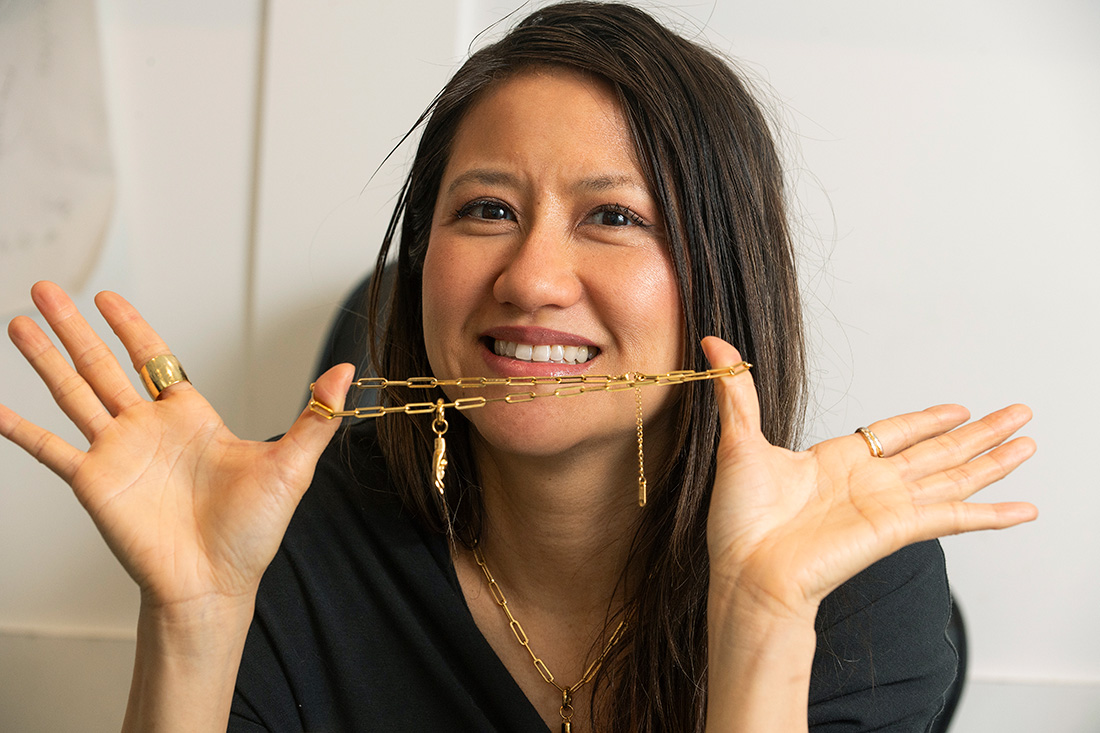
She credits her technical background, especially in the age of e-commerce and social media, with helping her to become successful and setting her apart.
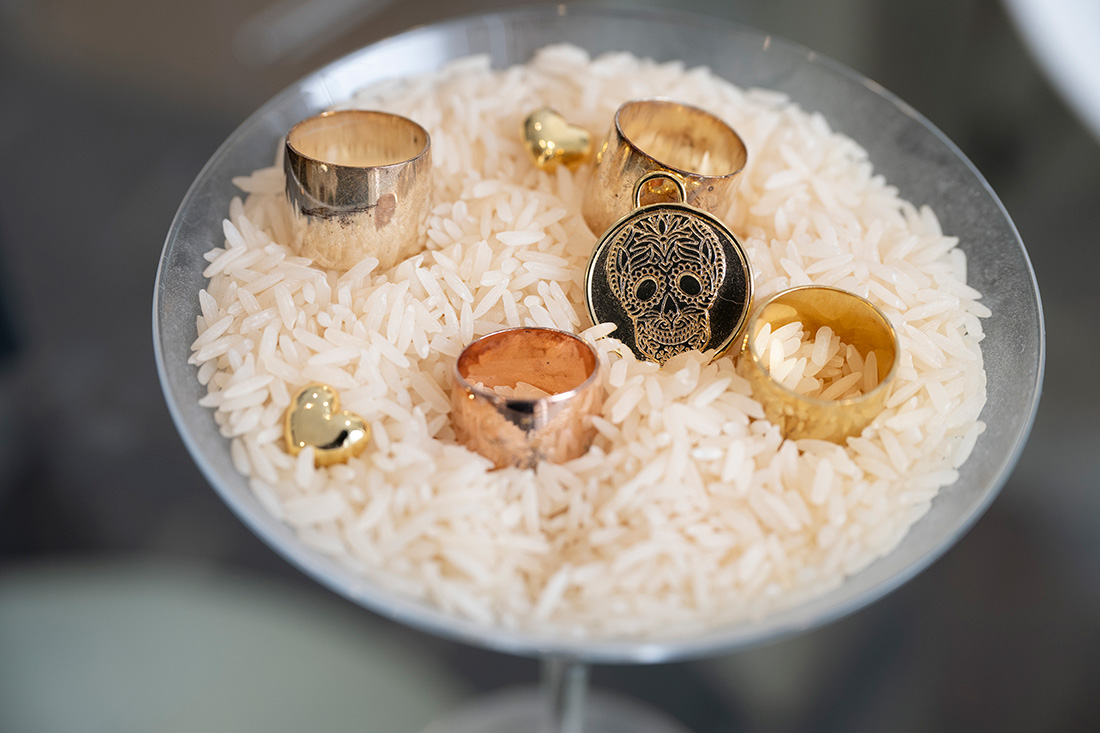
Over time, her jewelry evolved to include a message, Hou said, a brand focused on celebrating diverse cultures. From chopstick earrings to the Italian horn necklace representing strength, heritage and unity to skull earrings honoring Dia de Los Muertos, Hou creates modern and minimalist designs that promote cultural respect and inclusivity.
During the COVID-19 pandemic, when the anti-Asian hate movement was happening, Hou designed her chopstick earrings in solidarity, which talk show host Tamron Hall wore on her show while interviewing Hou. That moment was a full circle one for Hou, who shared on the show that her job at ABC involved conducting research and helping with the pitch to create Hall’s show.
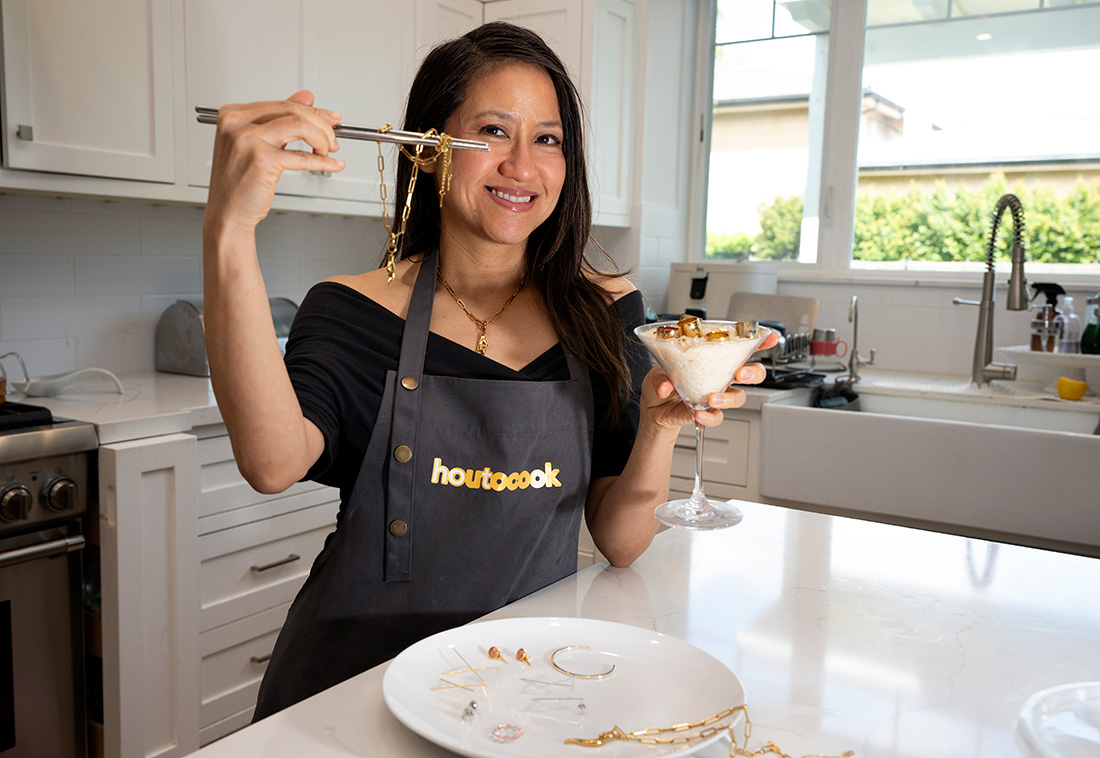
Besides her jewelry business, Hou also is a food influencer on social media. Her @HouToCook food channel on Instagram and TikTok had 30 million views in 2025.
Hou, whose father also is a Cal Poly Pomona alum, credits her time at CPP with helping her to hone her technical skills and providing her with a solid education.
The foundation she built at CPP, her career in television and her work as a designer have all contributed to the strong, capable and relentless businesswoman she is today, Hou said.