Editor’s Note
Brilliant Earth’s Q1 results reveal a tale of two markets: high-end customers remain resilient, while demand for lower-priced items softens. Despite this, overall sales rose 6%, fueled by strong non-bridal fine jewelry and a record Valentine’s Day.
The jewelry retailer noted resilience among its higher-end customers while demand softened for its lower-priced offerings.
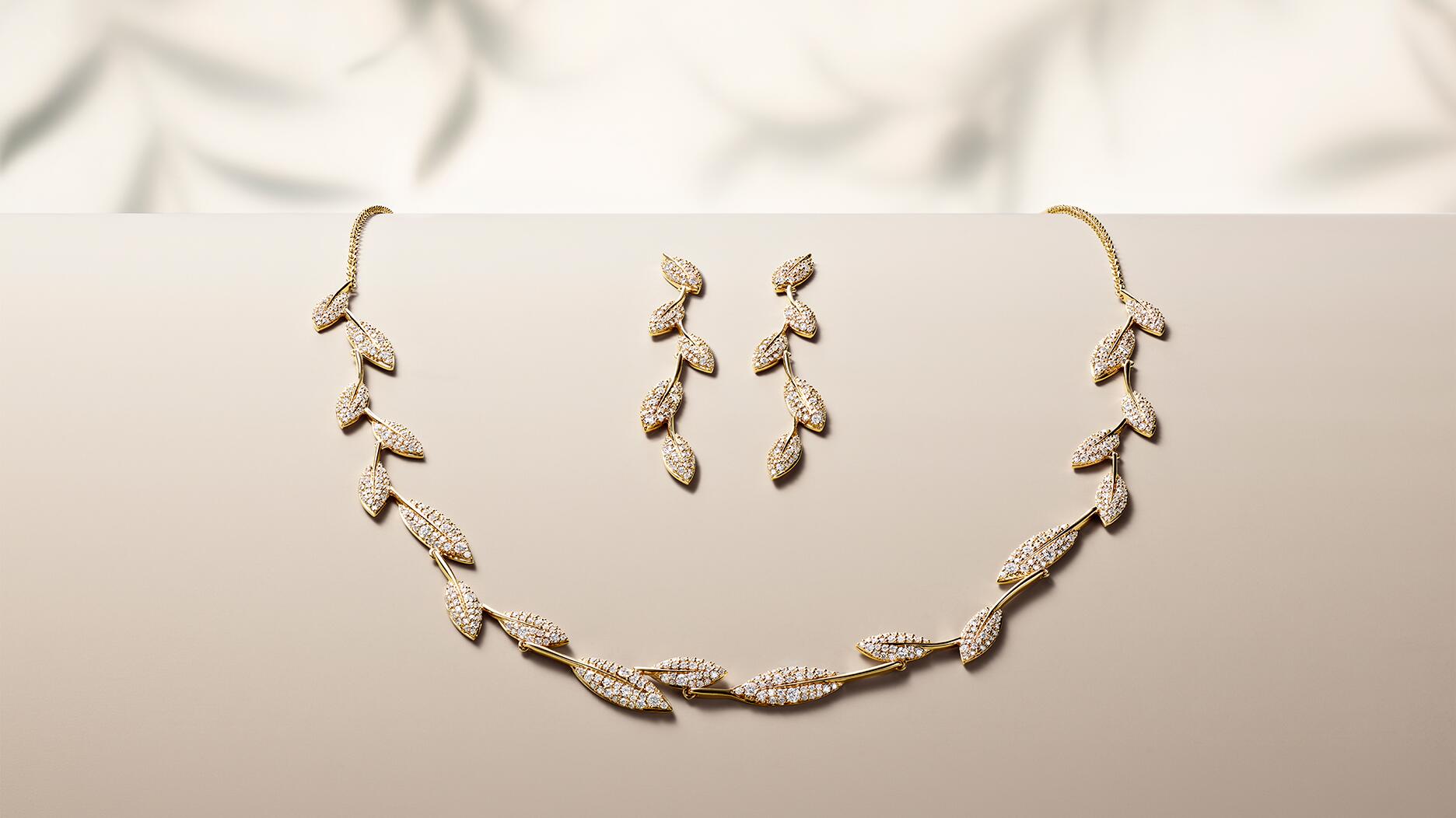
A lab-grown diamond pavé olive branch necklace and earrings from Brilliant Earth’s second collab with the late conservationist Jane Goodall. The jewelry retailer’s sales were up 6 percent in Q1.
San Francisco—Brilliant Earth kicked off its fiscal year on a high note, with growing strength in non-bridal fine jewelry and a record Valentine’s Day performance.
On an earnings call Wednesday evening, CEO Beth Gerstein and Chief Financial Officer Jeff Kuo discussed the jeweler’s most popular fine jewelry offerings, upcoming store openings, the effect of the “K-shaped” economy on consumer spending, and its outlook on the year ahead.
For the first quarter ending March 31, the jewelry retailer posted net sales of $99.5 million, up 6 percent year-over-year and at the high end of its guidance.
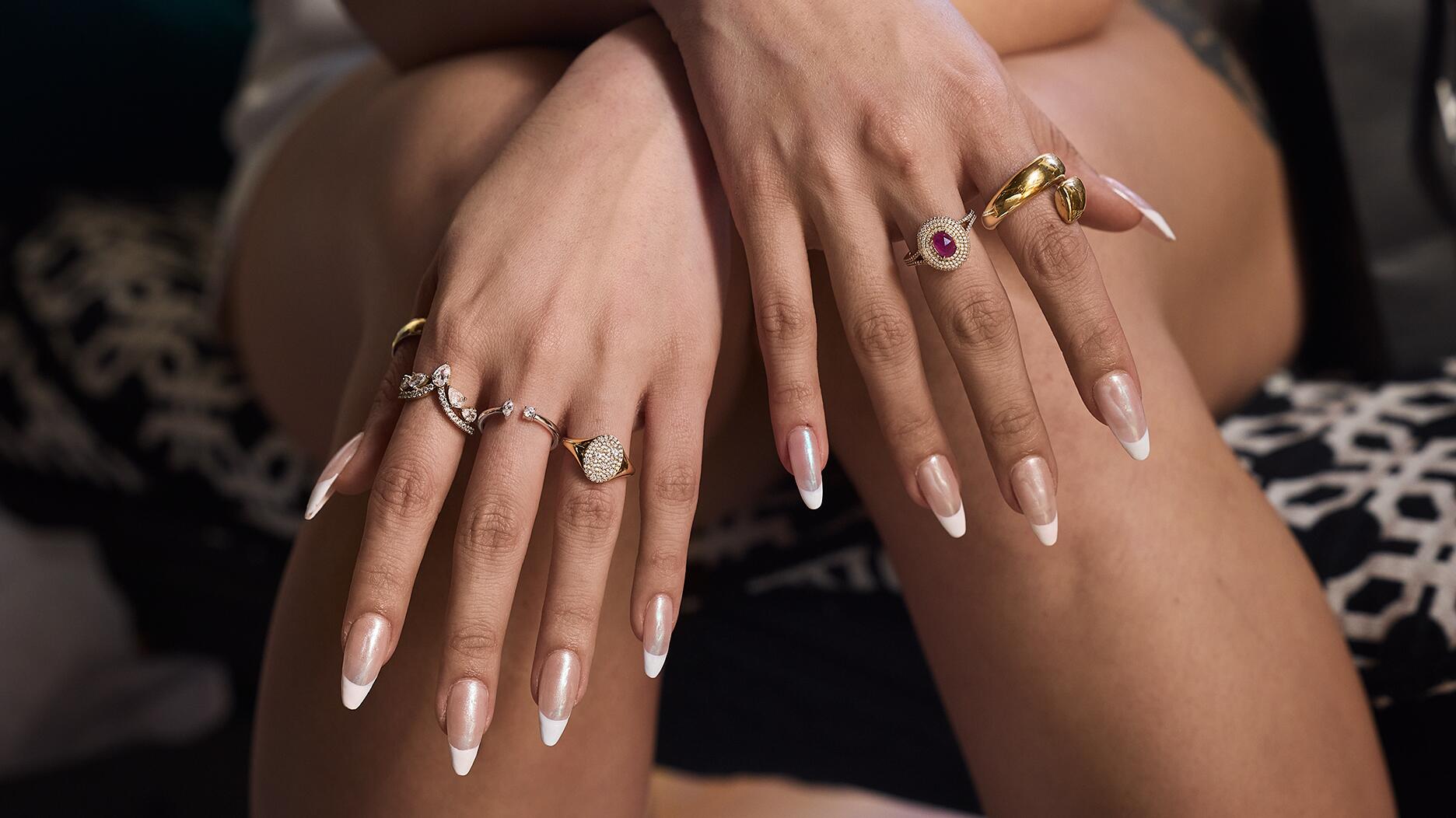
“Fine jewelry was a clear standout,” said Gerstein, noting a rise in visits to its showrooms to see its non-bridal fine jewelry offerings, particularly for its “Sol” collection, which launched in 2023.
The retailer also saw growth in wedding and anniversary bands, with growing demand for its diamond essentials.
In Q2, the company launched its “Butterfly” collection as well as its “Keepsake” collection ahead of Mother’s Day, which includes celestial-inspired lockets. More newness will follow, said Gerstein.
The total number of orders in Q1 rose 3 percent, while average order value (AOV) also rose 3 percent to $2,131.
The rise in AOV was attributed to a rise in average selling price across its assortment, said Kuo, which was driven by two factors.
The retailer has taken notice of the changes in spending among its customers.
In its annual sales forecast, the National Retail Federation highlighted the bifurcation in spending between higher- and lower-income consumers.
This is typical of what economists refer to as a “K-shaped” economy, with higher-income shoppers driving most of the spending growth across several retail categories.
The jeweler is seeing some signs of softness at its lower price points, Gerstein said, while its higher price points are “holding up well” in Q2, demonstrating the brand’s resonance with higher-income consumers.
Gerstein said the company is investing heavily in its $500 and above assortment.

In its earnings presentation, the retailer said its primary customer is 25 to 44 years old with a household income between $100,000 to $200,000, including educated, young professionals, couples shopping together, gift givers, and self-purchasers.
Along with its collections, Brilliant Earth said its campaigns helped to drive strong results in Q1.
Its “Perfect Timing” campaign celebrated chance encounters and unexpected love stories.
It also launched the “Bridal Collective” series, a creator-hosted event series held at its showrooms.
In the first quarter, gross profit was $54.1 million, or a 54 percent gross profit margin, down 2 percent compared with the prior-year period.
It fell within expectations, noted Brilliant Earth, despite navigating headwinds in precious metal prices and tariffs.
The retailer, which celebrated its 20th anniversary last year, operates 42 showrooms as of Q1, including its new “showroom of the future” in Beverly Hills, California.
It plans to open two more stores in San Antonio, Texas, and San Jose, California, by the end of the year.