Editor’s Note
**Editor’s Note:** Two decades on, Córdoba Jewelry Park stands as a testament to resilience and reinvention, transforming a craft into a robust industrial export powerhouse.
The Córdoba Jewelry Park is celebrating its 20th anniversary in excellent shape, having been a flagship in transforming the city’s jewelry sector and weathering the severe 2008 economic crisis that hit it hard. Jewelry has evolved from a purely artisanal world to an almost fully industrial economic field with a marked export capacity that was nearly unknown 20 years ago.
Currently, the park has 97% occupancy in the area dedicated to factories. It houses over 300 companies—316 in total after two decades of intense work, reconversion, and resizing of many of them. Of these, 172 are owners, while 144 rent spaces. It has 148 factories and 11 annex premises, plus 91 commercial spaces of about 40 square meters each. The park currently has over 2,000 accredited employees working there, reaching 2,079.
The park’s good health is backed by its data. The sales revenue of companies installed in the Poniente site exceeds 790 million euros, with a current assets of the jewelry sector installed there exceeding 96 million euros.
Rafael Ruiz, president of the Córdoba Jewelry Park, analyzes the evolution of the site over these 20 years, the current situation, and especially the changes in the jewelry sector. Ruiz is clear that “the sector has changed in these 20 years from being purely artisanal to becoming industrial,” precisely “thanks to the Jewelry Park being the infrastructure it needed to do so.”
For Ruiz, the park contributed three fundamental pieces for the conversion of jewelry in Córdoba. First, “it gave us the electrical capacity” for industrialization that “we didn’t have when we were spread across the neighborhoods of Córdoba” 25 years ago. Second, the park “gave us the space for factories that we didn’t have.” Finally, he praises the radical shift of the jewelry world from being “lax” as two decades ago to becoming fully committed to “the environment, taxation, and labor regulations.”
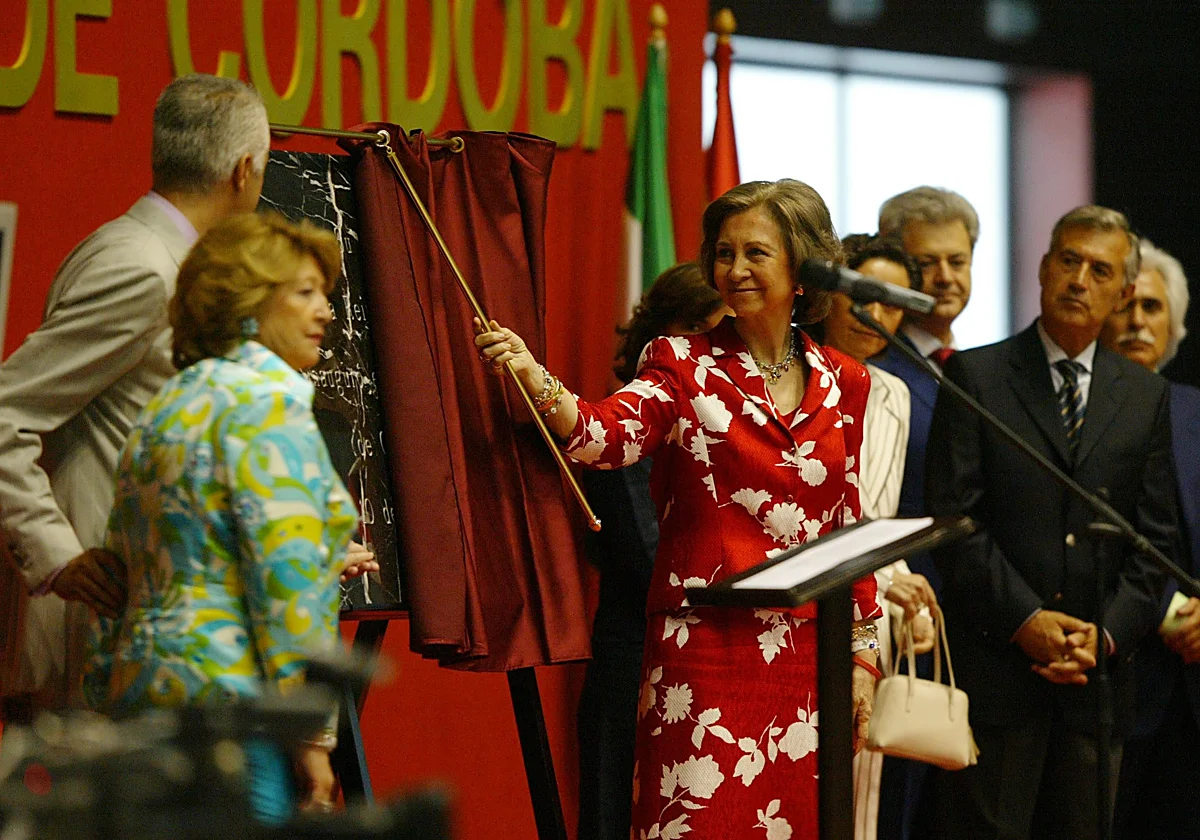
When Her Majesty Queen Sofía, now Queen Emeritus of Spain, inaugurated the Jewelry Park on June 10, 2005, they promised the site would accommodate 1,000 companies and 10,000 workers. Those were big words of the time. In fact, the 2008 global economic crisis, which hit Spain hard, also posed a serious initial obstacle to the park’s evolution. It managed to rebuild itself, demonstrating notable strength in the last decade.
Regarding the forecast from two decades ago and the current situation, Rafael Ruiz highlights that “now we have larger companies than 20 years ago that need a lot of staff.” The economic crisis led to “a screening” in the Córdoba jewelry world, allowing “a reconversion” and especially “a resizing” of companies to make them “more efficient and agile.”
For the president of the Jewelry Park, the other major change is that the local jewelry industry has exponentially developed its “export capacity” over these two decades. Ruiz now values that “half of the companies are dedicated to international export and the other half to the national market,” a big difference from the park’s early days when “barely four companies sold outside Spain, and everything was done nationally.”
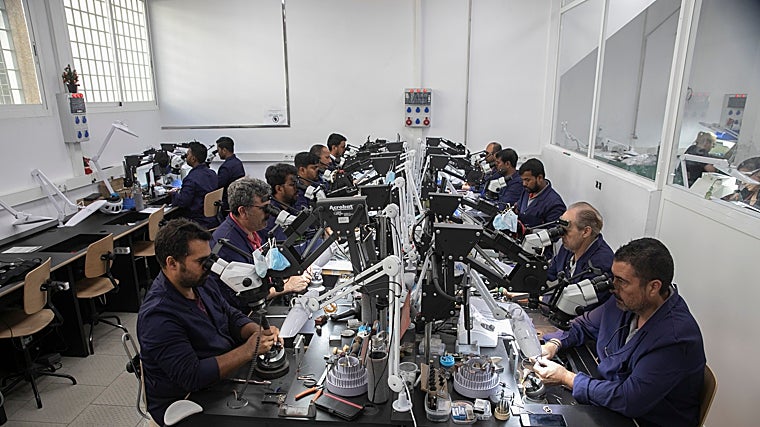
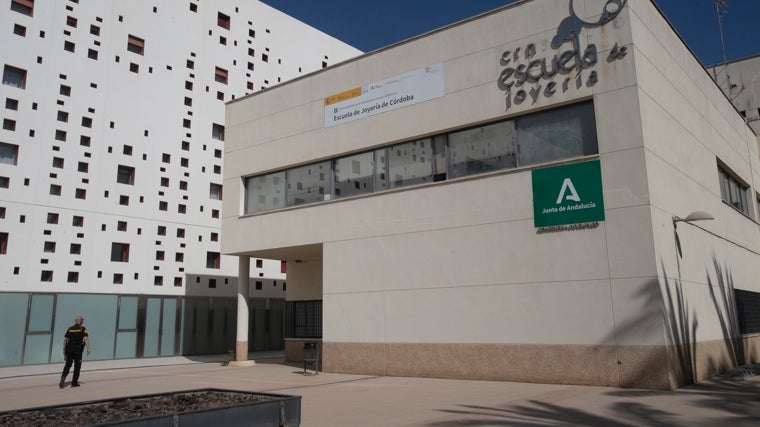
The park also houses a Jewelry School, which has been fundamental in ensuring generational renewal in the labor field. The jewelry sector in Córdoba now includes 400 companies, with more than half integrated into the park. The sector in the province employs about 1,300 people, of whom nearly 1,200 work in the capital’s site.