Editor’s Note
Pandora’s global success—selling three items per second—stems from a unique model that empowers customers to create personalized jewelry with personal meaning. This focus on storytelling and customization offers a compelling case study in differentiated brand strategy.

The Danish jewelry brand ‘Pandora’ enjoys immense popularity, selling three items per second globally. Operating over 6,800 stores in 100 countries, Pandora has grown in the global luxury jewelry market through differentiated strategies. Its unique business model, which allows customers to design one-of-a-kind jewelry that tells their own story, has captivated consumers worldwide.
This popularity has extended to the Korean market. Since its debut in 2008, its customizable charms in various materials and colors have resonated strongly with women in their 20s and 30s, keeping it consistently among the top sellers in department store jewelry sections. Recently, alongside brand repositioning, Pandora has accelerated its e-commerce efforts, entering a new growth phase in Korea.

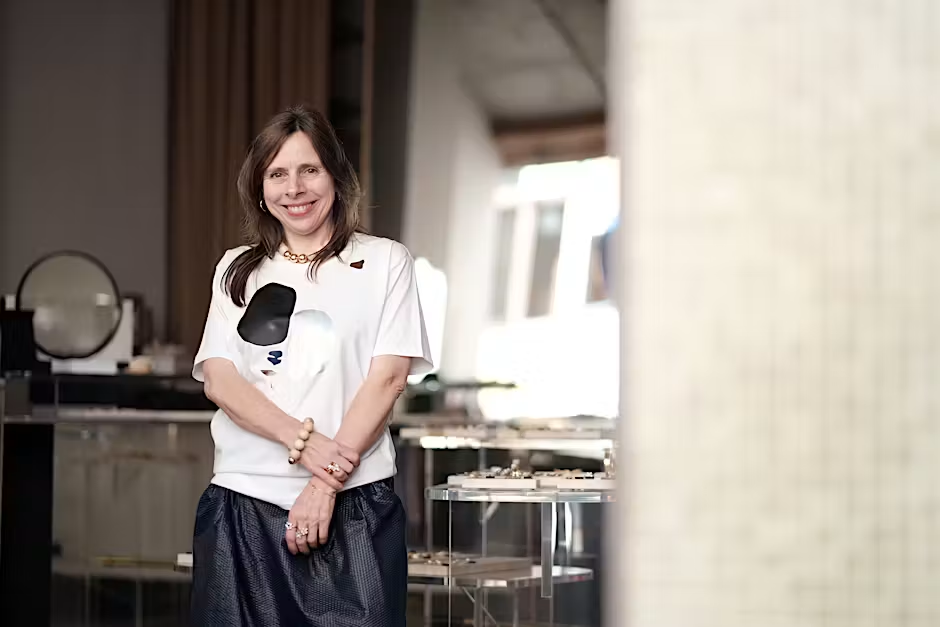
Jo Hye-yeon, Marketing Division Leader at Star Lux, Pandora’s Korean distributor, commented on the strategy:
The effects of the store revamp were immediate. Online sales in March increased by 40% year-on-year, and the conversion rate also rose by 20%. This growth trend in online sales has continued.
This success stems from maximizing consumer convenience. Recognizing that many customers first experience the brand offline, Pandora aimed to provide the same benefits and a convenient shopping experience online. The newly built official store offers an integrated ‘My Pandora’ membership linking online and offline, allowing customers to check order history and accumulate points anytime, anywhere.

Pandora’s signature ‘Ring 2+1’ promotion (buy two rings, get the lowest-priced third ring free), which is very popular with customers, was also seamlessly implemented online.
The newly added ‘SNS Account Link’ feature has been a great help in acquiring new customers. By allowing registration with minimal information using existing SNS accounts like Naver and Kakao, customer touchpoints have significantly expanded. For instance, Kakao Channel followers more than doubled compared to before the revamp.
Meanwhile, Pandora plans to get closer to new customers through new branding. Aligning with Gen Z’s desire for personalized consumption and purchase experiences, it is strengthening various design options and customization features to allow expression of individuality and personal stories.

Jo Hye-yeon emphasized the future direction: