Editor’s Note
This article outlines the significant economic potential of Mexico’s Interoceanic Corridor project, which could generate substantial daily revenue upon reaching full capacity. It also highlights the key logistical and developmental challenges that must be addressed to realize this ambition.
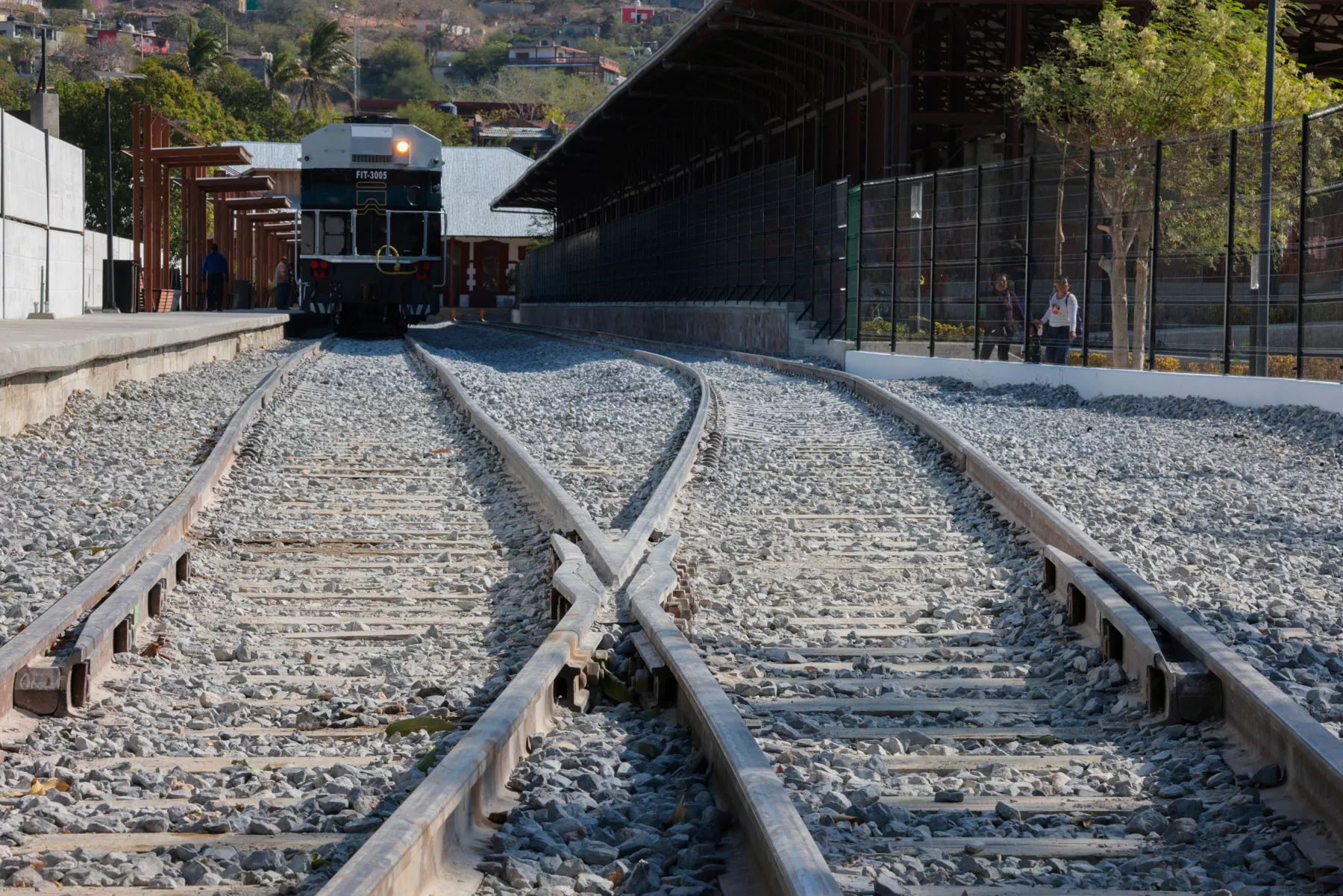
When the Interoceanic Corridor of the Isthmus of Tehuantepec (CIIT) reaches its maximum capacity in approximately five years, it could generate between eight and 10 million dollars daily.
However, the project faces several challenges before achieving the expected economic dynamism.
The plan envisions the creation of 10 development hubs along the more than 300 kilometers of railway between Veracruz and Oaxaca. These hubs would function as industrial parks and would be focused on sectors such as automotive, pharmaceutical, agro-industrial, among others.
Although seven of these hubs already have tenders from the private sector, aspects still remain to be resolved, mainly in terms of infrastructure, so that companies have what is necessary to start their productive activities.

Historically, the industries and value chains that the project seeks to attract have been concentrated in the north and Bajío region of the country, which implies a significant effort to attract investments.
In this sense, the Federal Government has implemented fiscal incentives, such as discounts on Income Tax (ISR) and Value Added Tax (IVA). However, the development of skilled labor in the region is another crucial challenge. It is planned that companies propose curricula adapted to the skills required in the production processes of the future industrial parks.
The CIIT traverses a total of 46 municipalities between Veracruz and Oaxaca, affecting up to 2.4 million people, which also highlights the importance of addressing security-related concerns.
Antonio Arranz, CEO of DHL, highlights problems such as frequent blockades on the train tracks in Michoacán, used as social protests, which end up severely affecting logistical operations in the region.
While he emphasizes the importance of having adequate infrastructure, such as a sufficient and preferably clean energy supply, he underlines that
This is especially relevant if planning to transport high-value goods or carry out sensitive production processes.
The project also seeks to become a strategic logistical crossing connecting the Pacific and Atlantic Oceans, which would be attractive to shipping lines internationally. However, the port infrastructure is not yet fully developed.
It is expected that once the project is completed, the ports can receive Post-Panamax vessels capable of transporting between 10,000 and 15,000 containers, with the goal of mobilizing up to one and a half million containers annually within a period of seven to 10 years. Nevertheless, it is acknowledged that it will take time to develop all the necessary infrastructure to make these ambitions a reality.