
Editor’s Note
**Editor’s Note:** This piece explores the enduring allure of Cartier’s Trinity ring, tracing its origins to Jean Cocteau and examining how its interwoven bands have come to symbolize a graceful approach to aging.
Cartier.
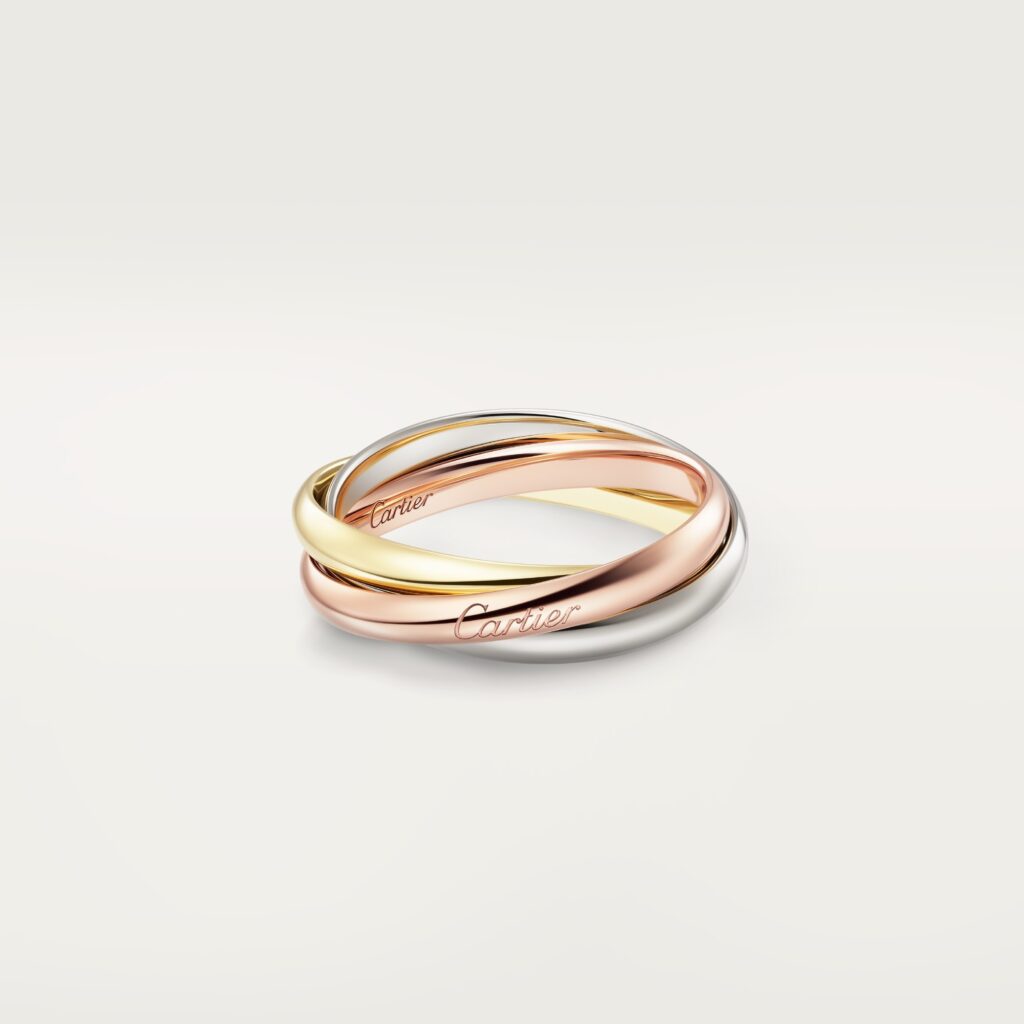
The Trinity ring collection began in 1924 at the request of Jean Cocteau, the renowned French poet and playwright. Three intertwined bands—pink gold for love, white gold for friendship, and yellow gold for trust—form a single Trinity ring. Iconic images of Cocteau wearing two Trinity rings layered on his little finger remain deeply symbolic to this day. Perhaps influenced by Cocteau’s legacy, I have always felt a subtly intellectual aura from this collection, and as someone with a strong intellectual vanity, I longed to capture that essence for myself.
However, the actual trigger for my purchase was actress Youn Yuh-jung. I recall it was about ten years ago, during the Blue Dragon Film Awards. I had the opportunity to assist her as part of the sponsorship. Usually, the PR team would deliver key pieces to the fitting location, and the celebrity would decide after trying them on. But Youn Yuh-jung came directly to the boutique, stating,
That moment left a lasting impression on me. As I watched her try on jewelry piece by piece, what caught my eye first was the Trinity ring she was already wearing—three bands entirely set with diamonds. Noticing my gaze, she shared the story behind it. In 2010, when she was already in her sixties and invited to the Cannes Film Festival for the first time, she thought,
So, to commemorate that brilliant moment, she bought the ring herself at the Cartier boutique in Cannes. After hearing that story, I found her incredibly admirable.
But she didn’t stop there. Eleven years later, she became the first Korean actress to win at the Academy Awards and the BAFTA Awards. Watching her, the Trinity ring transformed for me from mere jewelry into a symbol of ‘a person aging gracefully’—someone who gives their all to everything, yet knows how to celebrate and praise their own shining moments. That year, driven by the thought,
I bought the same Trinity ring.
Initially, I bought the diamond-set model to wear on my left middle finger as a symbol of success and responsibility. But over time, thinking,
I added a classic three-gold model. Now I wear the diamond-set one on my middle finger and the classic on my little finger. Looking back, it was quite a stretch for me in my mid-30s, but even now in my 40s, I have never regretted it once.
The model I bought, the same as Youn Yuh-jung’s, has since been discontinued. For my short, thick fingers, the angular finish of this design suited me better than the current rounded models. It’s a pity I can’t buy another. The angular design when the three rings are intertwined naturally adds volume, making fingers appear slimmer, and it looked much better on my hand.
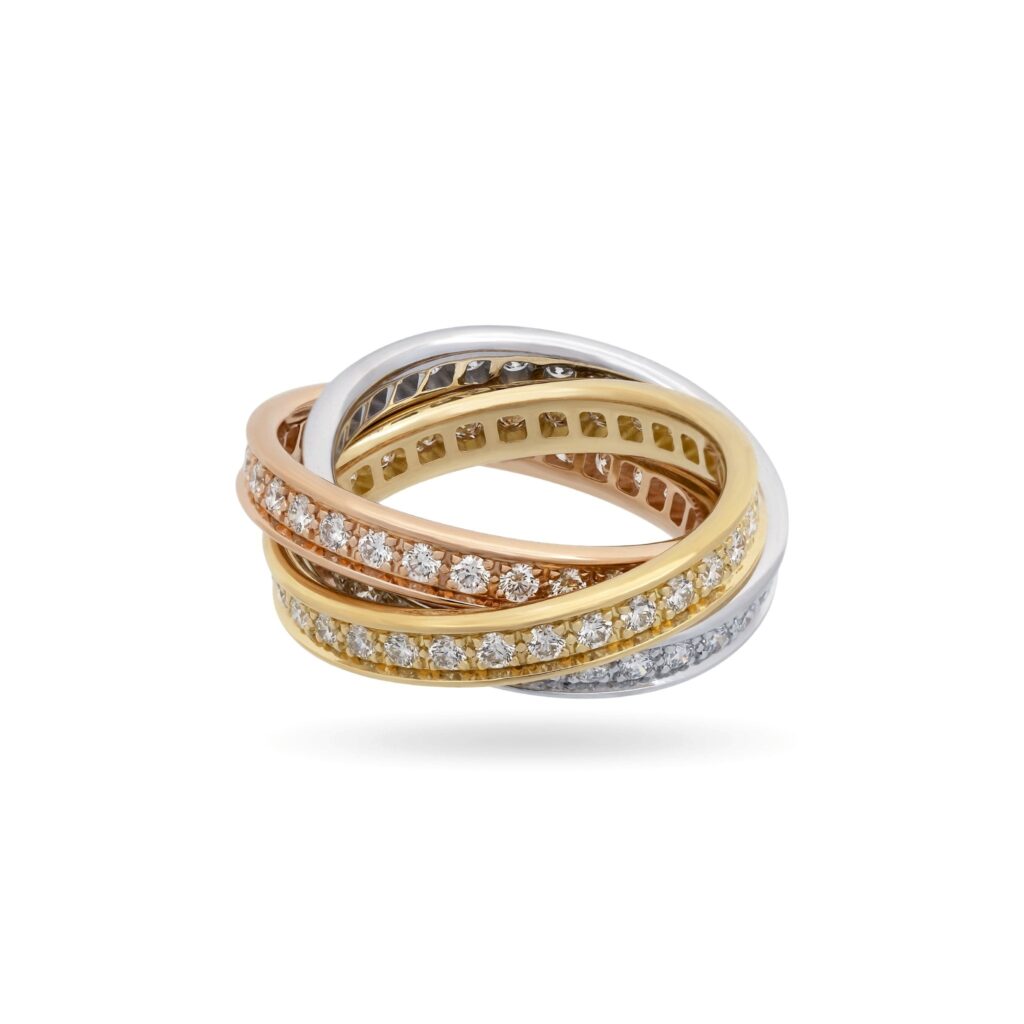
Sometimes, looking at the ring, I reflect on whether I am aging as gracefully as Youn Yuh-jung. Of course, a ring doesn’t change a person, but it does enough to pull me back from complacency.
There was one bittersweet note. Later, Youn Yuh-jung became an ambassador for T-brand, and I saw her say on a YouTube channel,
It felt a bit sad that our ‘couple ring’ was no more. But on the other hand, I was happy that another maison recognized her love and eye for jewelry, opening new opportunities for her.
Over time, the Trinity ring has expanded into various versions: single-gold models, black ceramic editions, and even recent ones with animal motifs. This is just my personal taste, but to me, Trinity is most beautiful when all three gold colors—pink, white, and yellow—come together. That was the image I first admired, and the classic form Jean Cocteau loved.
Cartier.
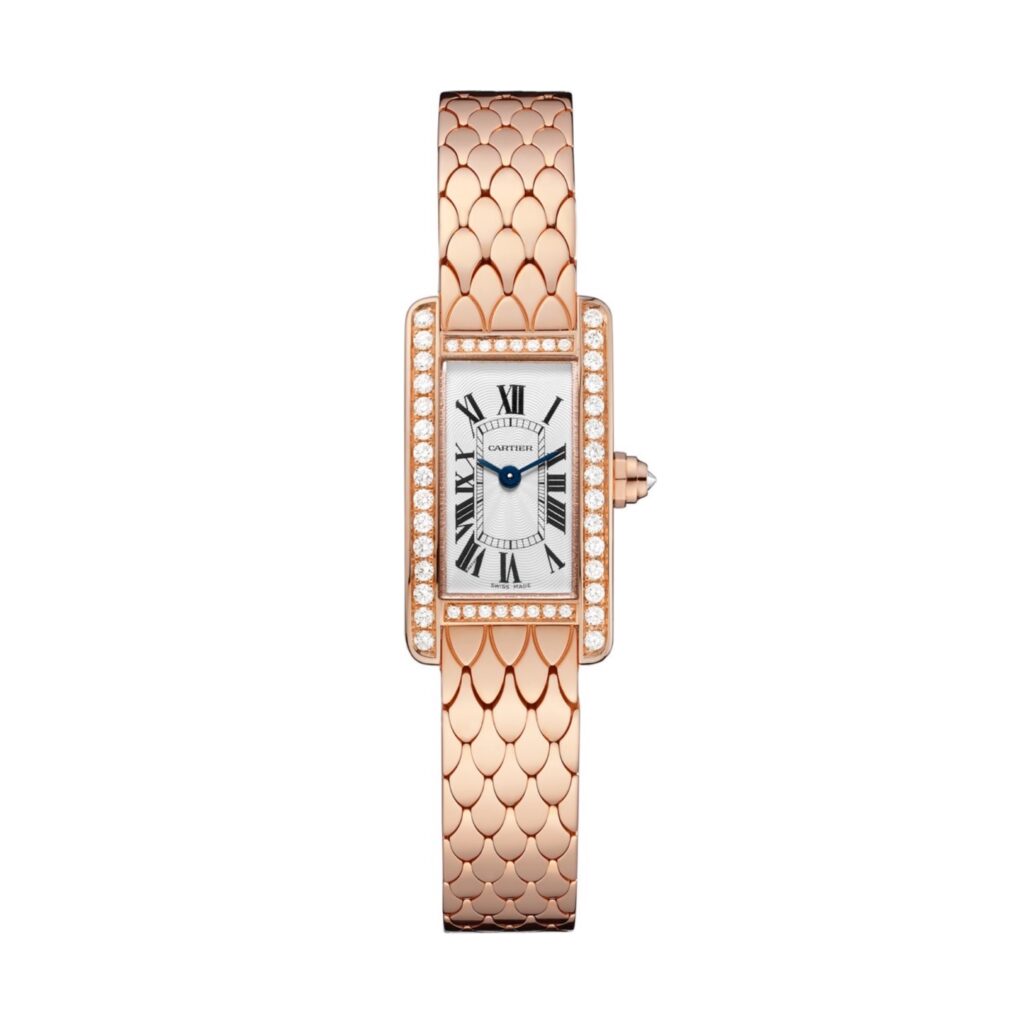
Personally, I love both Cartier’s timeless classic designs and B-brand’s signature glamorous, sensual style as a high jewelry maison. When I first saw the Tank Américaine Mini Jewelry Watch, it felt like
The classic Tank Américaine case paired with a snakeskin-textured gold bracelet was incredibly charming. At the time, I thought the bracelet was very B-brand-like, and later, when B-brand launched a new watch with a similar bracelet, I felt validated. The current Tank Américaine Mini Jewelry Watch has reverted to a classic link bracelet, but my model was a unique design available only for a short period.
Honestly, I thought gold bracelet jewelry watches were something for my 50s or later. But the price had risen dramatically since I joined the company, and rumors of discontinuation made me anxious. Interestingly, I bought this watch after I had already left the company. People often say that after quitting, you get sick of seeing the brand you worked for, but I spent my severance pay on the most expensive Cartier watch I owned. Looking back, my company loyalty was impressive.
Beyond the bracelet design, the main reason I chose this watch was that it made my wrist and arm proportions look beautiful. Watches with a longer vertical ratio are often recommended for those with thicker wrists because the elongated case reduces the empty space above and below the lugs, making the wrist appear slimmer. My Tank Américaine, even in mini size, has a longer vertical ratio, making my wrist look much more delicate. The feminine bracelet proportion, fitting the narrow case width, elongated the line from wrist to elbow, making my short arms appear longer and more elegant. In retrospect, no other watch or bracelet has ever flattered my wrist and arm proportions so well.
Due to its bracelet design, this watch naturally complements casual looks like t-shirts and wide pants, yet it also holds its own effortlessly with suits, cocktail dresses, and black-tie attire. That’s why I am confident I will continue to wear this watch well into my 50s, 60s, and even 70s, and my satisfaction will only grow. Of course, one day I might struggle to read the small dial due to presbyopia…
Cartier.
I have always frequently worn the Clash de Cartier small hoop earrings. For my narrow, long face, the 23mm diameter hoops fill the empty space around the jawline, creating a much more balanced look. So, I naturally thought,
When the Juste un Clou hoop earrings first launched, I wasn’t particularly interested. But my mind completely changed during a photoshoot with BLACKPINK’s Jisoo. We styled yellow gold and white gold versions consecutively on her right ear like piercings, and it looked incredibly beautiful. Jisoo herself liked the look so much that she used that photo as her Instagram profile picture for a long time—it was a perfect styling in every way. Seeing that, I felt I absolutely had to buy them.
The problem was that in reality, I am not Jisoo. I only have one piercing per ear, so styling two earrings consecutively on one ear like in the photoshoot was impossible. Even if I mustered the courage to get another piercing, the earring’s design has a fixed left-right orientation, making it structurally impossible to wear two side-by-side on the same ear. In the end, I could only wear one alone, and it felt surprisingly lacking in charisma.
Search keyword: jewelry purchase