Editor’s Note
**Editor’s Note:** This piece explores how Japanese jeweler KISHUN is pioneering a sustainable shift in the industry through urban mining, turning discarded materials into high-value jewelry and advancing circular economy principles.
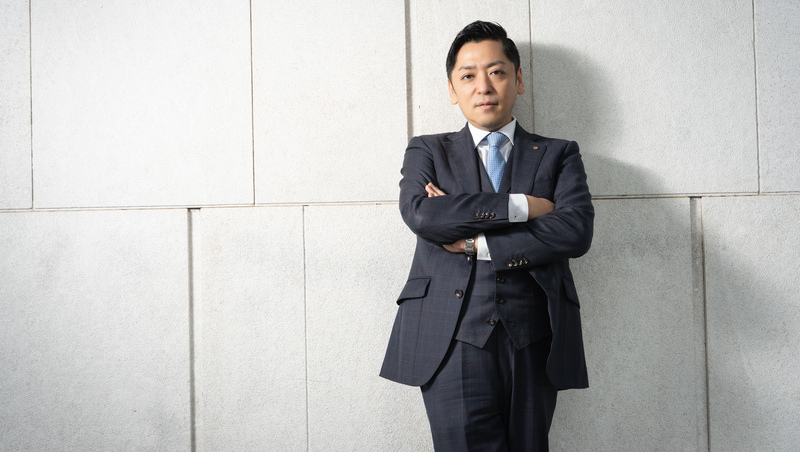
Japanese jeweler KISHUN is redefining the jewelry market, creating new possibilities for a sustainable circular economy in the industry. (Photo: KISHUN founder Tsuji Shun)
2026/03/26
Not selling second-hand, but restoring the value of jewelry — how did KISHUN go from a box of unwanted colored gemstones to the heart of the Asian jewelry market?
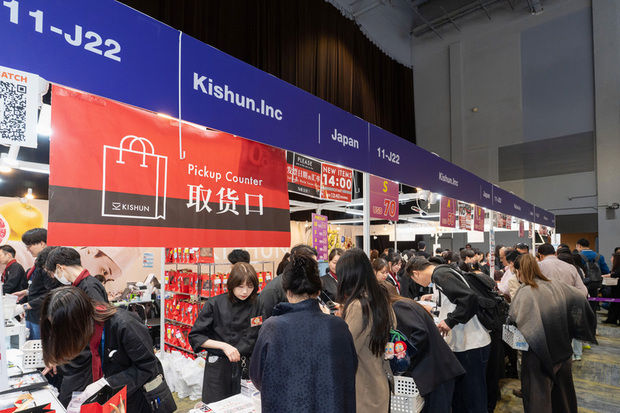
Before the exhibition opened, a long line had already formed.
At Hall 5 of the AsiaWorld-Expo on Hong Kong’s Airport Island, buyers clutching empty shopping baskets waited outside a booth. Their posture resembled not so much a jewelry show as a supermarket sale. When the booth’s glass display cases were unlocked, the crowd surged in, hands reaching into trays of gemstones — rubies, sapphires, emeralds — which quickly changed hands. This scene was later captured on video and widely shared on China’s Xiaohongshu, with comments reading: “So cheap, it’s a grab.”
That booth belonged to KISHUN.
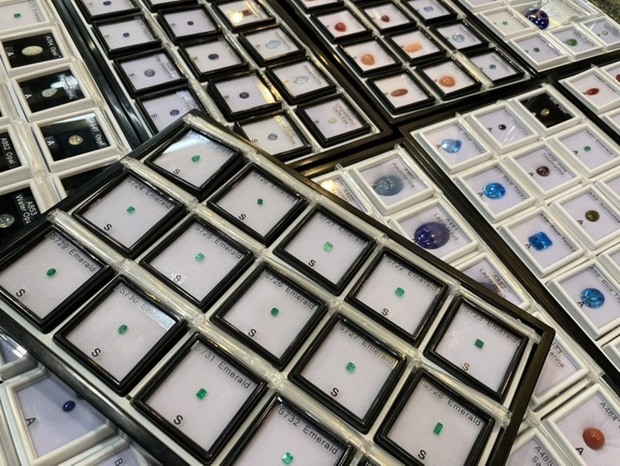
This Tokyo-based company has participated in the “Hong Kong International Diamond, Gemstone & Pearl Show” for ten consecutive years, becoming a talking point each time. The booth displays over a hundred types of loose stones, categorized into four grades by color, clarity, origin, and rarity, with unit prices ranging from $20 to $100 — a pricing logic that seems out of place in an industry where carat weight often defines value, yet it draws jewelry designers, wholesale peers, and curious individual buyers every year.
KISHUN’s exhibition area at the AsiaWorld-Expo in March attracted a large crowd.
KISHUN’s story begins about a decade ago.
At that time, KISHUN founder Tsuji Shun was working in Japan’s jewelry wholesale industry. One day, he visited a watch shop client. Japan’s second-hand recycling wave was in full swing: gold had a price, platinum had a market, diamonds had GIA certificates — but the colored gemstones in the middle, whether rubies or emeralds, no one knew how to price them, so no one was willing to.
The small white cardboard box he saw was filled with pearls, rubies, and emeralds — the very same types of gemstones he was trying to sell to these shops at high prices. But from a different angle, they had become waste.
After the Great East Japan Earthquake in 2011, he felt even more powerless as a jewelry industry professional unable to contribute to society. “I kept thinking, what can gemstones do for society?” This question haunted him for years until he saw the outline of an answer.
In 2014, at age 34, Tsuji Shun rented a space the size of a tatami mat in Kawaguchi City, Saitama Prefecture, with 500,000 yen in savings, and started a business with two partners. The company name combines characters from both their names: “Ki” from partner Sato Takao’s “Takao” (meaning precious metal in Japanese), and “Shun” from his own name (meaning moment or flash).
In its early days, KISHUN’s business model was simple: buy discarded colored gemstones from recyclers, send them for external certification and polishing, and sell them online. But soon, they hit a bottleneck.
The turning point came when Tsuji Shun flew to the Jewelry Trade Center (JTC) in Bangkok with a batch of certified gemstones to negotiate with Indian merchants and Thai wholesalers. “Japanese people had always come to buy gemstones; they had never seen a Japanese seller taking the initiative,” Tsuji said. This rare identity actually opened doors for him.
But a bigger problem emerged: how to price?
So he began building his own system: quantifying color, clarity, luster, origin, and rarity for each gemstone, recording every transaction, and gradually creating a traceable pricing trajectory.
This pricing system became the foundation for KISHUN’s stable B2B wholesale model. “A retail customer might spend one million yen on a stone today, but they won’t buy a second at the same price tomorrow. But wholesalers will — because that’s the market price. Our job is to make that market real.”
In its first year, revenue exceeded 100 million yen. Subsequently, KISHUN established its own certification laboratory, polishing workshop, and 3D jewelry design department, all operated in-house. Currently, KISHUN has five locations in Japan — Tokyo, Osaka, Nagoya, Fukuoka, and Hokkaido — along with a jewelry workshop and certification center, employing over 260 people.
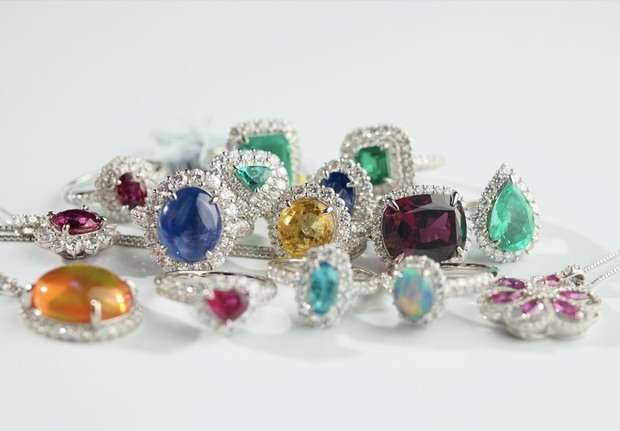
KISHUN gives discarded colored gemstones a new shine.
KISHUN has a term for their source: urban mining.
During Japan’s bubble economy peak, a flood of high-quality colored gemstones entered the market through luxury consumption. After the bubble burst, the economy declined, younger generations lost interest in their grandmothers’ old-fashioned designs, and jewelry circulation froze. Those gemstones didn’t disappear; they slept in drawers, safes, and the white cardboard boxes of watch shops. This is KISHUN’s mine.
This business model’s inherent ESG narrative has garnered industry attention in recent years. Gemstone mining in African regions has long been linked to forced labor, environmental damage, and armed conflict; KISHUN’s gemstones are all sourced from secondary acquisitions within Japan, involving no new mining. Tsuji named the company’s sustainability project “Re:D!al” — “Re” for regeneration, “Dia” for diamond, and “Redial” meaning to send a signal again — aiming to turn the concept of ethical jewelry from marketing language into the company’s daily operational logic.
Internally, KISHUN has established “Reframing College,” providing employees with systematic gemology and certification training. The name comes from Tsuji’s core philosophy. He uses an analogy: “It’s like the same glass of water: saying it’s half empty versus half full are completely different value judgments. How you see something determines what it’s worth.”
This isn’t just brand rhetoric. KISHUN had a case where a client thought their old jewelry was nearly worthless, but after certification, it was valued at over 10 million yen. The gemstone itself hadn’t changed; only the way it was viewed had.
KISHUN accepted an exclusive interview with Business Weekly, sharing the company’s future plans and outlook. (Photo right: KISHUN founder Tsuji Shun; Photo left: KISHUN Taiwan business head Ye Huan)
On the day of the interview, sitting next to Tsuji Shun was his wife, also KISHUN’s Taiwan business head, Ye Huan.
She is Taiwanese, having lived in Japan for many years, and now, as the wife of a Taiwanese son-in-law, she brings this Japanese brand back to her familiar market. Asked why Taiwan, her answer was more direct than her husband’s: “Taiwanese consumers are starting to genuinely care about the gemstone itself — where it comes from, its quality, whether it’s worth owning, and also… the ‘story’ behind it.”
She also noted that during recent visits to Taiwan, she deeply felt the country’s thorough promotion of ESG and SDGs, with not only businesses but also the general public showing high awareness of sustainable development and circular economy.
Her plan for KISHUN’s entry into the Taiwanese market was step-by-step. In April, the brand will hold its first sales event in Taipei. “Young Taiwanese people really understand vintage,” she said. “Vintage clothing, old furniture, second-hand vinyl records — they have an eye for quality. What we need to do is help them see second-hand gemstones the same way.”
This year, KISHUN also plans to launch an online auction platform, connecting buyers from Taiwan, Hong Kong, and Dubai, allowing the same gemstone to be revalued under different cultural perspectives. “A Taiwanese buyer and a Middle Eastern buyer will have completely different feelings about the same coral, and will offer different prices,” she said. “That’s the real tension in the second-hand gemstone market.”