Editor’s Note
**Editor’s Note:** This article highlights Glowgirl, a unique boutique blending a jewelry studio with a café, offering customizable chains and personalized beverages.
About Glowgirl
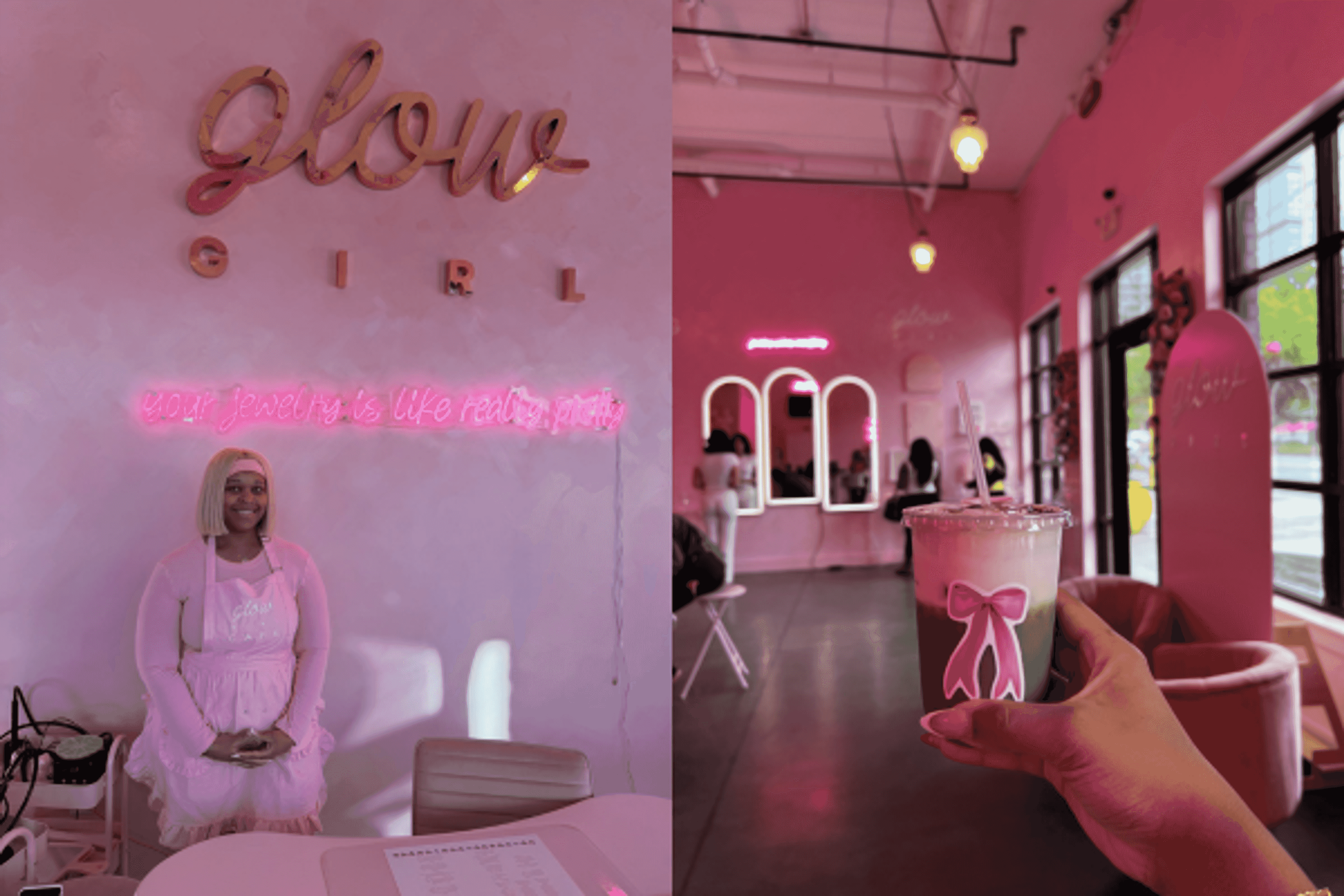
Glowgirl’s jewelry studio offers 30 chain designs and more than 50 add-on charms. Pieces are finished with a clasp or can be welded to make permanent jewelry.
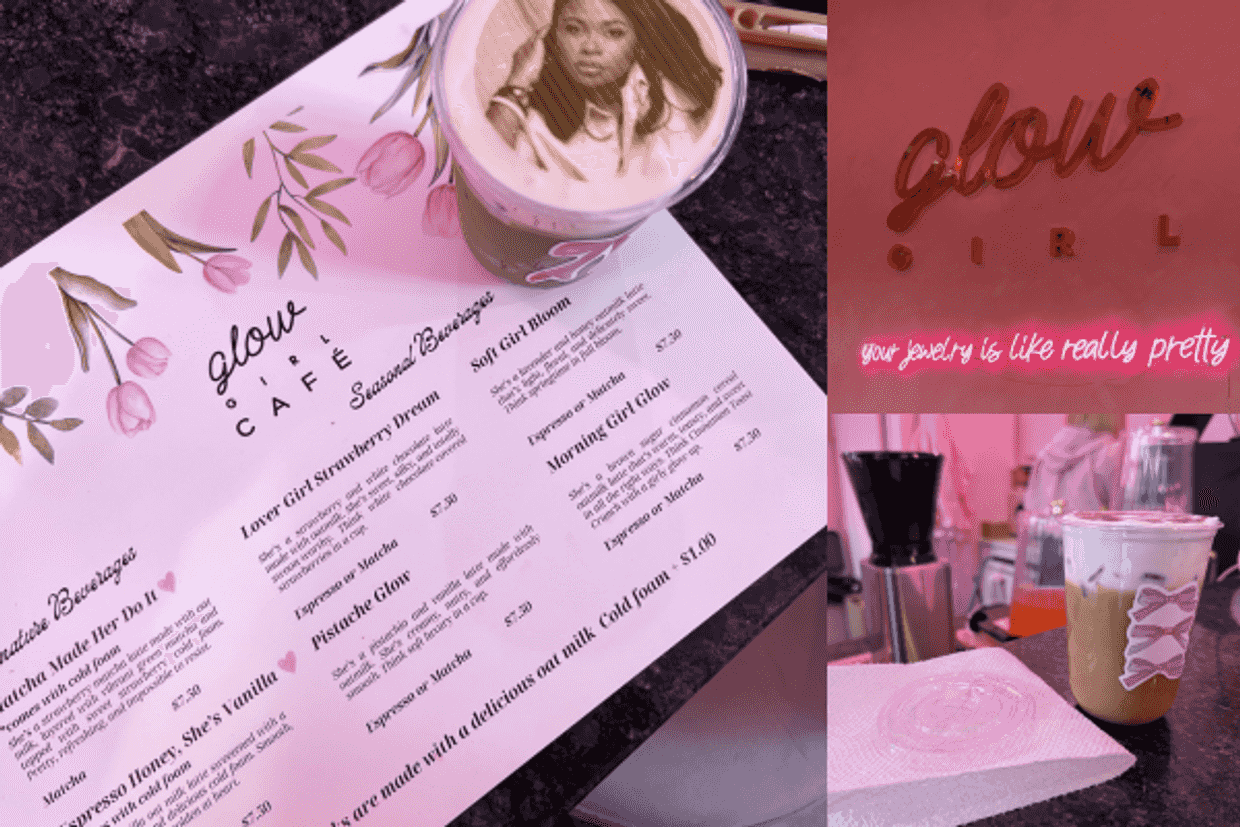
Glowgirl’s café offers matcha and lattes with personalized touches like a photo atop the drink’s foam.
The shop is open Thursday – Sunday from 11 a.m. – 7 p.m. for walk-ins and appointments.
From a college side hustle to a leap of faith
You started making chokers in college. What drew you to jewelry design?
“In college, I was on a self-journey trying to figure out what I was good at. I kept saying I wasn’t creative, but I was trying different things. I started making chokers, and they were a hit on my college campus. I was hosting events, selling them, and also selling online. From there, I taught myself how to make real jewelry — and that’s really how it all started.”
Glowgirl started as an e-commerce brand in 2018. What were those early days like, and what led you to leave your corporate job and go all in on Glowgirl?
“Glowgirl was a side hustle for about six years. I was working full-time at Wells Fargo and shipping orders on the weekends, doing pop-ups and selling custom jewelry. It was a lot, but I was building it little by little. There were a lot of signs. I just wasn’t happy, and I knew there was something else in me that needed to be brought out. Leaving was scary — especially not having that same amount hit your [bank] account every two weeks. But I had created this plan for myself called “Jorgie 3.0,” and it was really about betting on myself and not caring what people think.”
You added permanent jewelry after seeing it online. What made you want to bring that to Charlotte?
“It just made sense for the business. We were already making jewelry — it just wasn’t welded. Once I learned more about it, I realized it was something people really wanted. I don’t even think of it as a trend. I think it’s here to stay.”
Evolving the brand: from jewelry to experience
Glowgirl is both a jewelry studio and a café. How did that concept come together?
“I’ve always loved coffee, and the space we moved into already had a bar. My husband actually suggested adding a café, and it just made sense. I also love the idea of creating more of an experience — not just a place where you come in, shop and leave, but somewhere you can sit, hang out and enjoy yourself.”
What kind of experience are you trying to create for people who walk through your doors?
“I want people to stay a while, whether it’s in your budget to buy jewelry or grab a coffee. More than anything, I want people to feel seen, heard and celebrated. A place where you come in and leave feeling better than when you walked in.”
Why South End, and what it represents
Why was South End the right home for Glowgirl? What does it mean to you to operate a Black woman-owned business in South End?
“Honestly, I feel like God strategically placed us here. It’s a growing area, it’s central, and it’s a place where people come to hang out. My time here has really shown me that this is where we’re supposed to be.”
“Being a Black-owned business in South End is an assignment and a responsibility. It’s deeper than what people may see on the surface. I don’t take being in this space lightly at all. It’s a blessing.”
What do you think women — especially Black women — need more access to in business?
“Access to capital, for sure. Whether that’s grants, loans or just resources to get started. And also examples. A lot of times, we don’t see people doing what we want to do, so it can be hard to envision it for ourselves.”
Looking ahead: growth, legacy and impact
Was this always your dream, or did it evolve?
“It definitely evolved. Glowgirl actually started as an affirmation — it was who I aspired to be during a tough time in college. Now it’s grown into something much bigger, and it’s still evolving.”
What’s next for Glowgirl?
“Right now, I’m focused on growing this space — enhancing the experience, expanding our events and continuing to build community. I definitely want to expand to other cities eventually, and I’d love to make the café mobile.”
What legacy do you hope Glowgirl leaves in Charlotte?
“I want this to be a place where women are truly celebrated — somewhere you can walk in and leave feeling great, where the experience is unmatched, and you can’t get that feeling anywhere else.”