Editor’s Note
**Editor’s Note:** This piece highlights Vancouver boutiques offering unique charms for personalized jewelry, curated by Kristi Alexandra.
Charmed, I’m Sure: Where to Find Unique Charms for Your Necklace and Bracelet in Vancouver
Add some charm to your bracelet stack with these baubles from our favourite Vancouver boutiques.
By Kristi Alexandra / January 12, 2026
Why settle on one piece of jewellery to represent your dynamic persona when you could let five or six individual charms do the talking? Here’s where to find the coolest charms to add to your collection, from shops right here in Vancouver.
THE STORE: 75 W 7th Ave., 1038 Canada Pl., leahalexandra.com
GO FOR: A less permanent (but still fun) version of a tattoo. You can book “spark” appointments here, where your chain is welded together to make your chosen piece a little more permanent.
THE ESSENTIAL CHARM: With pearls on-trend and birthstones being timeless, the Pearlescent birthstone pendant ($95) brings the two together in a charm that’s both beautiful and self-reflective.
THE STORE: 2077 W 4th Ave., melanieauld.com
GO FOR: Experience the luxe treatment. These high-end pieces have a bespoke vibe. Engraving and welding is also available by appointment.
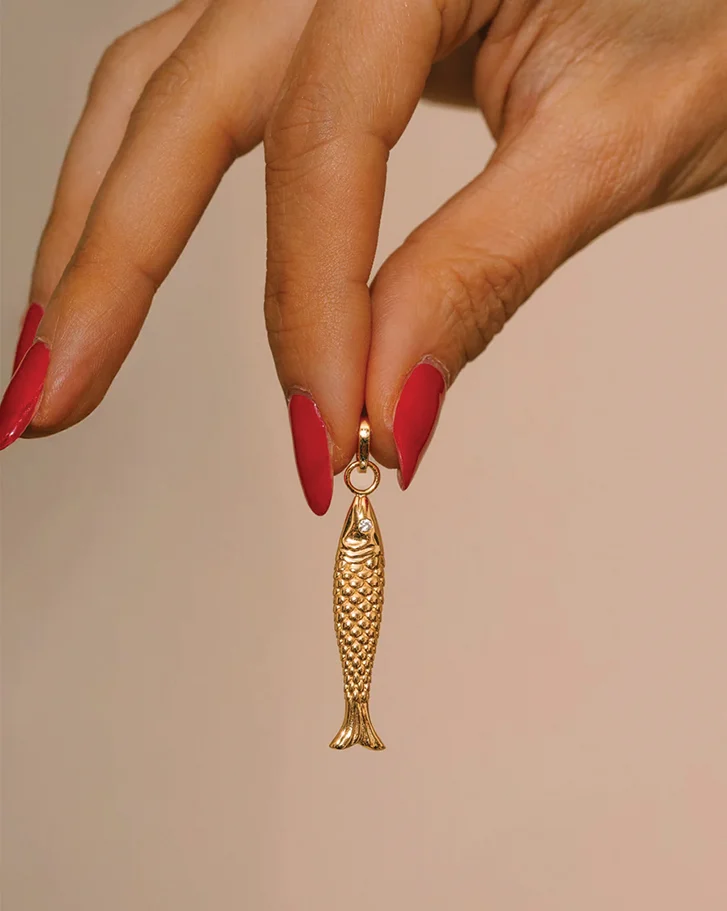
THE ESSENTIAL CHARM: This 14K gold vermeil Mediterranean-style Sardina charm ($115) with a cubic zirconia stone is sleek and playful, and definitely belongs in a scene from Mamma Mia! (We mean that as a compliment.)
THE STORE: 49 Dunlevy Ave., wolfcircus.com
GO FOR: Get the cool-kid statement piece here. You’ll find the brand’s demi-fine jewellery (hand-fabricated here in Vancouver) in all the hip shops around the city, but you’ll get to paw through the full line at the Railtown studio.
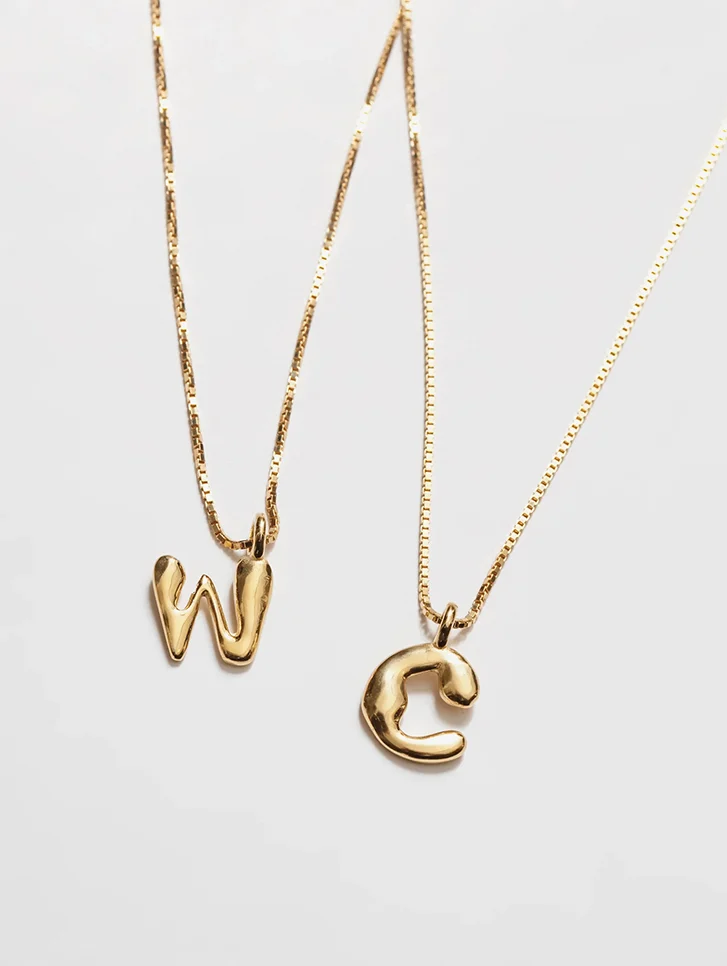
THE ESSENTIAL CHARM: No factory-stamped lettering here—Wolf Circus’s alphabet charms ($65 each) are made-to-order, and the hand-drawn, bubbly font certainly shows it. These letter initial charms come in 14K gold-plated brass and sterling silver (or solid gold for $389).
THE STORE: 73 Water St., shayelilyjewelry.com
GO FOR: Shayelily invites group bookings of one to five people to participate in a one-hour jewellery design session where you can mix and match charms and beads on a necklace or bracelet in her Gastown studio.
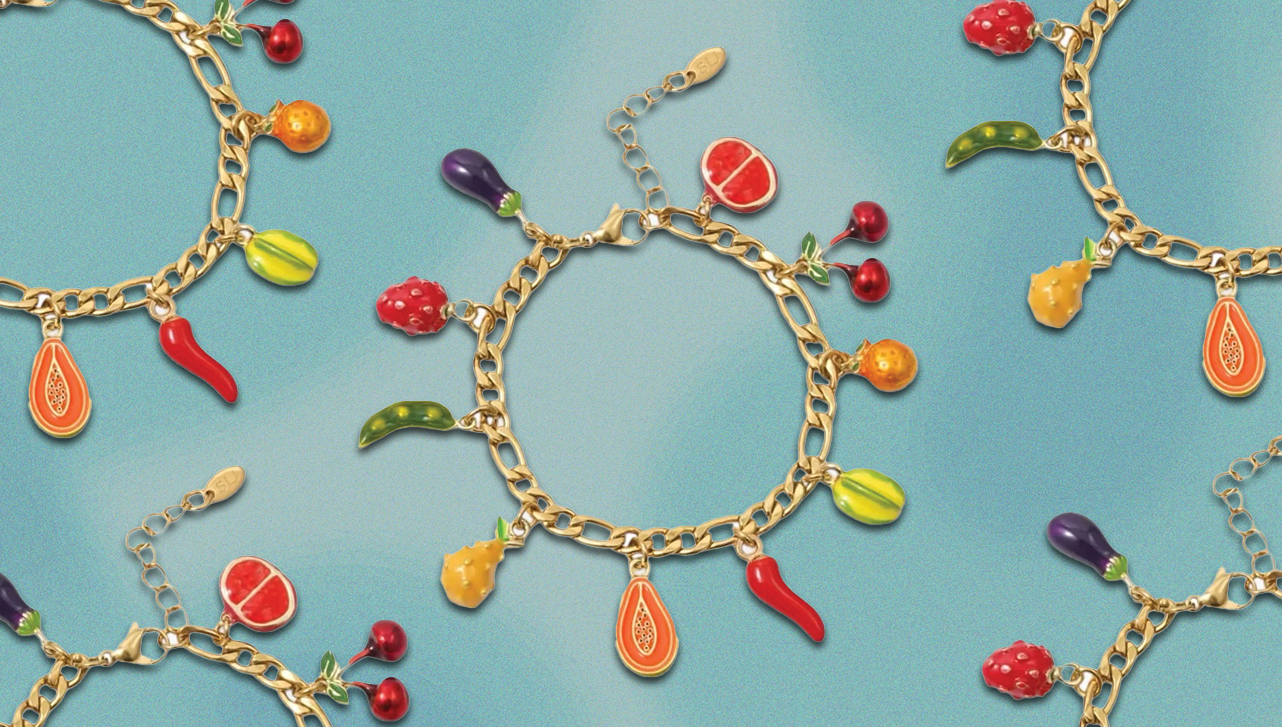
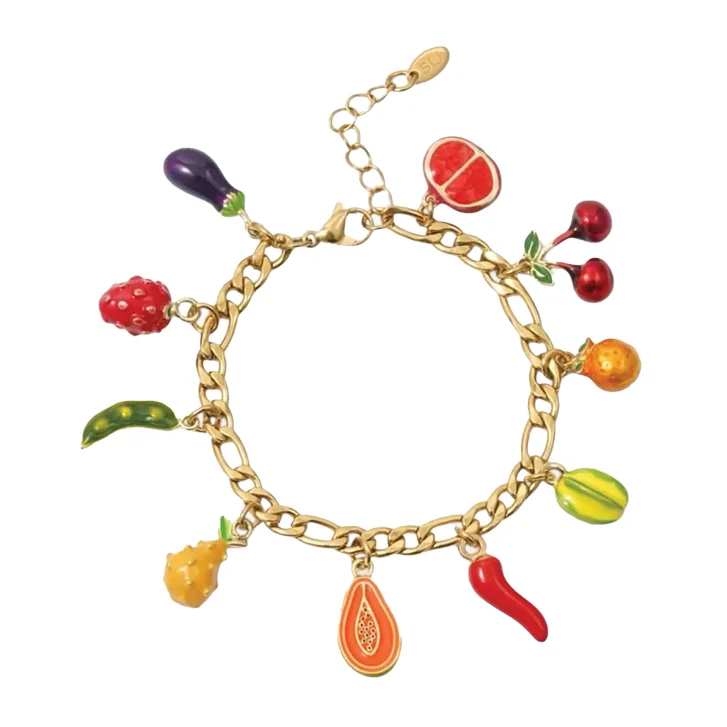
THE ESSENTIAL CHARM: Ten oh-so-sweet enamel fruits and vegetables fit on this 6.5-inch stainless steel Fruit Punch bracelet (which, by the way, is made-to-order, so each one is totally unique), giving your wrist a punch of colour ($85).
THE STORE: 1409–207 W Hastings St., amarabluedesigns.com
GO FOR: Most of Amara Blue’s pendants and charms are hand-illustrated signets or delicately carved designs—go for a handmade feel.
THE ESSENTIAL CHARM: If you’re a charm lover, you’ve already established that you’re eclectic—keep ’em guessing by swapping out your charms: the sterling silver Ouroboros snake charm ($85, complete with blue sapphire and tsavorite eyes) hinges open and closed.