Editor’s Note
**Editor’s Note:** This piece explores how MDW Jewelry designer Meghan Weeks channels resilience and cultural pride into her craft, bridging Indigenous heritage with contemporary fashion-arts.
MDW Jewelry Designer Meghan Weeks Is Reclaiming Her Culture
How MDW Jewelry connects with the Indigenous fashion-arts community.
by Erica Ngao – Jul 24th, 2025
SEWARI CAMPILLO
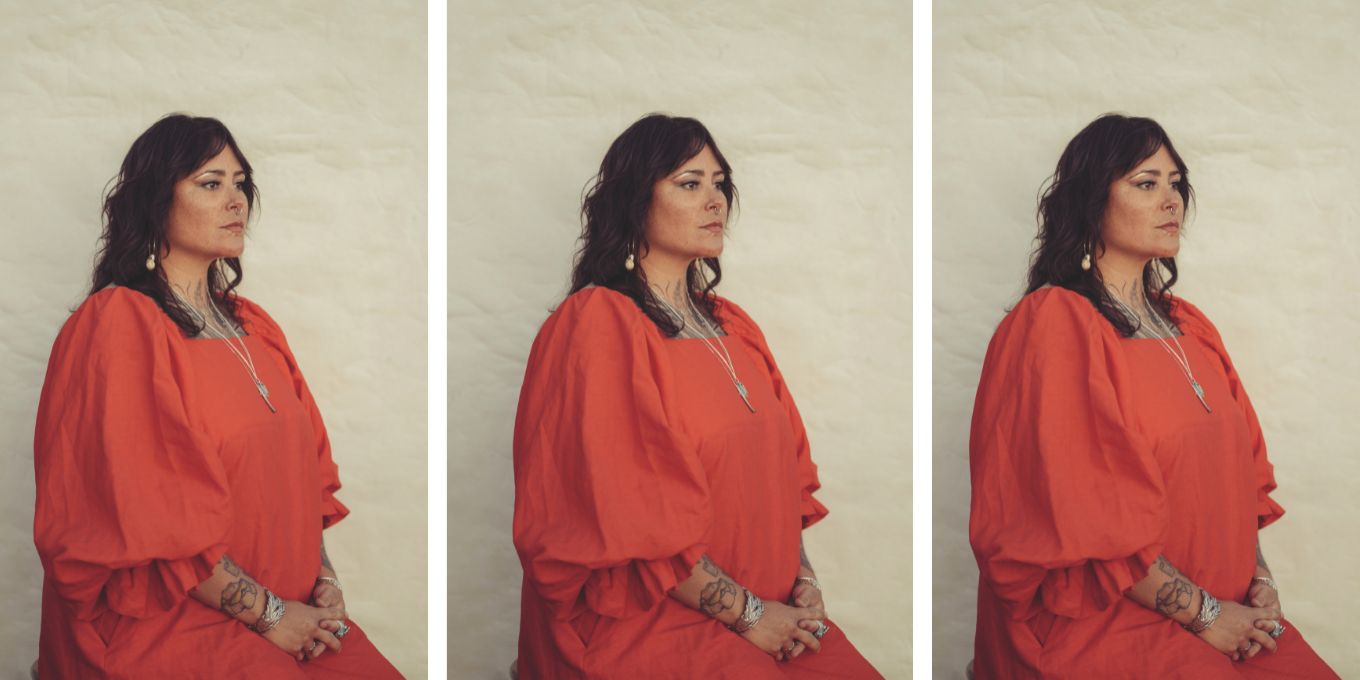
In Meghan Weeks’ new Vancouver studio, among her various tools and works-in-progress, stand two boxing trophies. The jewellery designer keeps them on display as a reminder to herself to approach life’s obstacles with determination and confidence. Her experience in boxing has mirrored her path as an artist.

After studying digital design and photography at art school, Weeks decided to pursue woodworking. She honed her skills working on custom kitchens at a cabinet shop and then became a wood-shop technician at the city’s Emily Carr University of Art + Design. In 2018, she started MDW Jewelry in her living room after taking a silversmithing course, during which she “fell head over heels in love” with the craft.
For Weeks, jewellery is also a way to learn about and reclaim her culture as a Cree woman from Treaty 8 territory and a member of Sucker Creek First Nation. Her work often draws from Indigenous teachings and family, especially her grandmother.
Each piece brims with personal significance and is wrapped in whimsy and humour. One series of charms, inspired by memories of accompanying her grandmother to bingo, includes a little purse with a dauber. And a bracelet is modelled after a strip of Wrigley’s Spearmint chewing gum, a treat that her grandmother would always carry with her. One of Weeks’ favourite pieces to create is a ring featuring the head of a bison, an animal that holds deep cultural and spiritual connections for many Indigenous communities. When the ring is worn, the wearer’s knuckle becomes the bison’s hump.

In 2024, Weeks received the BC Achievement Applied Art + Design Award for her work over the years as an artist, designer and small-business owner. It was a full-circle moment that began, as many accomplishments do, with the desire to challenge oneself to grow. Weeks says that one of the most meaningful aspects of this journey has been connecting with the Indigenous fashion-arts community and collaborating with others.
