Editor’s Note
This article explores “Ice Cold,” a new exhibition at the American Museum of Natural History that traces 50 years of hip-hop jewelry—from iconic nameplates to diamond-studded grills—highlighting how these bold accessories evolved into powerful symbols of radical self-expression and cultural influence.
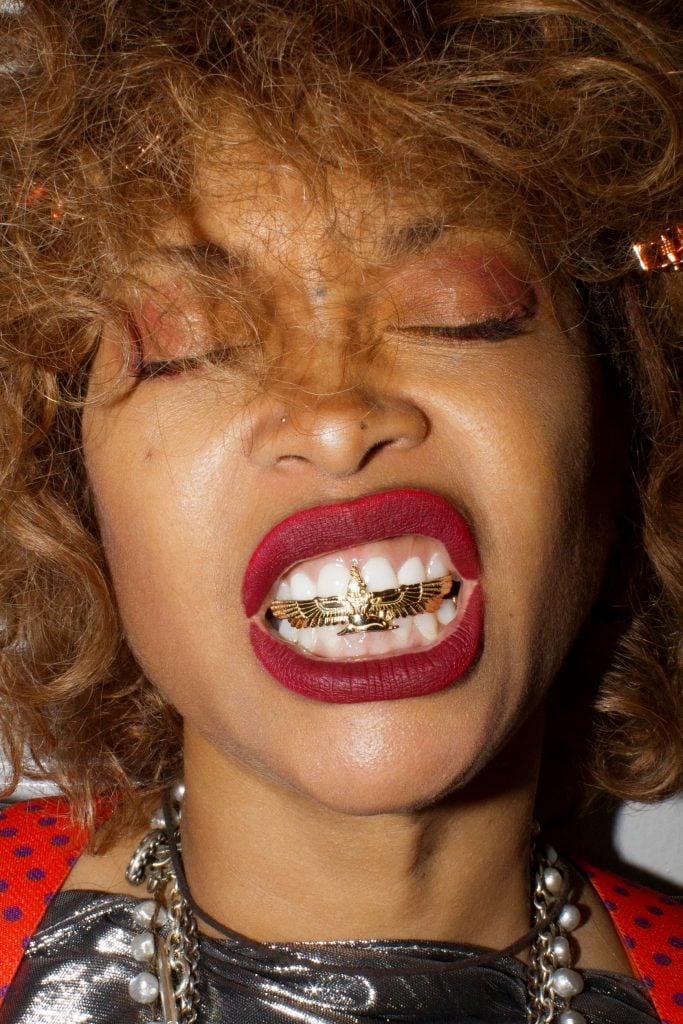
From Biz Markie’s brushed gold nameplate to T-Pain’s ‘Big Ass Chain’ studded with hundreds of diamonds, and Erykah Badu’s 22-karat gold Ma’at grills inspired by the Egyptian goddess, 50 years of hip-hop jewelry history is now on display in all its blinged-out glory at New York’s American Museum of Natural History (AMNH). As a playlist by DJ Woof sets the mood, these gilded and diamond-encrusted necklaces, rings, and grills chart how hip-hop’s custom-crafted, oversized accessories became, like their wearers’ music, forms of radical, unabashed self-expression.
“Ice Cold: An Exhibition of Hip-Hop Jewelry” may feel like a long way from the Bronx streets where hip-hop was born, and that’s part of the point. The exhibition demonstrates how hip-hop has spread so far beyond the margins that we may be only beginning to understand its influence on the culture at large.
The ever-larger dazzle of these jewels also challenges what success in America is supposed to look like and who gets to show it, argues Gill. The project, including his film on the topic, “has shed light on larger conversations around societal perception and the American Dream,” he said in press materials. “This exhibition pushes that further in a powerful way.”
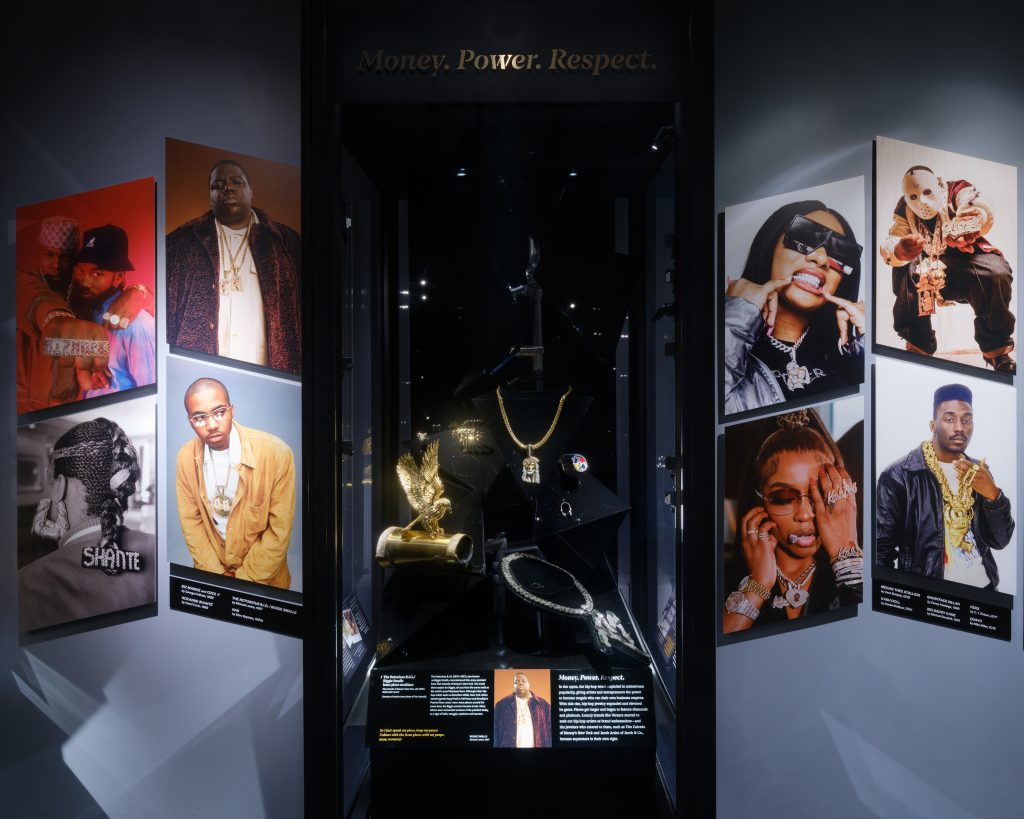
“Ice Cold: An Exhibition of Hip-Hop Jewelry.” Photo: Alvaro Keding/© American Museum of Natural History.
In addition, hip-hop jewelry is shown here as a personal expression of one’s culture and life, made popular by Black and Latinx communities.
Additionally, the show spotlights the jewelry makers who worked closely with these artists to create accessories not seen anywhere before, like K & I jewelers in Brooklyn’s Albee Square Mall, and a later generation of now well-known jewelers like Tito Caciedo of Manny’s New York and Jacob Arabo of Jacob & Co.
But the AMNH show marks a new level of acknowledgment. What’s more, while setting up the show, several of the artists whose jewelry is on display, including Roxanne Shante, Joey Bada$$, FERG, and Nas, all said they had come to the museum as children on school trips. Returning now, as makers of cultural history, to see their own artifacts in the global and historical context of the museum’s hallowed halls of gems and minerals, is its own kind of priceless jewel.
Art & Exhibitions
From Ghostface Killah’s arm-mounted eagle monument to Nicki Minaj’s Barbie-pink pendant, the show highlights five decades of wearable art.
Erykah Badu. Photo: Tony Krash.
by Devorah Lauter
Oct 7, 2024
Indeed, the show’s curatorial team points out that the exhibition is about a lot more than just bling.
FERG. Photo: C.T. Robert.
Take the iconic label chains in the show. There’s the diamond-studded Roc-A-Fella medallion, in honor of the record label co-founded by Jay Z; there’s Nipsey Hussle’s All Money In A$I necklace, referring to the record label of the same name, founded by the late rapper; and there’s Coach K’s diamond and 14-karat white gold QC necklace, signifying Quality Control Music. These, Tobak points out, are veritable symbols of entrepreneurship, the “hustle” of trying to make it, in “a grind outside of conventional opportunities that weren’t always made accessible to these artists.”
On the curatorial team, Tobak is joined by hip-hop legend Slick Rick, Kevin “Coach K” Lee, founder and COO of the Quality Control Music record label, Karam Gill, who made the 2021 documentary series Ice Cold, and other contributors.
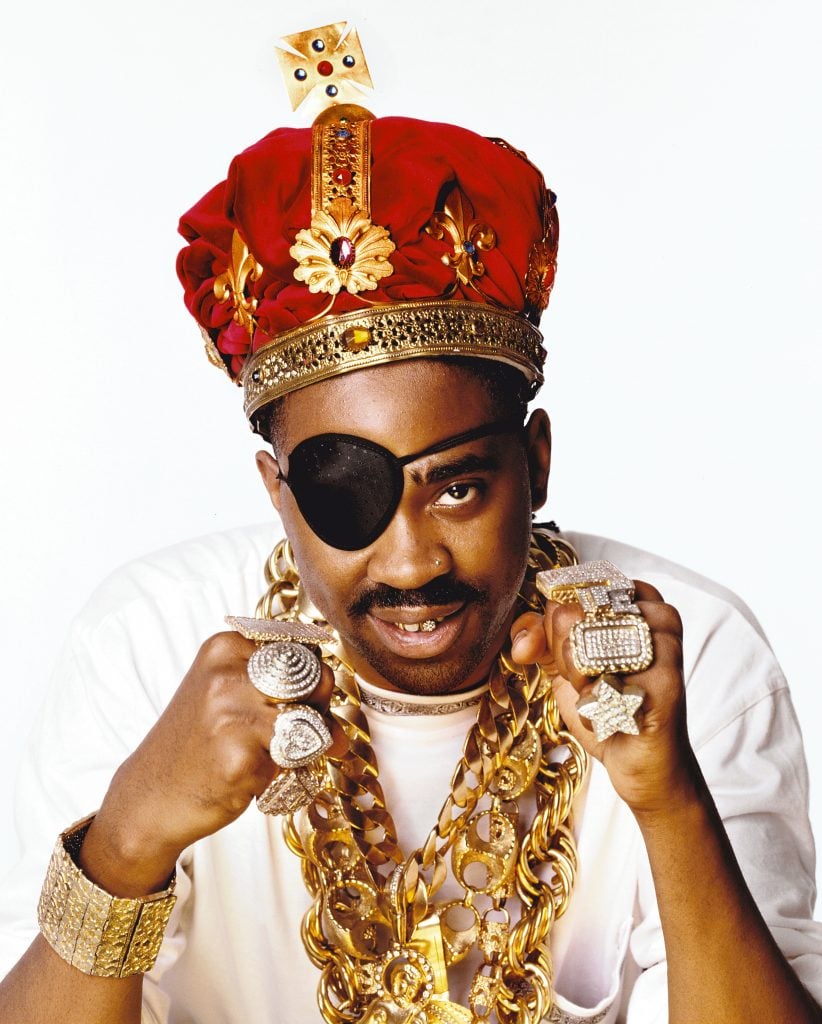
Slick Rick’s iconic eye patch, for instance, is an intrinsic part of his theatrical, narrative style and persona, while also a rejection of conventional ideas of displaying wealth.
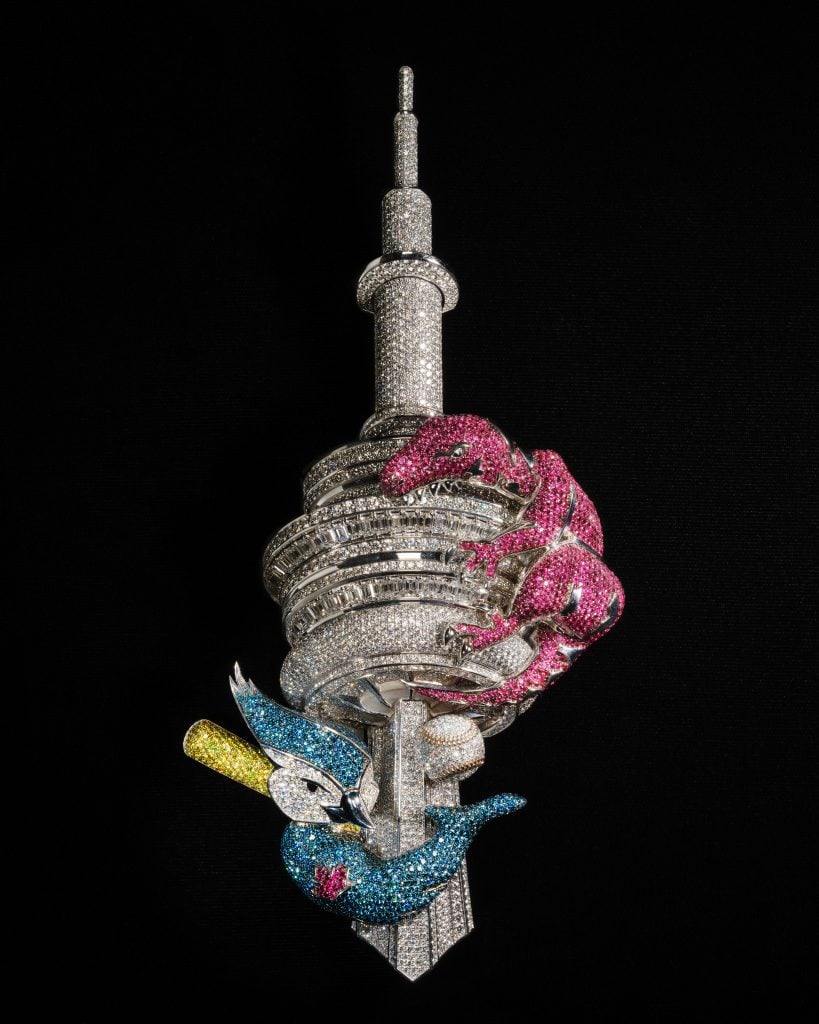
Drake, The Crown Jewel of Toronto Pendant. This pendant—designed by Alex Moss in 2023 to celebrate Drake’s hometown of Toronto—boasts multicolored diamonds and rubies on 18-karat gold and features the mascots for the Toronto Raptors and the Toronto Blue Jays wrapped around Toronto’s CN Tower. Alvaro Keding/© AMNH
Ghostface Killah. Photograph by Atsuko Tanaka
Legendary pieces in the show include Notorious B.I.G.’s giant “Jesus” necklace; Slick Rick’s crown, eye patch, and five-foot-long chain; and Ghostface Killah’s five-pound Eagle arm band-cum-wearable monument. Another favorite example of hip-hop’s newer phase of bold expression is the Nicki Minaj “Barbie” pendant in gold, diamonds, and Barbie-pink enamel.