Editor’s Note
**Editor’s Note:** Fourteen years on, Córdoba Jewelry Park has turned a crisis-born beginning into a thriving export hub, now hosting 242 companies and 1,200 jobs. A testament to resilience and recovery.
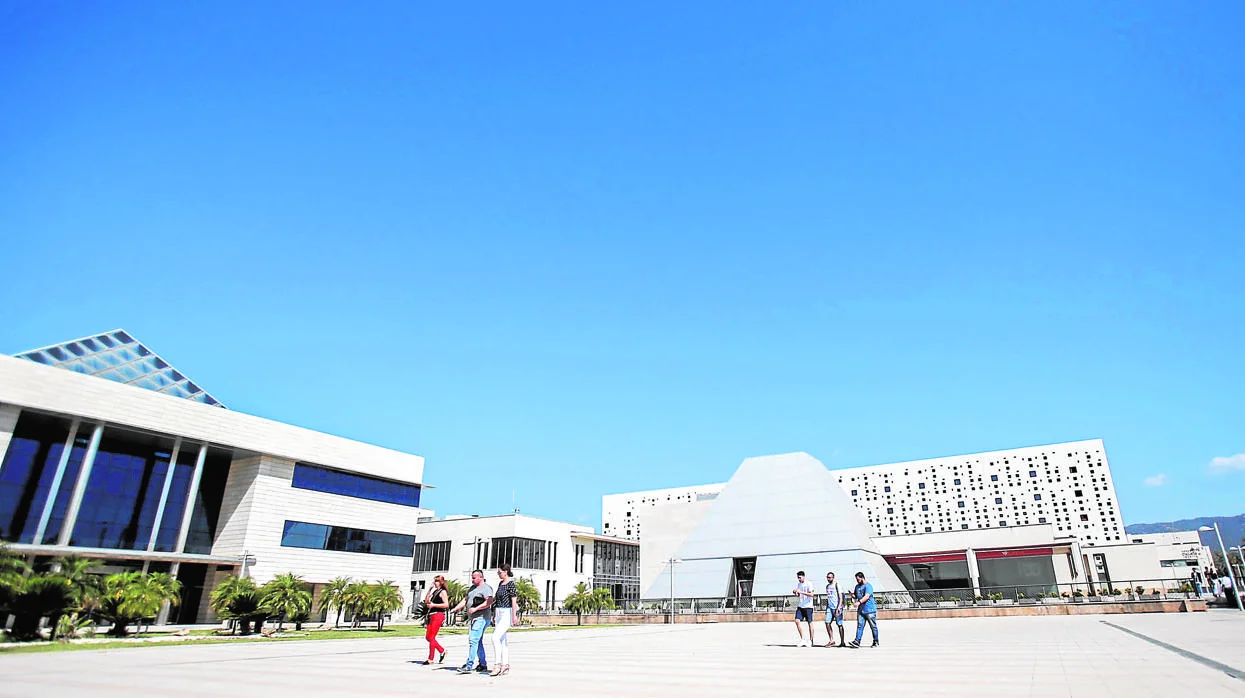
The Córdoba Jewelry Park (Parque Joyero) has just celebrated 14 years of intense activity, marked by a start in which its enormous expectations were dashed by a massive crisis. Conceived during the boom years, it managed to survive the lean period and, with the economic recovery cycle, is now showing its best face. Europe’s largest factory in the sector currently houses 242 companies, providing approximately 1,200 direct jobs, and is primarily driven by exports.
Looking back to its inauguration reveals the scale of its birth: a cost of 90 million euros—the largest private investment in Córdoba on record—140,500 square meters of construction, and a plan to house 4,000 employees. It was designed to be the great factory that would revolutionize Córdoba’s jewelry industry and boost its exports. Fourteen years later, its manager, Arístides Bermejo, takes stock of its nearly 15 years of existence.
He recalls that it was born from the “need to make a qualitative leap” in the workplaces that jewelry firms had until then—many were still located in the city center and lacked advances in facilities and technology. It was conceived during an “upward moment in the economy” when “no one could imagine what would happen.” What happened, he explains, was that the sector had to shift from a widespread belief that “we were going to take over the world” to the “strongest recession in jewelry in centuries.”
The industrial modules of this manufacturing hub are all sold, and 70% are active. As for the commercial spaces, occupancy is around 50%.
Bermejo summarizes his analysis of the Park’s trajectory: “It has been key to modernizing our area of activity and to making many companies realize that we are a basic industrial sector for the capital’s economy and that it is necessary to collaborate among ourselves, sharing production data and even commercial information.” He argues that today this industrial estate generates “synergies at the business level that would be unthinkable otherwise.” He also highlights that it provides this area of activity with facilities that enjoy “measures that make us one of the most secure estates [a key issue for jewelers] in Spain.”
These are not mere philosophical reflections. The Park’s management, chaired by jewelry entrepreneur Rafael Ruiz, recalls the 2015 estimate by Manuel Alejandro Cardenete, Professor of Economics at Loyola University, that this manufacturing complex generated a positive impact of 98.1 million euros on Córdoba’s economy. Furthermore, it was considered that for every euro spent, it increased provincial production by 2.3 euros. These figures, now in a clearer scenario of sector improvement, must have increased. “Today, these facilities are the largest jewelry industrial estate in Europe. As a concentration of firms in one estate, we are the largest factory in the sector in Europe,” they say in its management.
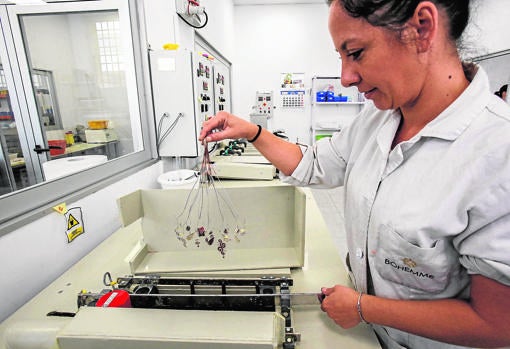
A “factory” made up of 242 companies, compared to the 92 with which the project started. These firms, according to the manufacturing hub, total approximately 1,200 direct employees and more than 2,500 indirect ones, who are suppliers of raw materials. They continue their robot portrait of the jewelry firms installed in the Park, giving a touch of heterogeneity: “Here, we have companies with a single employee to others with seventy.”
The firms are from Córdoba, with a workforce ranging from one to 70 employees, export-oriented, and constantly committed to modernization. Bermejo graphically says that this is a “hit” for the Park. Because “it provides a company/school relationship for everything related to research, development, style trends, or innovation in materials. It is an opportunity to have it within the estate.”
Although at the end of 2008, with the crisis already shaking, the Park changed its philosophy and allowed the entry of non-sector businesses—greater occupancy reduced the difficulties of maintaining this giant—its management explains that jewelry firms still make up the “majority,” accounting for 90% of the total. The managers of this manufacturing enclave draw a profile of the businesses in this sector present in this industrial hub. They are “overwhelmingly from Córdoba,” although there are “some of foreign origin, from India and Italy.”
What is a common indicator, according to the management of this industrial hub, is the commitment of the businesses established there to sell abroad. “Approximately 80% of the production of the Jewelry Park is dedicated to exports—its manager specifies. And many of the firms located here dedicate 100% of their production to exports.”