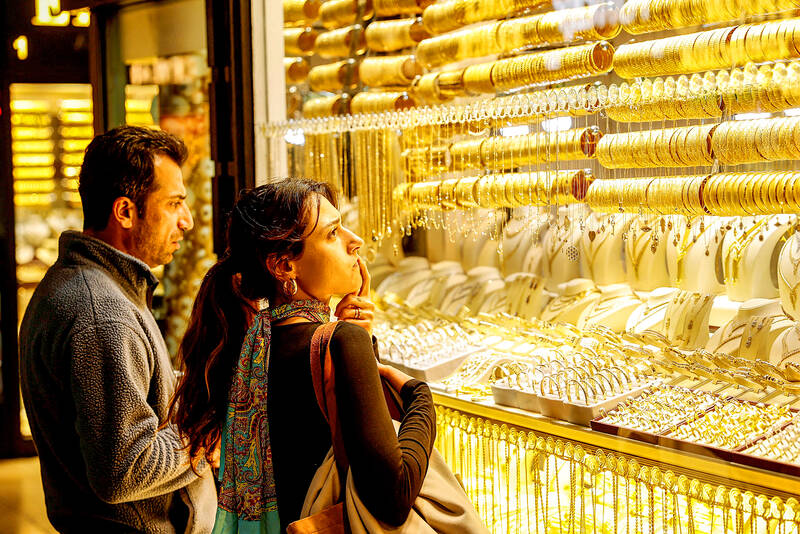
Editor’s Note
**Editor’s Note:** As gold prices soar to historic highs, Italy’s jewelry artisans are adapting by reducing gold content in their designs—a strategic move to manage costs and meet the demands of budget-conscious consumers amid global economic uncertainty.
In Italy’s storied gold-making hubs, jewelers are reworking their designs to trim gold content as they race to blunt the effect of record prices and appeal to shoppers watching their budgets.
Gold prices hit a record high on Thursday, surging near US$5,600 an ounce, more than double a year ago as geopolitical concerns and jitters over trade pushed investors toward the safe-haven asset.
The rally is putting undue pressure on small artisans as they face mounting demands from customers, including international brands, to produce cheaper items, from signature pieces to wedding rings, according to interviews with four independent jewelers in Italy’s main jewelry-making hubs.
That could, for instance, keep the size of a pendant unchanged, but cut its weight in half.
Her company supplies wholesalers and some retail stores, with nine out of 10 of its products shipped to international markets.

Vicenza, known as one of Italy’s three “cities of gold” alongside Arezzo in Tuscany and the Golden Valley of Valenza in Piedmont, hosts twice a year the Vicenzaoro fair, a global event for jewelry and watchmaking.
In Arezzo, several jewelry makers have stepped up the use of machinery that keeps a piece’s shape while cutting its metal content, said Giordana Giordini, owner of independent jewelry brand Giordini.
Italy in 2024 accounted for 11.2 percent of the US$130 billion global jewelry market, according to a recent study by bank Mediobanca.
More than 6,800 companies operate in the gold, silver and jewelry industry in Italy, employing almost 34,000 people, the study said.
Cecile Cabanis, finance chief at luxury behemoth LVMH, on Tuesday said that the price of gold had a negative effect on the performance of its watches and jewelry business, which includes high-end brands such as Bulgari and Tiffany.
Sharp day-to-day swings in the price of gold and silver have a direct effect on retail prices as raw material costs are directly passed on to customers, Giordini said.
Giordini said that fluctuations in the price of gold can affect the costs facing businesses like hers by tens of thousands of euros, as they pay for raw materials upfront.

While high-end customers might view gold jewelry as an investment and remain willing to absorb higher prices, the need to also serve the less affluent consumers is driving the focus on reducing weight, another producer from Valenza said.
However, demand for gold jewelry is expected to endure as consumers continue to look at the metal as a store of value.
A gold necklace that cost 300 euros (US$358) a few months ago might now be priced at 500 euros, she said.
Valenza jeweler Alessia Crivelli, who is also the vice president of trade group Confindustria Federorafi, said that another option for producers is to recover and reuse scrap metals from their own production lines.
However, using recycled or resold gold is close to impossible because it can be difficult to certify its origin.
Wedding rings, where weight constitutes a significant share of the cost, are becoming a focal point in price sensitivity for couples.
