Editor’s Note
**Editor’s Note:** This article explores the symbolic rather than material nature of the Spanish Crown Jewels, drawing a literary parallel to Shakespeare’s *Henry VI, Part 3* to highlight how the crown represents content and sovereignty, not adornment.
In Henry VI, Part 3, William Shakespeare writes, “My crown is in my heart, not on my head; not decked with diamonds and Indian stones… my crown is called content.” This often-quoted line is striking not only because it was penned by one of the greatest literary minds of all time, but because, in just a few words, it captures a philosophy that closely mirrors the nature of the Spanish Crown Jewels: the crown itself is not worn by the monarch, but exists as a symbol of the monarchy, placed beside the throne during royal events such as proclamations, state occasions, and funerals.
Neil Daughters is the Director of Berganza, a UK-based antique and vintage jewelry dealer renowned for sourcing and presenting rare, museum-quality pieces. With a deep expertise in historic jewels, Daughters oversees a collection distinguished by exceptional provenance and authenticity.
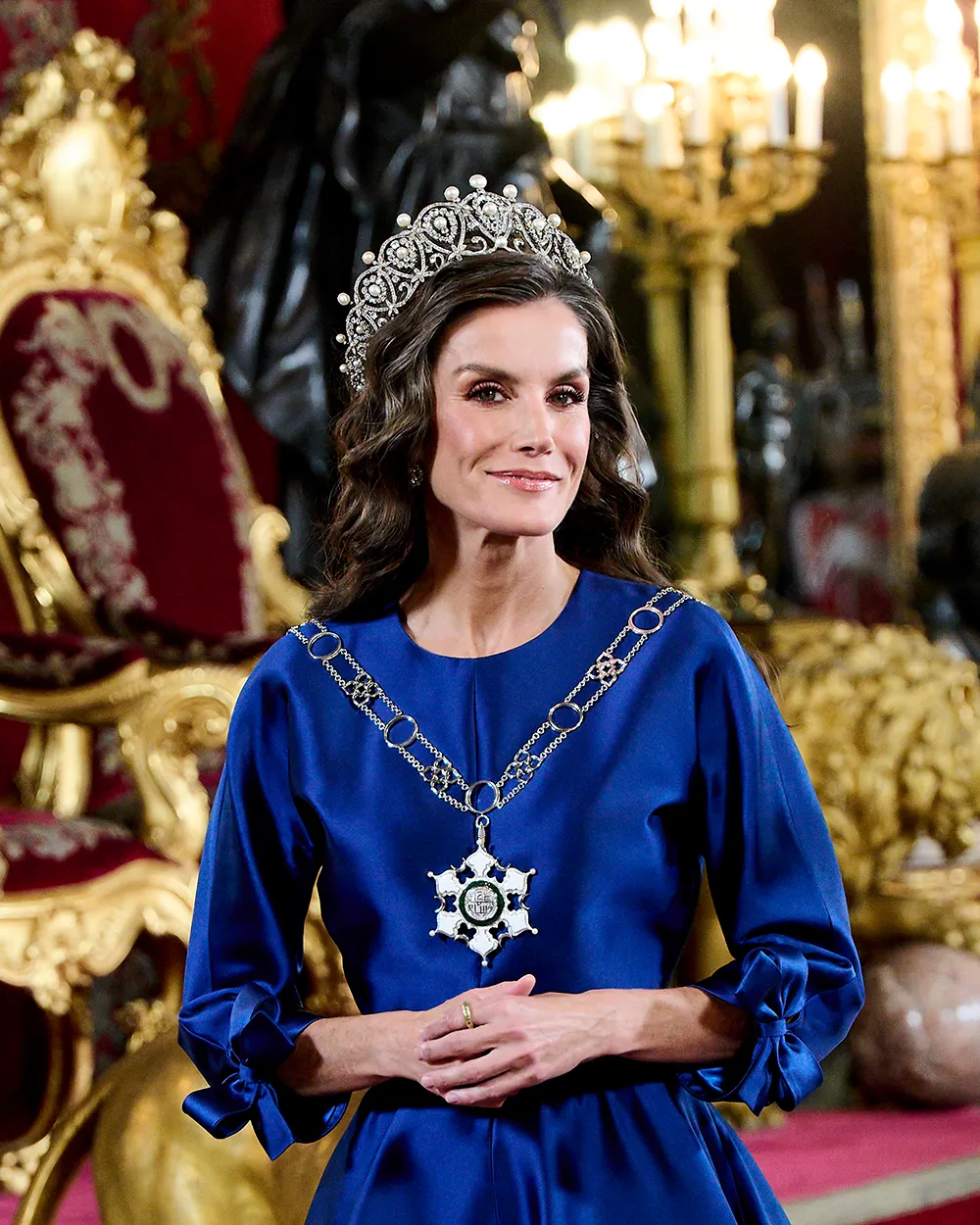
Few royal jewelry legacies are as layered or enduring as this one, a history that continues today under the reign of King Felipe VI and Queen Letizia. These rare natural diamonds and gemstones have long served as symbols of empire, markers of dynastic continuity, and vessels of collective memory.
The Spanish Crown Jewels are the symbolic regalia and historic diamond jewelry of Spain’s monarchy, including crowns, scepters, swords, and heirloom jewels that have been passed down through generations of royal families.
The Spanish Crown Jewels and Royal Collection developed in tandem with Spain’s rise as a global power. The marriage of Ferdinand of Aragon and Isabella of Castile—both still teenagers at the time—unified Spain politically and spiritually, and jewelry played a meaningful role in signaling that union. Symbolic objects such as the Royal Scepter and Sword represented both sovereign authority and Catholic power, while the fine jewelry that followed reinforced the image of a divinely ordained, formidable monarchy rather than a frivolous one.
Neil Daughters explains, “Spanish jewellery has always possessed a distinct ‘soul’ that separates it from the rest of Europe. During the Golden Age, we see a strong Baroque influence—deeply religious designs, often incorporating the cross, necklaces, and parures—many of which remain among the most important pieces in Spain’s royal jewelry history. Take that, Napoleon.”
What distinguishes these jewels is their remarkable consistency: exceptional, high-quality diamonds, a restrained use of colored gemstones, and a strong emphasis on symmetry, clarity, and proportion. Crafted predominantly in platinum and other white metals—a hallmark of early 20th-century jewelry design—these pieces reflect a modern, refined elegance rather than ostentation. Many were designed with European royal jewelry in mind.
Now we can get to the stunning natural diamonds of the Spanish Crown Jewels and royal collection, beginning with one of the most important pieces in the Spanish royal jewelry canon, the Diamond Chaton Necklace (also known as the Chaton Necklace).

Daughters says, “Queen Victoria Eugenie, known as Queen Ena, was a transformative figure for Spanish style. Born a granddaughter of Queen Victoria at Balmoral, she brought the more ‘airy’ and ‘modern’ aesthetics of London and Paris to Madrid.” He noted that the best illustration of her style is the Diamond Chaton Necklace.
– Elizabeth Taylor: My Love Affair with Jewelry
– The Greek Royal Jewelry Collection Traces the History of Europe In Diamonds
– How Princess Diana Revolutionized Royal Jewelry Rules
– How Catherine, the Princess of Wales, Carries a Royal Jewelry Legacy