Editor’s Note
**Editor’s Note:** Italy’s jewelry districts are in crisis, with exports down 18% last year and production plunging 27% in early 2026. As closures mount, Confartigianato urges banks to extend loans to stem the collapse.
The export of Italian jewelry districts fell 18% last year, and production dropped 27% at the start of 2026. More and more companies are heading toward closure. Confartigianato is calling for help: “Interventions with banks to obtain loan extensions.”
Goldsmithing is one of the symbols of Made in Italy. A luxury sector that until recently had managed to survive both economic crises and foreign competition unscathed. But U.S. tariffs first and now the war in Iran have completely changed the scenario, bringing dark clouds to the horizon. Last Monday, the first meeting dedicated to this supply chain was held at Mimit, with a promise of a new meeting in May.
The situation is dramatic, denounces Confartigianato Orafi, speaking of an 18% drop in exports in one year. A contraction that takes us back to the times of Covid and even before the 2008 financial crisis. The first two months of 2026 are characterized by a 27.5% drop in production (almost double compared to 2025). This negative contingency is caused by at least two factors: prices and wars. The cost of gold has skyrocketed: from a safe-haven asset, it has become a speculative tool.
Troubles began with Trump’s announcements of tariffs on all kinds of European products, including jewelry. Historically, they were at 6%—a “sustainable” and amortized level—now they are at 15%. “It has been a torment, not so much for the increases but for the constant back-and-forth. A market like the American one has completely different dynamics compared to ours. The main distribution channels are catalogs and telesales, both of which need long lead times and certainty to organize sales,” comments Parrini. The result? Exports to the USA, traditionally the first trading partner, have decreased from 20% to 15% of the total. It must be said that goldsmithing has its main outlet in the foreign market. Exports account for 90% of turnover, with the domestic market decimated by the high cost of living and fast fashion, which also impacts accessories. The Middle East is the first importer of Made in Italy jewelry, with about 19%. Both for the charm they exert—”giving them and buying them” is a demonstration of a certain social status—and because Dubai is the main hub towards otherwise inaccessible markets like Iran. “For all high-end products, and for jewelry in particular, Dubai is a strategic node for distribution, and the ongoing war is a significant danger,” Parrini explains further.
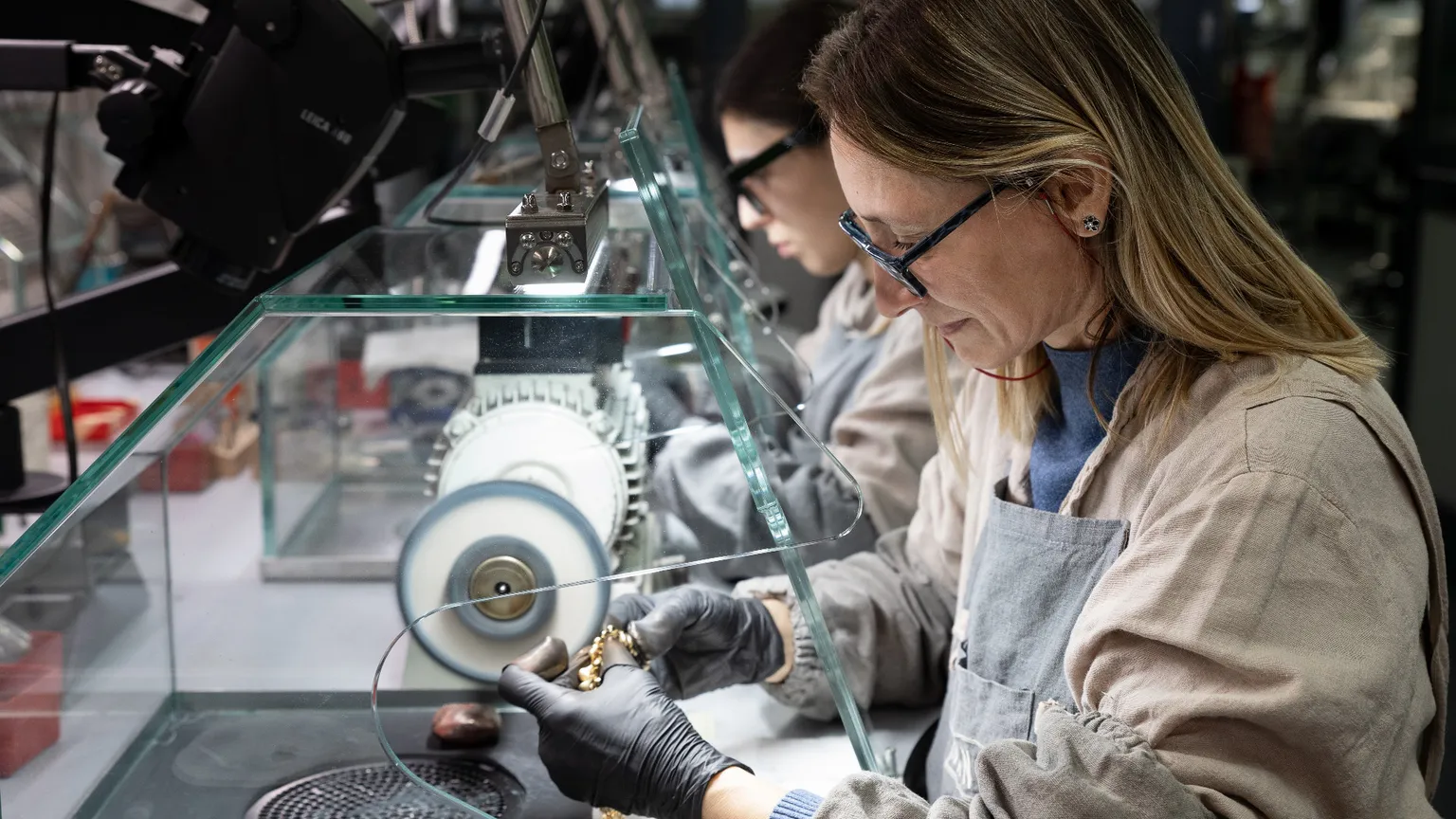
In Italy, there are four production districts: Arezzo, which is the main one but also the most in difficulty, followed by Vicenza, Alessandria, and Milan, where sales of branded products like Bulgari and Gucci are concentrated. There are about 8,000 artisan businesses, often very small (the average number of employees is 3-4 people). An activity that is still artisanal with slim profit margins: the raw material accounts for about 90% of the selling price.
“Since the beginning of the year, about 80 companies have already closed in Arezzo, and the situation risks becoming explosive because many social safety nets are about to expire,” continues the president of Confartigianato Orafi. Hence the request to the ministry for an extension of the extraordinary redundancy fund until the end of the year, but above all for an intervention to mitigate the costs that artisans must bear for the loan for use. In practice, they buy gold from banks with a sort of loan that requires the payment of quarterly interest. With the doubling of the value of gold, interest has also increased, making it impossible to work. “We ask for government intervention with ABI and the Bank of Italy to obtain extensions and state guarantees that allow operational continuity,” summarizes Parrini. Another option could be to lighten the concentration of gold in the artifacts: in Italy, it is 750 thousandths per gram, but it can also be lower and allow for more affordable jewelry. A stratagem to make a virtue of necessity.