Editor’s Note
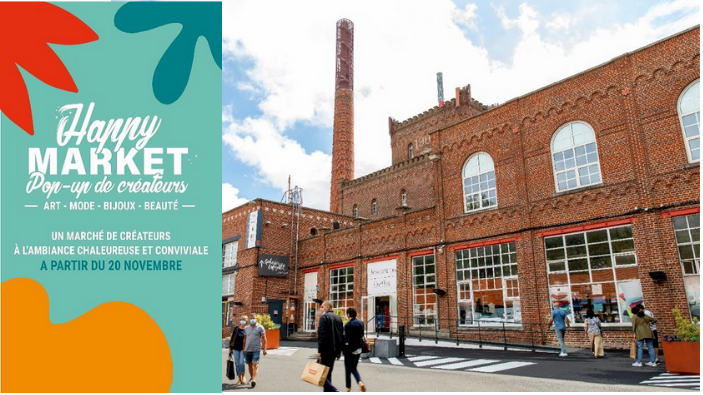
Happy Market launches a weekend series from Nov 20 to Dec 19 at L’Usine Roubaix, spotlighting 11 local, eco-conscious creators in fashion, jewelry, beauty, and accessories. Each vendor is chosen for their commitment to sustainable practices, offering a unique opportunity to support responsible craftsmanship.
Happy Market, an event dedicated to local and committed young creators, will be held every weekend from November 20 to December 19 at L’Usine Roubaix. The first edition will feature 11 regional creators in a 220 m² space, where they can showcase and sell their creations: fashion, jewelry, beauty, accessories… Each creator was selected for their commitment to sustainable economy (fabric and material recovery, use of organic and natural products…). A great opportunity to treat yourself or prepare original end-of-year gifts!
JACKET.te is an upcycling brand born in January 2020 in Hauts-de-France. Fashion, accessories, home decor—everything is sourced with love, eco-responsibly cleaned, and customized. Grandmothers’ canvases, their lace, and silk squares form the basis of the decorations. Anne-Sophie recreates vintage jackets, workwear, military styles… and personalizes on demand. Today, Jackette is present on Instagram, at 59/62 salons, and in boutiques across France. At L’Usine Roubaix, the brand will offer Christmas home decor and unique, handmade gifts.
Le Comptoir de Capucine creates authentic and original 100% handmade creations in Lille. Capucine, the creator, imagines and makes accessories, bags, pouches, and zero-waste items using beautiful floral, colorful, and timeless fabrics such as Toile de Jouy or the famous Liberty of London fabric.
Les petits Bijoux de famille is a brand of colorful, delicate, and eye-catching jewelry created by Priscille in her workshop in Villeneuve d’Ascq in the North. The jewelry is primarily imagined using pom-poms or colorful leather scraps from high-end leather goods, preserving the quality of earrings, bracelets, or even children’s barrettes… These comforting and warm materials are mainly paired with stainless steel or fine gold-plated findings, or even gold-plated.
Monsieur Lucette is a French brand whose mission is to give meaning and utility to orphan socks and end their waste. The socks are made in France from recycled materials. They are Oeko-Tex certified and made from GOTS-certified organic cotton. They are designed and crafted to complement and harmonize with each other through their complementary patterns.
Studio NAÏF is a creative studio with a simple goal: to color daily life and awaken curiosity! Through joyful objects and clothing or creative workshops, Studio Naïf presents a colorful and graphic universe, not without a good dose of self-mockery! The studio’s preferred technique is artisanal screen printing on textiles, allowing endless customization of second-hand clothing or fabrics, in a more responsible consumption approach. Each creation is hand-printed in the North, in La Madeleine.
CASALO makes handmade accessories: scrunchies, toiletry bags, bob hats, masks, barrettes, and makeup remover wipes. Composed of two sisters and their mother, the brand is family-run, 100% from Lille, and uses as many recycled fabrics or those from local merchants as possible.
Lunettes de ZAC, already present at L’Usine Roubaix, offers refurbished glasses from major brands and new, upcycled frames made from shells, fishing nets, wood plastic…
Les Douceurs d’Anita returns to basics with simple, natural, and effective products. A selection of soaps, cleansers, creams, lotions, masks… to delight the skin and care for it properly!
Retro Nana is a workshop offering a collection of recycled vintage and trendy jewelry.
Jessica SANYASI created the brand JESWINDRA Créations in 2012. She blends Art Deco, Ethnic, or Vintage styles, fitting into a “Retro-Ethnic” style. She uses various weaving and embroidery techniques to design and create unique or small-series jewelry. Her creations are made with precious and high-quality materials such as Swarovski crystal, Japanese seed beads, stainless steel, or rhodium-plated steel. She produces her pieces in her workshop in Marquette Lez Lille and exhibits her work at artisan or creator markets.
Blanche et Lucien is above all a story of creation, environment, and passion for beautiful materials. Emilie, a young graduate in fashion trades, makes leather and textile fashion accessories with a desire to combine the two materials to create unique, customizable, and innovative objects.
The Happy Market at L’Usine Roubaix is open from 10 a.m. to 7 p.m. starting Saturday, November 20, on Saturday, November 27 and Sunday, November 28, and every Saturday and Sunday until December 19. Building 1, 1st floor.
More information: usineroubaix.fr