Editor’s Note
**Editor’s Note:** A new study on Valencian “obras de hilo” jewelry suggests that pieces traditionally attributed to Morisco artisans may have been crafted by Christian goldsmiths, challenging long-held assumptions about the cultural origins of this luxurious style.
A study of Valencian jewelry made in the Morisco style reveals that other pieces from Las Alpujarras may also have been crafted by Christian goldsmiths.
The analysis of twenty Valencian “obras de hilo” — a type of jewelry decoration using wire superimposed on precious metals — confirms that Christian silversmiths at the beginning of the 16th century decorated pieces “a la morisca” (in the Morisco style), a practice considered luxurious. Ana Labarta, Professor of Arabic and Islamic Studies at the University of Valencia, has analyzed the impressions of jewelry made in twenty examinations to become a master of threadwork. She points out the great typological and decorative similarity between Valencian jewelry and other Morisco pieces found in treasure troves from the Alpujarras region, suggesting that the Andalusian pieces may also have been the work of Christian goldsmiths.
The examinations to become a master of threadwork from the Silversmiths’ Guild of Valencia that were analyzed feature twenty Christian candidates, as evidenced by their names and experience. Half of them had their workshops near what is now the Plaza del Tossal. Around the year 1500, this area was the beginning, within the city walls, of the city’s Moorish quarter. The examinations were extracted from the “Libros de dibujos” (Books of Drawings, 1508-1882), held in the Historical Municipal Archive of Valencia.
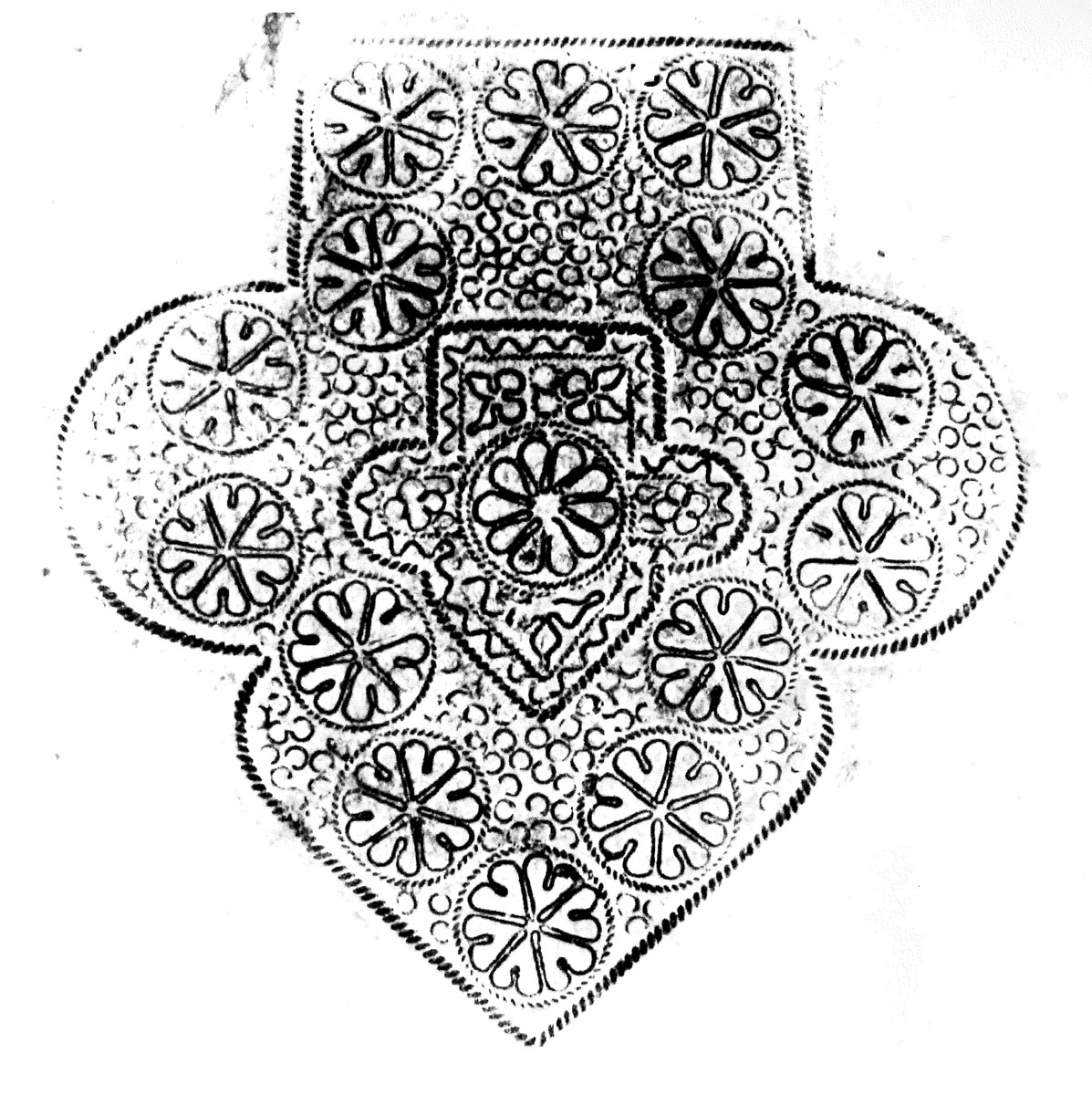
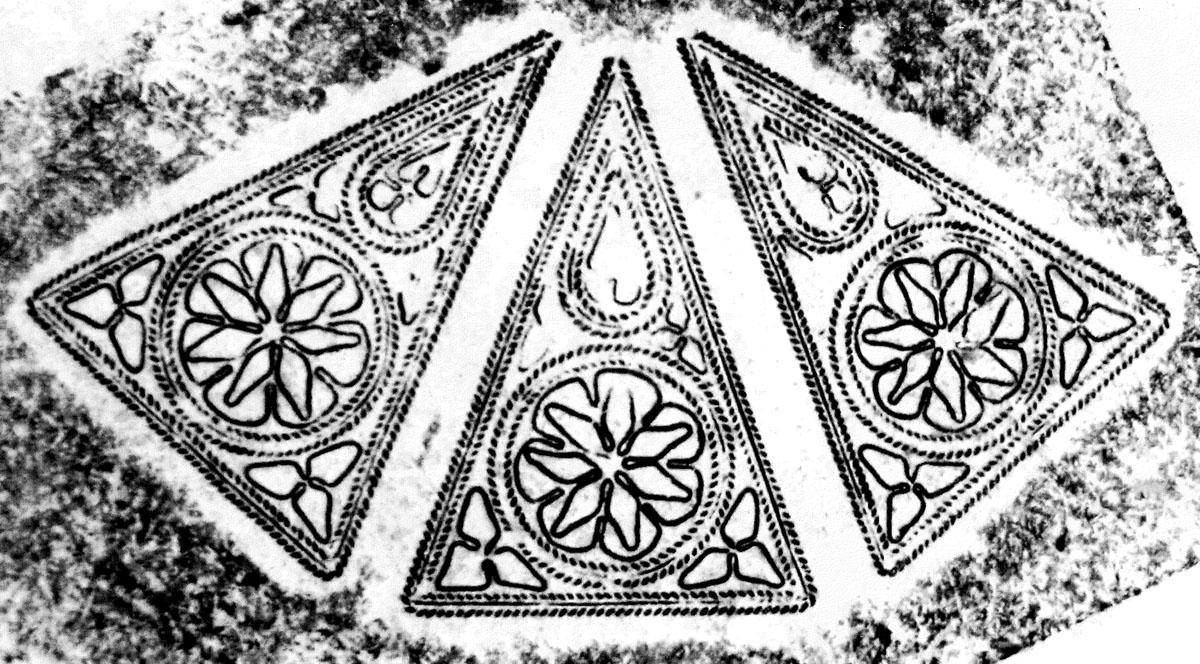
The works analyzed by Ana Labarta span from 1508 to 1538, although most are from the period 1508-1510. The specialist defines what pieces the drawings represent and compares these pieces, made by Christians, with those preserved in museums. The threadwork pieces were considered minor works in silversmithing, although they were aimed at Muslim elites and, for a period, also Christian ones. In the analyzed examinations, the pieces were not drawn but stamped after being blackened, so their life-size impressions are preserved, along with the date of creation and the names of their authors.
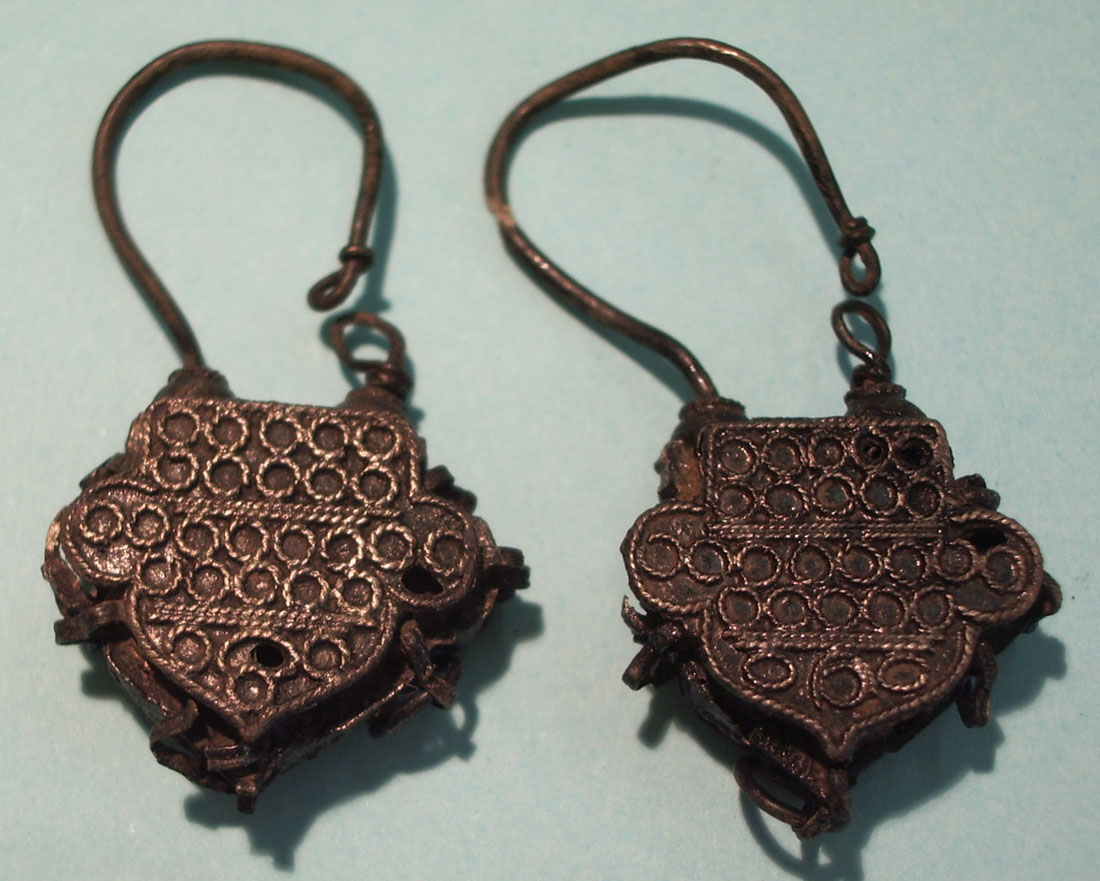
There are four “alcorts,” identified as such by the silversmiths themselves, with circular, square, and triangular motifs or three-quarter circles. The “alcorts” — a loanword from Arabic “al-qurt” — are earrings with a pentagonal profile. Similar examples exist in various museums from Hispanic Jewish and Muslim necropolises, such as the Archaeological Museum of Sagunto or those discovered in the necropolis of Sant Joanet in L’Ènova (Valencia). Joan Nadal, “argenter e obrer de fil de coses morisques” (silversmith and threadworker of Morisco things), whose examination is the oldest preserved in Valencia, made an “alcort.”
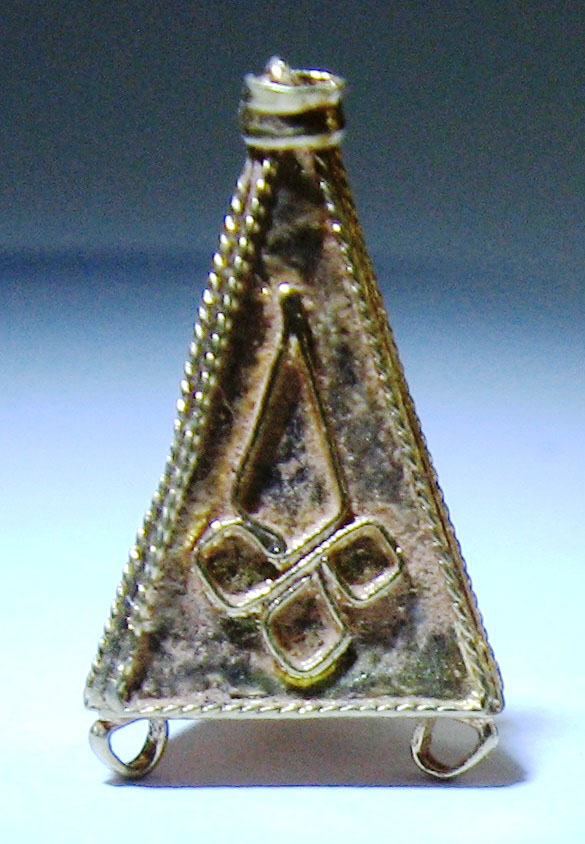
There are parallels between the development of a stamped triangular pyramid, a similar one in the Museum of the Alhambra, and another found in La Contraviesa, notes Ana Labarta. Regarding pendants, plates, and “domina de fil” — more or less circular pieces — Valencian goldsmiths made various such jewels.
In the specific case of square plates, Ana Labarta highlights the epigraphic decoration adorning the oblique band that crosses the center of six of the ten plates stamped by Valencian goldsmiths. On them, it reads “lā ilāha illā-llāh” — “There is no god but God” — a monotheistic profession of faith in Arabic, but not necessarily Muslim, as it does not allude to the prophetic mission of Muhammad. The type of script imitates that seen in the headings of surahs in Qurans from the Mudéjar period, but according to the specialist, it is evident that the artisans who traced these jewels did not know Arabic.
According to Ana Labarta’s research, none of the examined threadwork masters was from the Mudéjar community of Valencia, an aspect that their onomastics would have revealed, as this was in the period before conversion. They were also not Jews — expelled in 1492 — nor Judeo-converts, whose documented surnames from the 14th century do not coincide with those of the Valencian masters examined in the 16th. Furthermore, as a result of publications by Professor Francisco Cots, additional information about the silversmiths is available, including where they lived or worked, their previous years of apprenticeship, or the annual payment of the tax to the confraternity, among other details.
Silversmiths’ Guild
Search keywords: jewelry tests