Editor’s Note
**Editor’s Note:** A beginner metal detectorist in Germany has unearthed a stunning hoard of Byzantine gold jewelry and silver coins dating back to the Viking Age, offering a rare glimpse into the far-reaching trade networks of a 13th-century settlement.
Archaeology & History
A German man just learning how to use a metal detector uncovered a hoard of buried Byzantine jewelry and silver coins. The discovery was made in what once was a Viking Age trade settlement.
One of the gold earrings with semi-precious gems in the Byzantine style. Photo: ALSH.
Artnet News
Mar 15, 2023
An 800-year-old cache of gold jewelry and silver coins was discovered in northern Germany. And where there’s newly unearthed gold, there’s quite likely an amateur metal detectorist who located it.
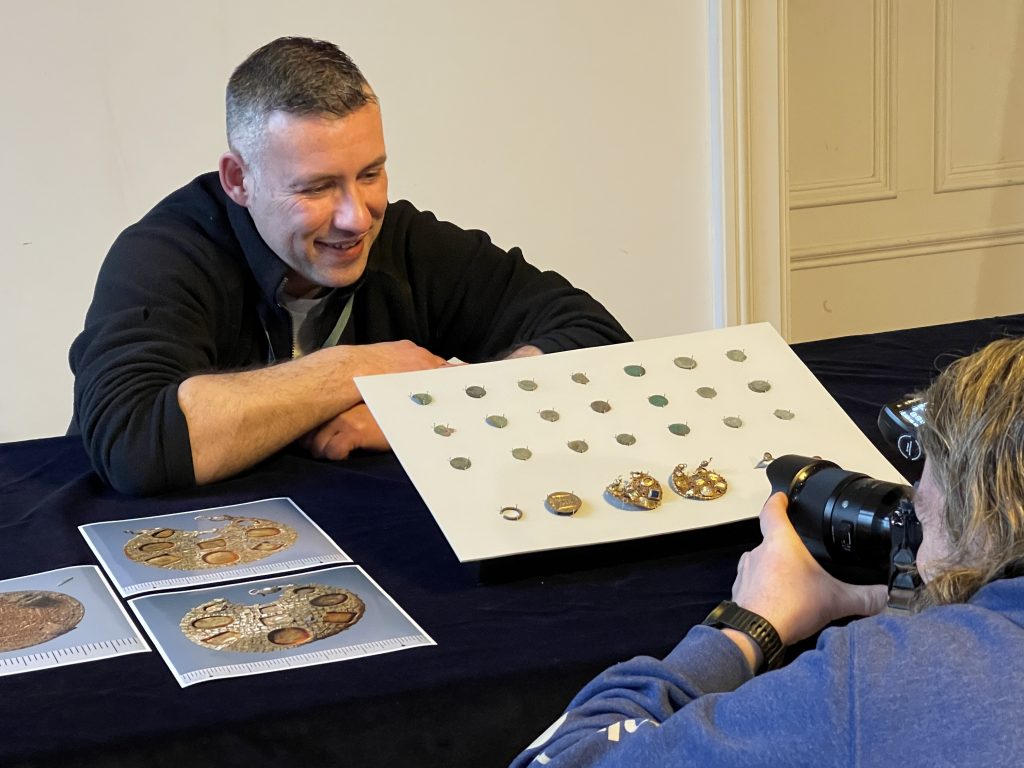
Nicki Andreas Steinmann was a trainee learning how to use a metal detector with an instructor when, while walking a tract of land close to Hedeby and Danewerk World Heritage Site in the state of Schleswig-Holstein, the pair stumbled upon gold artifacts and coins. Once unearthed, the hoard, as indicated by the coins found stacked upon one another, looked to have been buried all at once.
Nicki Andreas Steinmann, the trainee metal detectorist, with his discovery. Photo: ALSH.
The detectorists reported their find in late February to the State Archaeological Department of Schleswig-Holstein (ALSH), which conducted the analysis of the artifacts.
One of the gold earrings with semi-precious gems in the Byzantine style. Photo: ALSH.
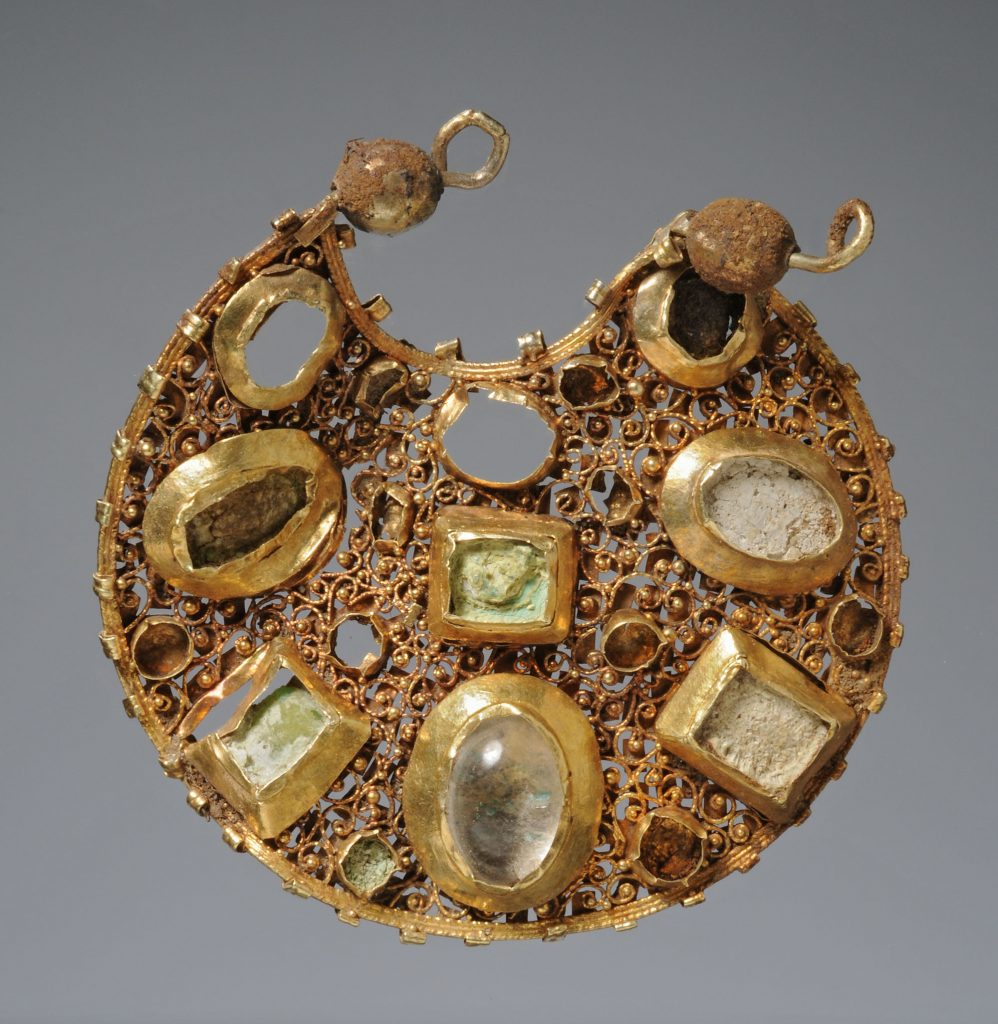
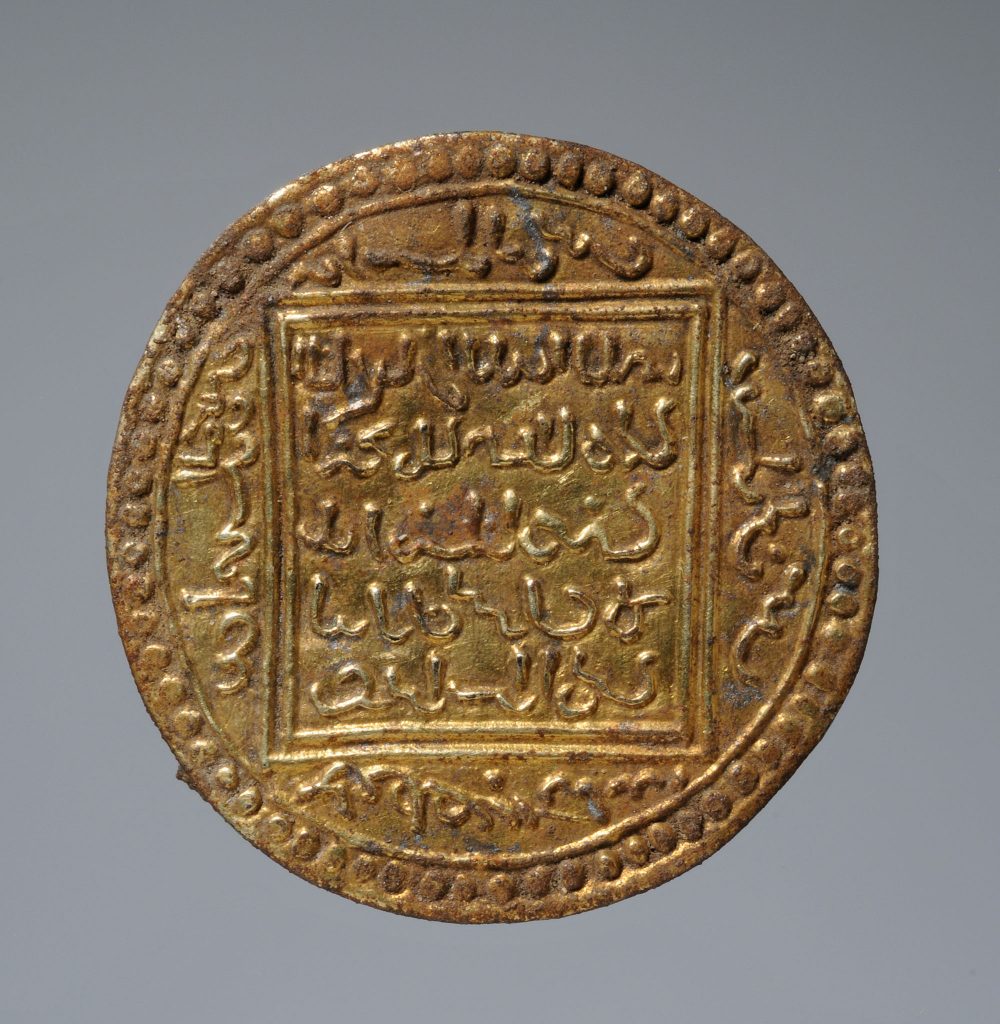
The team has dated the two earrings, surprisingly well-preserved, to around 1100 due to their apparent Byzantine style and craftsmanship. One of the brooches is also an imitation of an Islamic gold dinar, dating it to the Almohad caliphate between the 12th and 13th centuries.
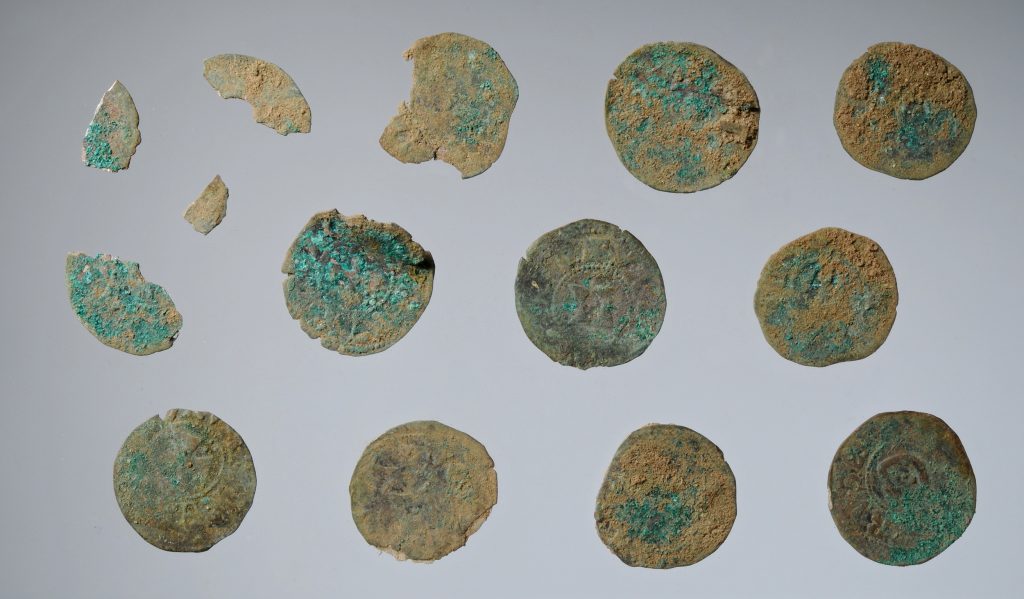
The 30 coins are linked to the reign of Valdemar II, the Danish king who ruled from 1170 to 1241. Fragments of fabric found with the coins suggest that they were once buried in a bag.
The gold brooch designed as an imitation Almohad gold dinar. Photo: ALSH.
That the stash should contain Mediterranean jewelry and Danish currency makes sense for the area of Hedeby, once a Viking Age trading hub.
Some of the Danish coins, some fragmented. Photo: ALSH.
In fact, the archaeologists speculate that the hoard, whether it contains personal possessions or stolen property, could have been buried hastily when Hebedy was sacked and destroyed in 1066.
Its resurfacing, though, is another matter.