Editor’s Note
This article covers the presentation of the ‘Almería Fenicia’ cultural project at the Archaeological Museum of Almería, highlighting institutional support and public interest.
The Grupo Regente has presented this afternoon the cultural project ‘Almería Fenicia’ at the Archaeological Museum of Almería, supported by representatives of the Junta de Andalucía, the Provincial Council, and the municipalities of Almería and Cuevas del Almanzora, as well as the attendance of more than a hundred people interested in heritage, including university professors, the School of Arts, and the Friends of the Alcazaba Association.
The president of Grupo Regente, Juan Salvador López Segura, stated at the event that
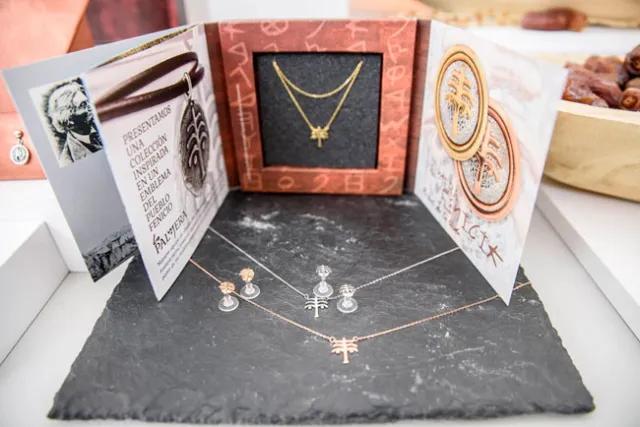
Thus, Grupo Regente, faithful to its commitment to history, has highlighted the Phoenician Palm Tree in this cultural and tourism project, and has reproduced it in a series of original and exclusive jewelry pieces (necklaces, bracelets, earrings, etc.), specially conceived from ancestral models of our Phoenician ancestors. These pieces, as well as the original coins, could be seen in a brief exhibition held this afternoon, as a continuation of the presentation, at the Museum of Almería.
Phoenicia, or Land of Palms, was located west of Syria. The alphabet, pottery, cultivation of vines and oil, and the handling of glass with the glassblowing technique are examples of their decisive contribution to the development and progress of our province. Likewise, the Phoenicians shine for their knowledge in astronomy, being the discoverers of what we know as the North Star, also called the Phoenician Star.
The Phoenicians settled in Almería from the 7th century BC, mainly attracted by its wealth and abundance of minerals, metals such as silver, iron, and lead, and by the great natural, fishing, and agricultural resources.
Luis Siret, a mining engineer born in Flanders, arrived in the province of Almería in 1881. Considered the father of Almerian archaeology, he carried out the first excavations in the necropolis of Villaricos, ancient Baria. Located in the northeastern area of the province of Almería, Villaricos has been considered one of the most representative vestiges of Phoenician culture.