Editor’s Note
In this issue, we spotlight Chanel’s ‘Reach for the Stars’ high jewellery collection—a celestial tribute to Gabrielle Chanel’s iconic motifs of comets, wings, and lions. Presented at the Place Vendôme maison, this marks the final collection by the late Patrice Leguéreau, whose visionary work since 2009 elevated the house’s narrative craft. Infused with the golden-hour drama of Hollywood glamour, the collection captures a luminous farewell to a master storyteller.
Chanel unveils ‘Reach for the Stars’ high jewellery collection, focused on three elements beloved of Gabrielle Chanel: comets, wings and lions. Invited the VIP clients and press to its Place Vendôme maison, where the ‘Reach for the Stars’ high jewellery collection was presented.
‘Reach for the Stars’ is the last collection by the late Patrice Leguéreau, whose genius marked the house’s high jewellery creations since 2009. Rich in narrative, ‘Reach for the Stars’ doesn’t merely use these three motifs woven through Gabrielle Chanel’s life; it adds the cinematographic drama of the golden hour, recalling the glamour and radiant California sunsets of the designer’s Hollywood era. Patrice Leguéreau said of ‘Reach for the Stars’:
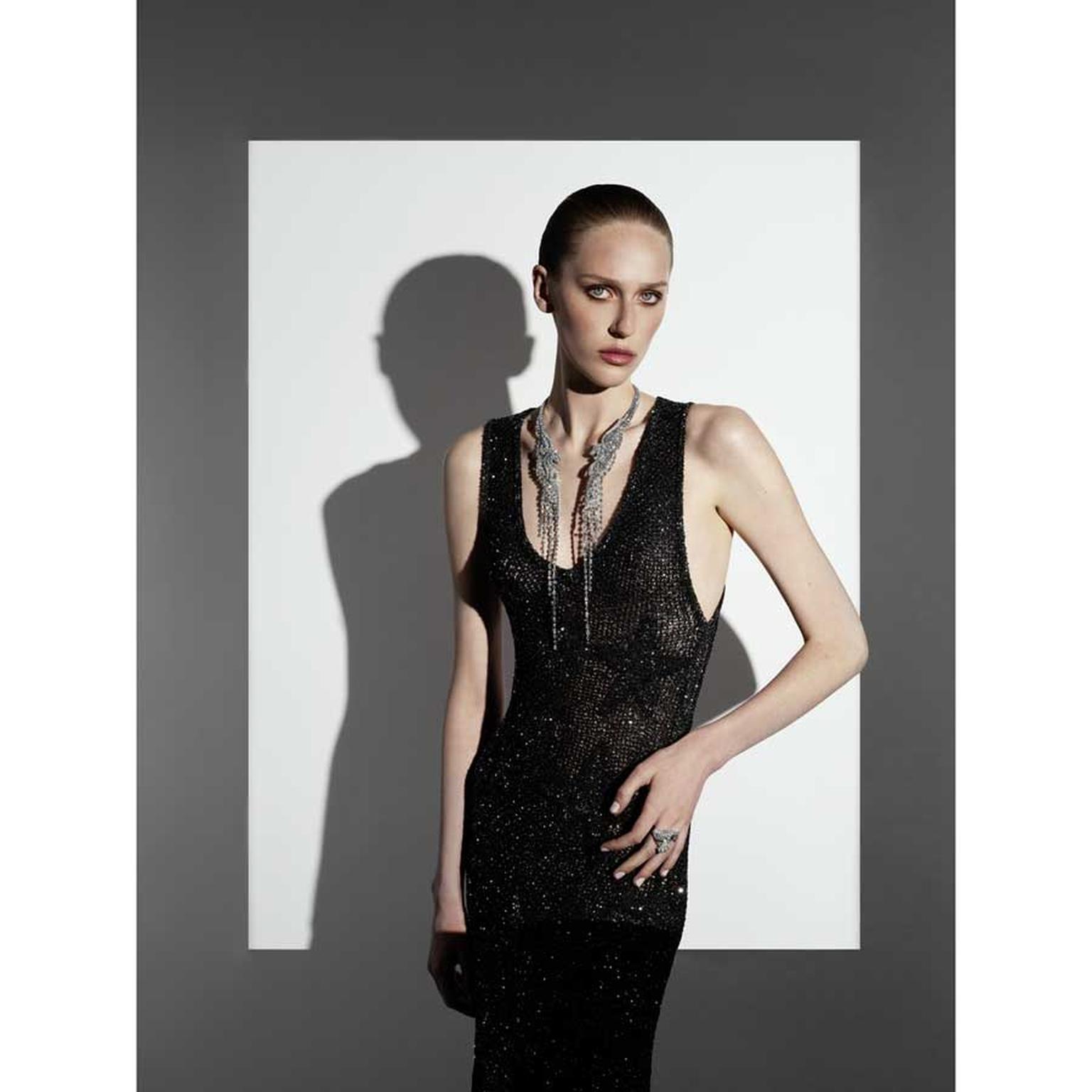
The first chapter is inspired by the comet’s freedom to fly, and is the closest reference to Gabrielle Chanel’s 1932 ‘Bijoux de Diamant,’ her only high jewellery collection, which featured stars draped across the shoulder, forehead, and around the wrist. Soaring lighter and brighter, chains of gold and onyx free the comet, which softly lands on the body. The Dazzling Star necklace brings a contemporary twist to Gabrielle Chanel’s belief that the star symbol is perennially modern. Rings become jewels spanning the entire hand, chokers fly around the neck in a blaze of celestial light, and a meteor shower of diamonds cascades down the body. Black onyx rod-beads recreate the drama of the neckline of a black couture gown in the ‘Dreams Come True’ necklace, while the cuff features onyx mimicking a quilted fabric cinched by a dazzling diamond-set star.

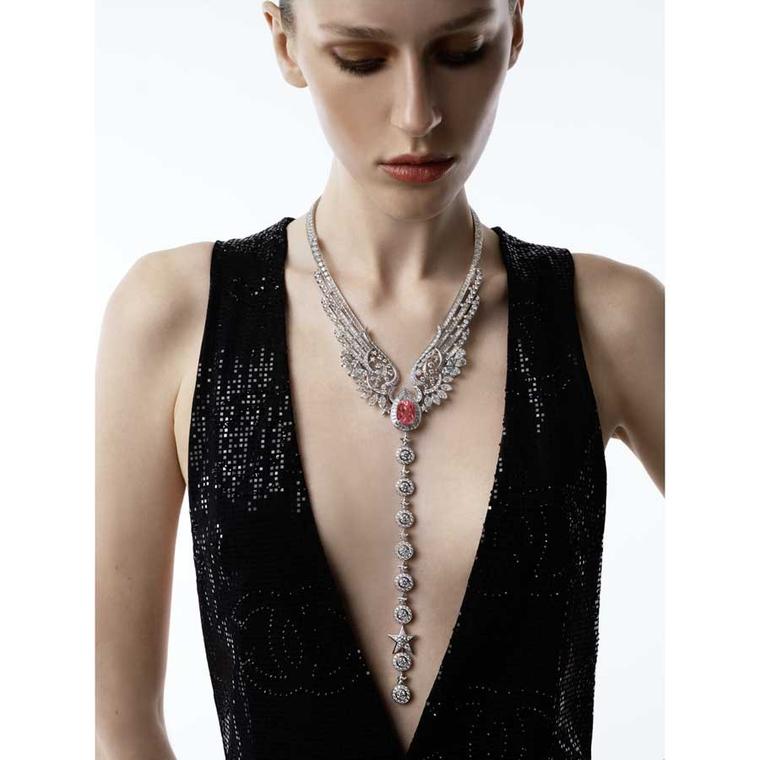
One of the highlights of Chanel’s Reach for the Stars high jewellery collection for 2025 is the Wings of Chanel necklace with a 19.55-carat Padparadscha sapphire. The pendant and chain can be worn as a bracelet.
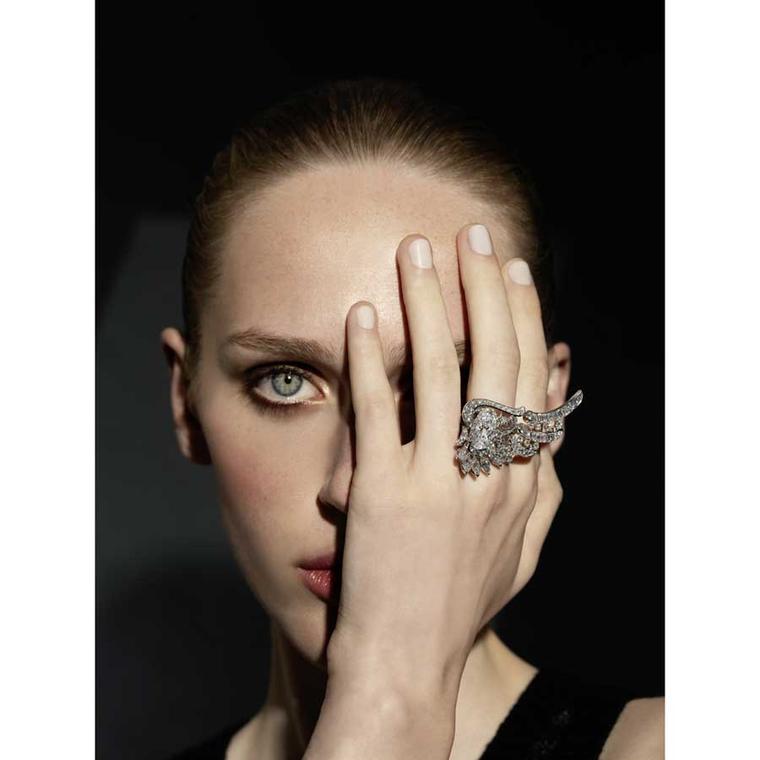
Mademoiselle Chanel’s beloved lion comes to life in the Embrace Your Destiny ring featuring a 10.51-carat pear-cut diamond, from the Chanel Reach for the Stars high jewellery 2025.
Additional pieces from the collection include: The Five Stars ring referencing Gabrielle Chanel’s fascination with stars; the Wings of Chanel ear cuff as a contemporary twist on her love of feathers; the Sky is the Limit necklace with an abstract lion silhouette in diamonds; the Aim for the Stars ring spelling out ‘star’ in yellow and pink sapphires, garnets, diamonds and Akoya pearls; the Wild at Heart necklace in pink gold with a 5.05-carat pear-cut diamond; the Touch the Sky Necklace with a 3.11-carat diamond surrounded by wings and cascades of diamonds; and a pendant featuring a stylised lion with its mane surrounded by an aura of stars.
The Embrace Your Destiny necklace features the profiles of two magnificent lions with a pair of pear-shaped diamonds.