Editor’s Note
This article explores the rise of lab-grown gemstones, a technological innovation offering an ethical alternative to traditionally mined stones. While these synthetic jewels present a compelling solution to issues of labor exploitation, their growing market presence also raises new questions about value and tradition in the fine jewelry industry.

Fine jewelry is often seen as a symbol of wealth and status, but diamond mining is frequently associated with slavery and labor exploitation. Now, catalyzed by technology, laboratories are capable of producing high-quality gemstone rough. Through carbon capture technology, carbon dioxide is transformed into green raw materials for synthetic gemstones, completing in 10 weeks what takes billions of years for natural minerals to form. However, as the lab-grown jewelry market expands, some brands emphasizing “environmental friendliness” do not clearly disclose whether their manufacturing processes comply with sustainability regulations or third-party certifications.
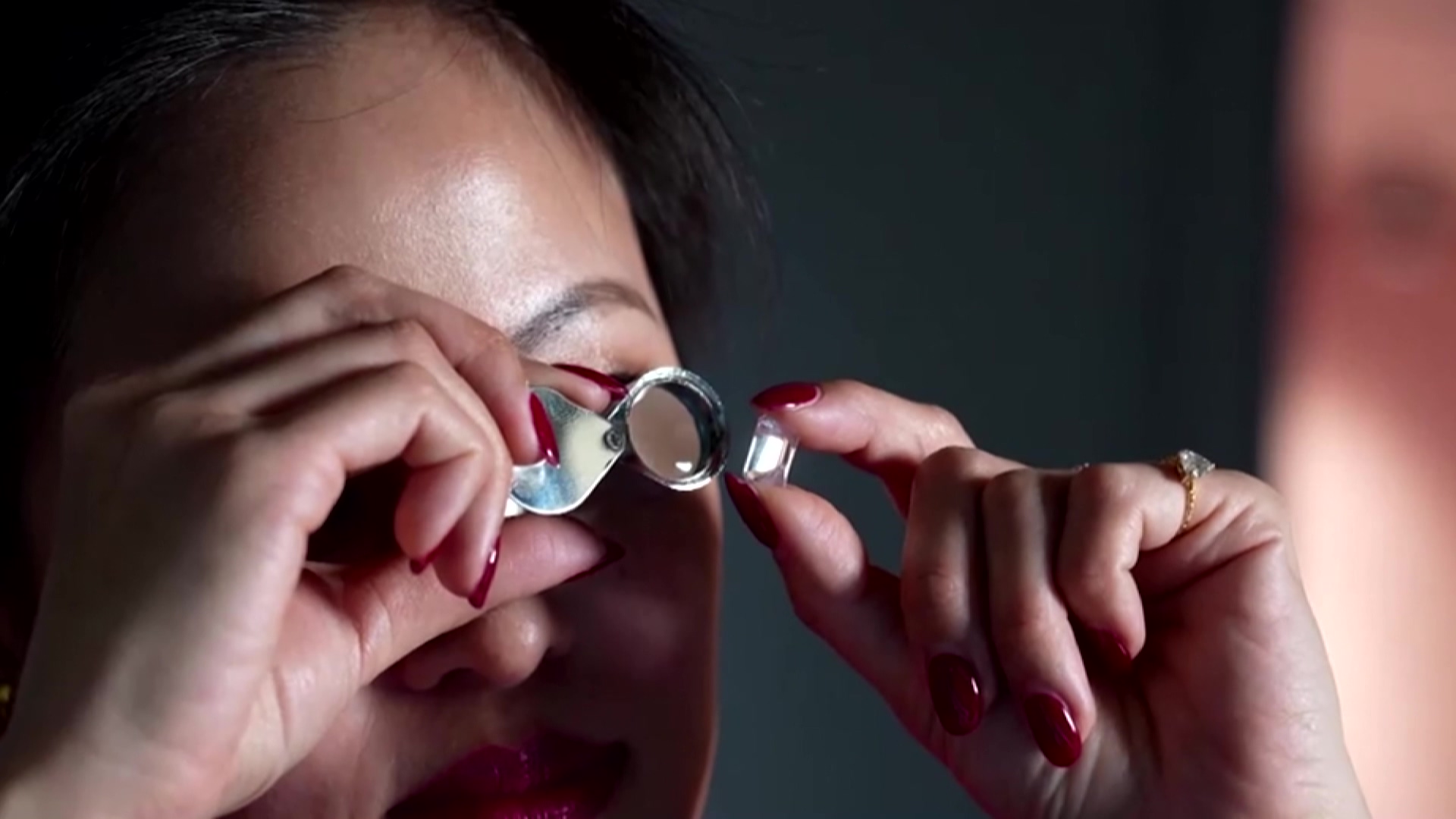
Jewelry designer Annabella Chen carefully examines the diamonds of her brand. These sparkling jewels are not natural diamonds but man-made products from a laboratory.
Annabella founded her eponymous jewelry brand over a decade ago. Troubled by the limited sources of gemstones and issues of slavery and labor exploitation in mines, she boldly adopted lab-created colored gemstones, recycled metal ores, and pearls produced through regenerative farming.
Lab-grown jewelry looks like natural gemstones but lacks the flaws found in real minerals. They are only sold after being graded according to the diamond 4Cs standards: carat, color, clarity, and cut.
The technology for cultivating gemstones in laboratories began to emerge in the 1980s. The principle involves using chemical formulas in a controlled lab environment to simulate the natural process of mineral formation, with carbon dioxide from the air being a key element. The formation of natural mineral deposits often takes billions of years, but lab-grown minerals can achieve the same result in just 10 weeks.
This drastically shortened production process does not affect the quality of the jewelry and can also lower the selling price. Annabella’s synthetic jewelry sells for an average of less than 60% of the price of natural jewelry, attracting more consumers. These efforts also won her a London innovation enterprise award.
Synthetic gemstone laboratories use carbon capture technology to convert carbon dioxide into carbon atoms, which become the rough material for polishing synthetic diamonds. This offers a turning point for the fine jewelry industry, which has been notorious for inhumane mining processes.
The CEO of a diamond research data institution pointed out that lab-produced synthetic diamonds have grown by 20% in recent years, with global revenue reaching $15 billion. The production cost of lab-grown diamonds has also declined year by year. Currently, the price of a 1-carat synthetic diamond is 80% cheaper than a natural diamond, whereas the price difference was only 10% a decade ago.

Jewelry industry analysts observe that as the source of jewelry raw materials becomes more stable, brands must find market uniqueness to create new product life cycles. Jewelry brand Pandora emphasizes the importance of design elements, offering up to 1,200 diamond design items to attract more customer segments.