Editor’s Note
**Editor’s Note:** This piece highlights the inspiring journey of a Salzburg couple who transformed a shared passion for jewelry-making into a thriving business, with new products on the horizon.
The Salzburg couple Jan Reichetzeder and Lydia Zechner turned their passion for jewelry into a professional success. They will soon present new products.
What began as a hobby quickly developed into a successful business: Lydia Zechner and her boyfriend Jan Reichetzeder started designing bracelets with various stones in their free time.
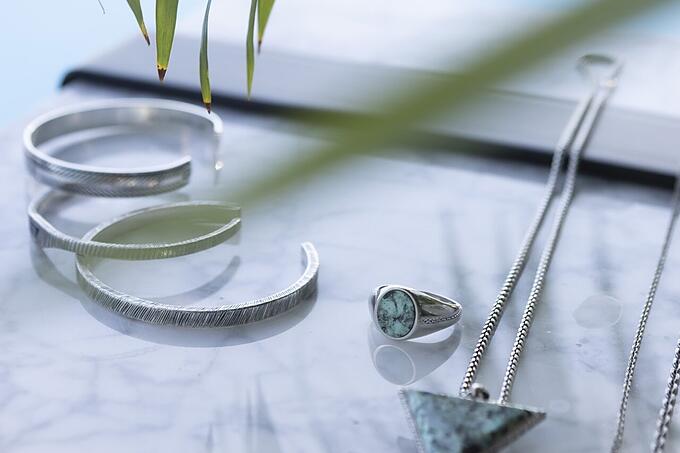
Under the name Jala Korsar, they design and sell necklaces, bracelets, rings, and bangles made of silver. “For us, it was always important that the quality of our products is right. Therefore, the selection of materials played a central role.”
Jan Reichetzeder’s father owned a wholesale business for minerals and gemstones, which gave the couple access to high-quality stones. “Jan grew up with the topic, so to speak, and I brought my knowledge from the design field,” explains Lydia, who completed a master’s degree in design and product management at the University of Applied Sciences in Kuchl.
Initially, they sourced the stones through wholesale, but soon Lydia and Jan traveled to the sources themselves. “We flew directly to the stone dealers in Asia, visited the family businesses several times, and convinced ourselves of the quality,” reports Lydia Zechner. This close cooperation with the producers ensures that only the best stones are used.
The design of the jewelry pieces takes place in Salzburg. “I make the first models on the PC, we determine the dimensions and decide how the pieces should ultimately look.”

Precision and craftsmanship are crucial in manufacturing, as many stones are cut specifically for the collection. “We use only natural stones. That means no chemical treatment, no recoloring. Everything we process comes straight from the earth,” explains Jan Reichetzeder.
One of the challenges was making gemstone jewelry, often considered old-fashioned, accessible to a young and modern audience. “Stones and gemstones are often associated with older ladies, but we said from the beginning: These are beautiful materials that can be integrated into everyday life in a modern way,” says Zechner.
This philosophy is also reflected in the prices. While comparable jewelry pieces are often expensive luxury items, Jala Korsar aims to offer an affordable alternative without compromising on quality. “We wanted to offer high-quality jewelry that the middle class can also afford. For us, the value of the product is paramount, not just the brand name.”
In 2019, Jala Korsar experienced an important turning point when a company from Frankfurt showed interest in investing. “We received an email saying they discovered us on our website and would like to invest. At first, we thought it was a scam,” recalls Lydia Zechner. But the offer turned out to be legitimate, and with the investor’s entry, the label became a GmbH. “Thanks to them, we were able to improve our website and optimize our online marketing, which later proved to be our great fortune.”
Just one year later, the COVID-19 pandemic tested Jala Korsar’s business model. “Our mainstays, the trade fairs and markets, completely disappeared, but there were many orders directly through our website,” reports Lydia. Thanks to the improved online presence and the investor’s support, the label survived. “Without this help, we probably wouldn’t have made it,” Lydia admits openly.
In the near future, the company plans to add earrings to its range. “That’s something many of our customers miss,” reveals Lydia Zechner. Otherwise, the label remains true to its basic philosophy.
