Editor’s Note
**Editor’s Note:** This article highlights the charm necklace as the standout jewellery trend for summer 2026. Our fashion editor curates 12 top picks that promise to elevate any outfit, blending timeless sentiment with seasonal style.
Charm necklaces are trending for summer: 12 to buy that will make every outfit better
Meet this season’s most prolific jewellery trend
By Hannah Banks-Walker
Published: 09 July 2026
Jewellery is, by its very nature, one of the most timeless investments one can make. It is, after all, designed to last, and tends to be the accessory on which we project sentimentality and meaning. My grandmother’s charm bracelet, for example, was given to me on my 16th birthday, and boasts a selection of talismans – some weird, some wonderful – collected over at least 70 years, each of which represents a specific moment in her life. In an increasingly digital world, the concept of physically collecting beautiful, wearable items imbued with significance is more appealing than ever. Perhaps that’s why, then, that charm necklaces have emerged as one of summer 2026’s most prevalent jewellery trends.
One of the most fervent champions of these busy pendants is Dua Lipa, who has worn several different styles over the past few months. Most recently, as she landed in New York following her dreamy Italian honeymoon with Callum Turner, the singer was photographed in Chloé’s Paddington necklace, a chunky gold chain boasting alternating heart and locket charms. Prior to this, Lipa declared herself a fan of Martha Calvo, a Miami-based jeweller whose bold creations include a variety of charm necklaces. From cord styles to gold chokers, it was the Sanctus necklace chosen by Lipa; it’s handmade with antique saint-bearing coins, rendering each piece unique. On Instagram, Lipa even doubled up with Martha Calvo’s mushroom pendant, adding even more charms into the mix.

According to Google data, searches for “chunky charm necklace” have more than doubled since the start of spring, with an increasing amount of people now specifically looking for custom styles they can build themselves. Responding to such demand are brands such as Astrid & Miyu and Pandora, both of which have launched necklaces that can be customised with a personalised selection of charms. At the former, this comes in the form of Story Chains: necklaces to which one can add birthstones, numbers, initials or zodiac signs, as well as a host of other pretty, bejewelled amulets. Connie Nam, founder and CEO of the brand, says:
Pandora, meanwhile, just collaborated with super-stylist Harry Lambert on a line of limited-edition charms, all crafted from freshwater Baroque pearls. From sweet little pea pods to puffer fish (already sold out), each can be added to necklaces, bracelets and even earrings to create a truly individual piece of jewellery.
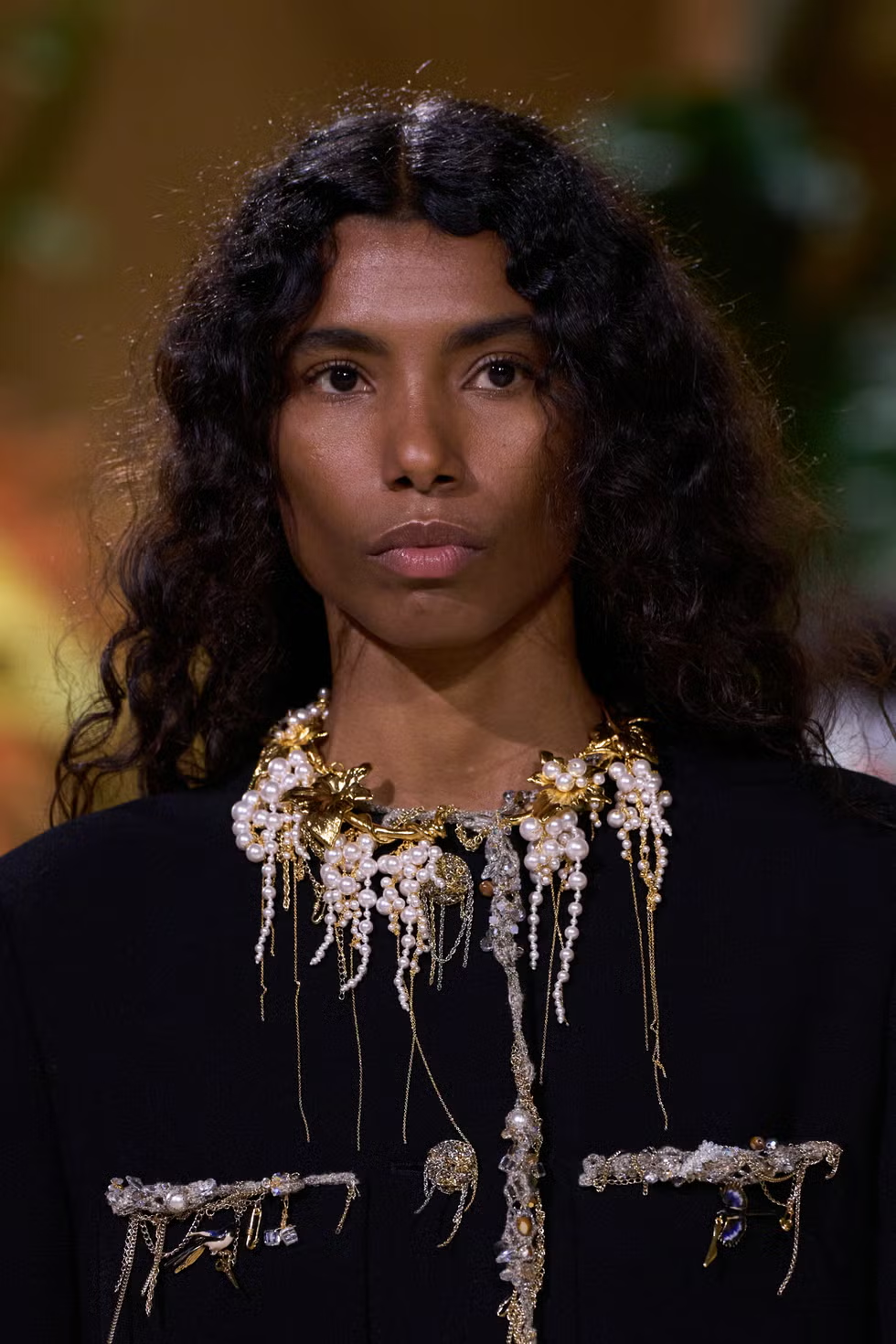
This is a trend that’s showing no signs of fatigue. Just this week, Matthieu Blazy offered his own haute couture take on charm necklaces at Chanel, where they were dripping with pearls and colourful blooms, while for autumn/winter 2026, Michael Rider made Celine’s long and bold with oversized charms. The best attribute of these necklaces? They take the pressure off the rest of your outfit, providing you with a focal point around which you can build a look.
From ready-made versions to bespoke pieces you can build, find your own charm necklace below – jewellery that you can buy now and wear forever.
Martha Calvo Sanctus necklace – £216 at marthacalvo.com
Chloé Paddington gold-tone and leather necklace – £910 at NET-A-PORTER
Ben-Amun charm necklace – £264 at Moda Operandi
Rixo Lima necklace with semi-precious stones – £145 at rixolondon.com

SCCollection Robin gold charm necklace – Now 23% Off – £144 at Wolf & Badger
Free People Maxamillion charm necklace – £40 at Free People
Hermina Athens gold-plated Athinules charm necklace – £155 at Harrods
Missoma charm choker – £139 at Missoma
Astrid & Miyu Story Chain necklace – £175 at astridandmiyu
Orelia London create your own eclectic charm chain necklace – £65 at orelia.com
Pandora Baroque pearl Two Peas in a Pod pendant necklace – £148 at Pandora
Saint Laurent Dove and Lucky Charm necklace – £621 at Moda Operandi
