Editor’s Note
**Editor’s Note:** Idéonature Créations has earned “Made in France” status after customs inspection, but the Landes-based brand is now pursuing the more rigorous Origine France Garantie certification. The hurdle? A costly supplier audit. The creator is now seeking funding to cover the expense and validate the authenticity of its supply chain.
Certified Made in France after a customs inspection, the bracelets of Idéonature Créations also aim to obtain the Origine France Garantie certification. To achieve this, a major audit must be conducted, and the creator is seeking funds…
Published on January 25, 2024 at 8:17 PM
1500 COUPS DE POUCE
Arya, the brand prioritizing Made in France
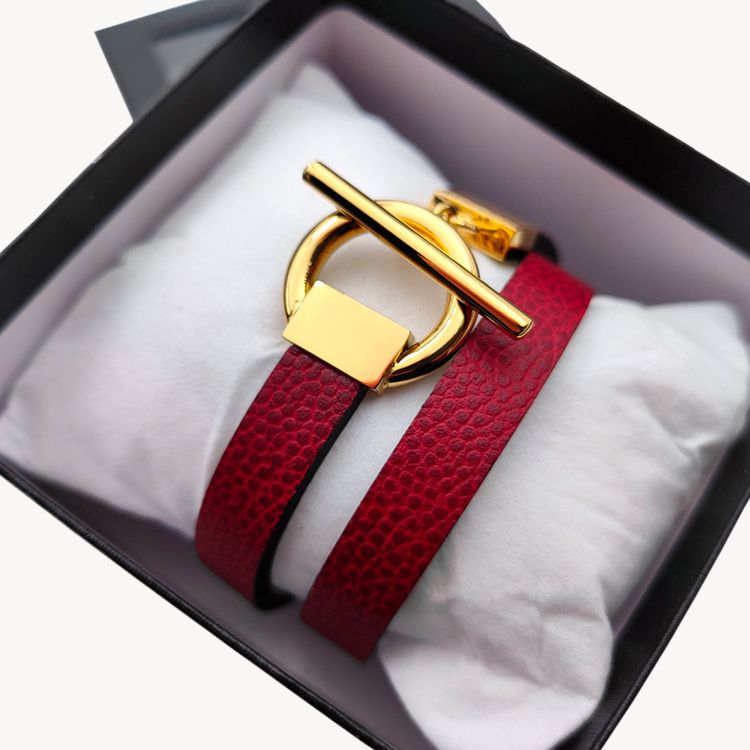
It is in Mouscardes, in the Landes region, that this jewelry brand was founded by Myriam and Philippe Morlet. Metal bracelets, decorated with leather from the Basque Country or the Vosges, and entirely hand-assembled on our territory…
Photo: Idéo Graphique.
Coming from the technical world, more precisely in micromachanics, Philippe Morlet did not intend to work in fashion jewelry. Unlike his partner, Myriam Morlet, a graphic designer and graduate of the École Supérieure des Arts Appliqués Duperré in Paris. However, a common desire to work together on their own led them to turn to a creative field.
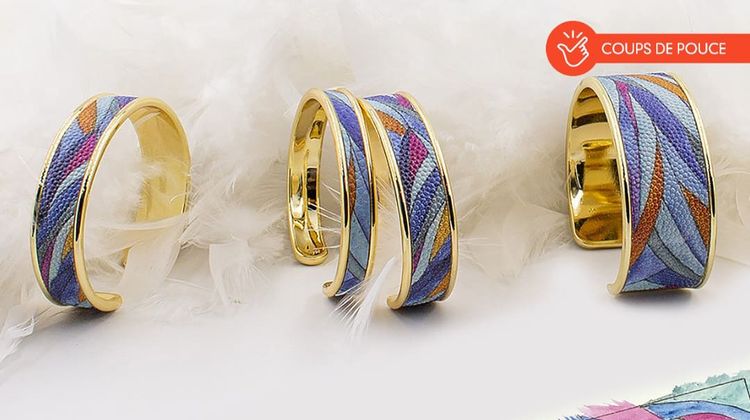
A project that evolved after meeting the manager of Soulor, a leather shoe manufacturer, who suggested the couple add leather to their jewelry.
Thus, the couple turned to two French tanneries, Carriat in Espelette, and Sovos Grosjean in the Vosges.
The choice of French tanneries is not insignificant, since for Myriam and Philippe Morlet, it was “essential” to do Made in France.
In this sense, the company works with several suppliers, for leather, but also for the making of the bracelets and their gilding.
A new product also Made in France that will thus complement a local manufacturing approach, the metals used by Idéonature Créations currently being mostly from Greece.
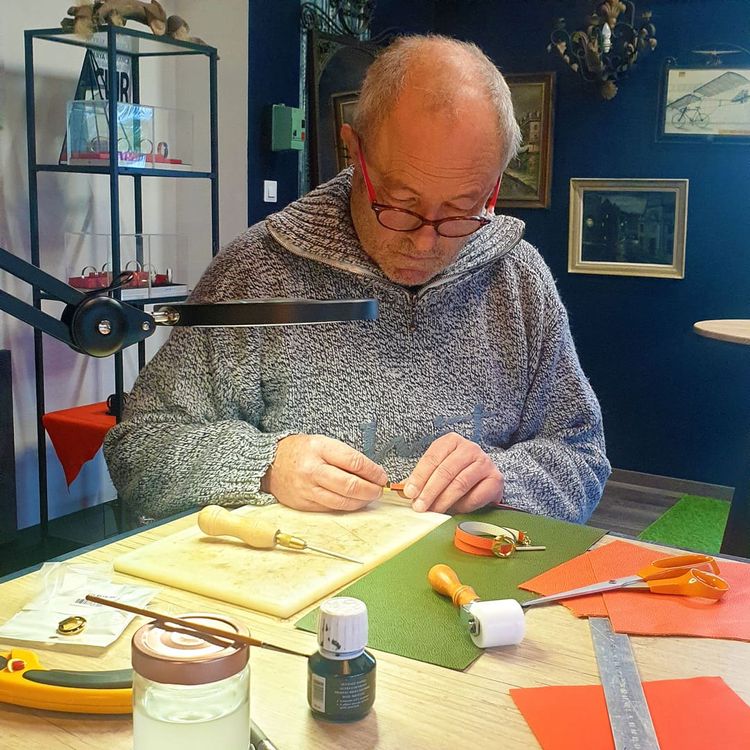
Photo: Idéo Graphique.
And to go even further in this desire to do fully Made in France, and to be able to notify customers, Myriam and Philippe Morlet recently put together a file to have their products certified Origine France Garantie.
Obtaining this Origine France Garantie certification would thus allow Arya France to offer its jewelry in more boutiques and craft exhibitions.
Myriam and Philippe Morlet also enjoy a few resellers, and have recently been able to offer their creations at Christmas markets.
While waiting to possibly conquer the North American market, the couple is looking at the opportunities available to them, such as being sold by a boutique at the Carrousel du Louvre…
More information on the Arya France website
Photo: Idéo Graphique.