Editor’s Note
**Editor’s Note:** This piece highlights how Linz-based Stütz, a third-generation family jewelry firm, has reinvented itself from a conservative trader into a modern designer brand. With 100 employees, over €22 million in turnover, and a network of 16 Goldwelt stores plus 1,000 retailers, the company demonstrates that tradition and innovation can coexist—keeping design and strategy anchored in Linz while leveraging global production.
The long-established Linz jewelry trading company Stütz has successfully leveraged the rapid transformation of the industry. The third-generation family business has evolved from a classic, conservative provider into a fashionable designer with 100 employees and a turnover of over 22 million euros.
Hundreds of thousands of pieces of jewelry and 60,000 watches pass through the Linz headquarters annually. Sales are conducted in 16 of its own Goldwelt stores in Austria and Bavaria, as well as through more than 1,000 jewelry retailers, 400 of which are in Austria.
Production is carried out by contract manufacturers in Italy, Germany, Spain, and Asia. However, design, distribution, marketing—and thus the “brain”—remain in Linz. The jewelry is designed by master goldsmith Manfred Stütz, who, together with his brother Hermann, manages the business.
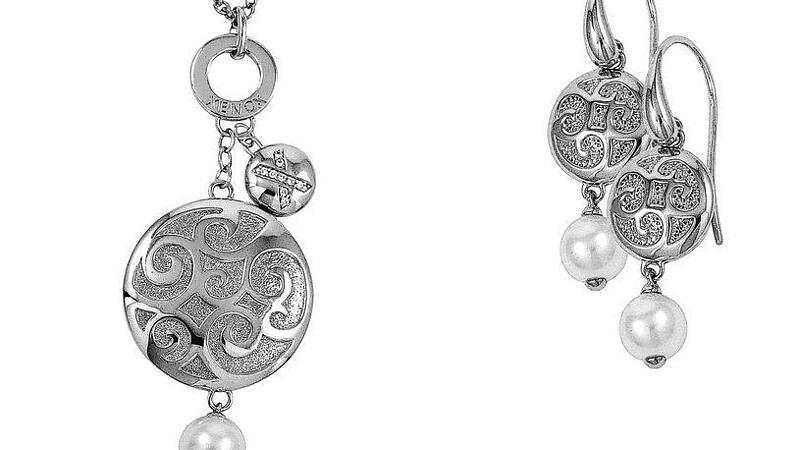
Ten years ago, he created the brand Xenox. Fashionable jewelry made from sterling silver and stainless steel attracted young and young-at-heart customers. The Stütz family is pleased with double-digit growth rates.
The company is the general importer for watches of brands such as Hugo Boss, Tommy Hilfiger, Dolce & Gabbana, and Replay.
In jewelry, half of the turnover is generated outside Austria: in Germany, Switzerland, the Netherlands, Belgium, and Spain. Scandinavia is next on the expansion plan. There is no rush regarding the new EU countries.
Grandfather Adolf Stütz founded the company in 1934. Stütz also offers gold and diamond jewelry ranging from 200 to 10,000 euros in its program. The headquarters resembles a fortress.
In the jewelry sector, the Stütz brothers see themselves as number three in Austria, behind Dorotheum and Alphagold, also based in Linz. Here, in the secret EU jewelry capital, the company Palido of the Paukner family is also located. The Stütz brothers also view competition from the “cheap” Tchibo-Eduscho positively.
In 2010, Xenox will launch a new line for men. The brothers are already testing the self-designed bracelets. After all, what pleases a man should be tested on one’s own body.
• The Linz company employs 100 people and generates a turnover of more than 22 million euros.
• General importer of watches for many major fashion brands
• 16 own Goldwelt stores in Austria and Germany
Stütz offers jewelry under the brand “Xenox” made from sterling silver and stainless steel. The company also has gold and diamond jewelry ranging from 200 to 10,000 euros in its program. Photos: Werk
The jewelry trading and design company Stütz, founded in 1934 in Linz, is run in the third generation by Hermann (l.) and Manfred Stütz.