Editor’s Note
**Editor’s Note:** This article highlights Aamir Khan’s thoughtful gesture for his wife Gauri, presenting a uniquely crafted ring that required the dedication of 131 artisans over 256 hours.
Aamir Khan’s unique gift to his wife: prepared by 131 artisans in 256 hours
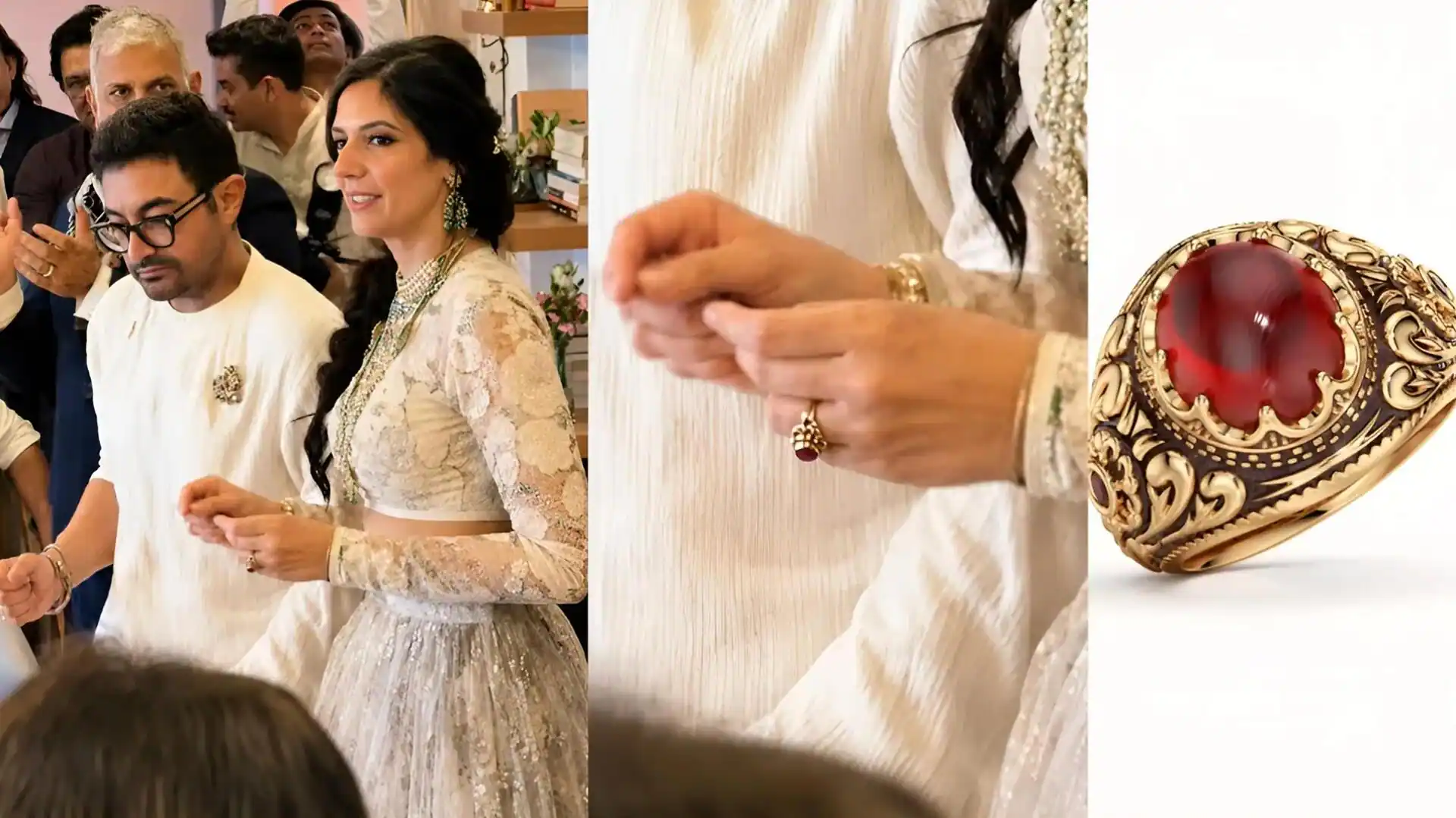
Bollywood’s Mr. Perfectionist, Aamir Khan, has been making headlines recently regarding his wedding. He recently married Gauri Spratt, and now a very interesting detail about their wedding has emerged. The ring Aamir chose for his wife Gauri is no ordinary ring, but one in a million. This beautiful ruby ring has been crafted in a very special way.
Aamir gifted his wife Gauri a one-in-a-million ruby ring. Behind the creation of this ring lies the immense hard work of artisans. It was not made by a single person, but by a total of 131 skilled artisans working together with their hands. All these artisans took a long time of 256 hours to completely prepare this single ring. Aamir’s unique gift for his wife is currently a topic of discussion on social media, with everyone praising the ring.
It took 3 months to find the right gemstone. According to reports, Aamir gifted Gauri a customized ruby wedding ring from the luxury jewelry brand ‘Queen’. The center of the ring features a natural ruby from Madagascar. The co-founder of this jewelry brand revealed in a conversation with Hindustan Times that finding the perfect gemstone for the ring was a very long process and took more than 3 months.
This gemstone is one in a million. The co-founder of Queen said:
A royal crown-like look and real diamonds. Unlike modern and simple bridal jewelry, Aamir’s wife’s ring is very special. The ruby is set in a gold structure resembling a royal crown, rather than a simple band. Gold twisted braids and fine bead-like engravings give it a magnificent vintage and weighty look. Additionally, to further enhance the sparkle and beauty of the main Madagascar ruby, several real diamonds have been set around it.