Editor’s Note
Following the launch of its Desert diamonds at last year’s Couture show in Las Vegas, A Diamond Is Forever returns to spotlight natural diamonds. The collection, featuring tones from sunlit whites to deep cognac and whisky hues, continues to dominate fine jewelry, proving these stones endure like the sands of time.
After launching its Desert diamonds last year at the Couture show in Las Vegas, A Diamond Is Forever returns with its celebration of natural diamonds.
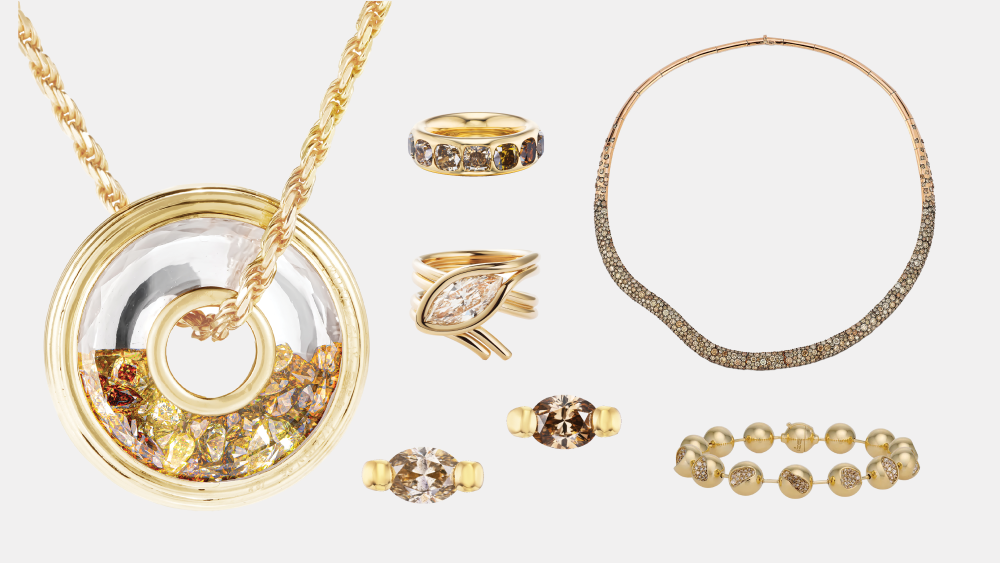
Mason & Books 18-karat yellow gold Lasso ring.
The Desert diamonds showcased at the trade show feature a range of tones, from sunlit whites and champagnes to deep brown cognac and whisky hues. And this trend continues to dominate amongst the fine jewelry space — as these stones will continue to withstand the sands of time.
Walters Faith Julian 18-karat gold and champagne diamond Wave necklace.

Drawing inspiration from the desert landscapes from which natural diamonds originate, the wild nature of diamonds is on display. As a marker of authenticity, Desert diamonds use this spectrum of hues to showcase the story of each rare and unique diamond, with no two stones the same.
Moritz Glik Giro 22 necklace.
With consumers looking for diamonds with earthy tones and to connect with nature, A Diamond Is Forever launched its Desert diamonds to offer a distinct look. The Desert diamonds product assortment is a contemporary expression of individuality, authenticity and personal style.
JV Insardi Day bracelet.
At Couture, diamonds showcased are a wide-ranging and innovative usage of the kaleidoscopic colors found in nature — set in rose or yellow gold.
Ultra Gauge 18-karat yellow gold and Desert diamonds ring.
Cross-industry, retailers and designers continue to create pieces and highlight these desert-inspired palettes. These jewelry collections and pieces range from subtle gradient and solitaire designs using Desert diamonds and are available at both independent and large-scale jewelers including Jared Jewelers, Reeds Jewelers and more.
Uniform Object 18-karat yellow gold and champagne Desert diamond Mantle Studs.
To learn more, visit adiamondisforevermarketing.com.