Editor’s Note
This article highlights the vibrant trade and cultural exchange at the Ninth China-Eurasia Expo, where seamless digital payments and diverse international pavilions underscore growing regional economic integration.
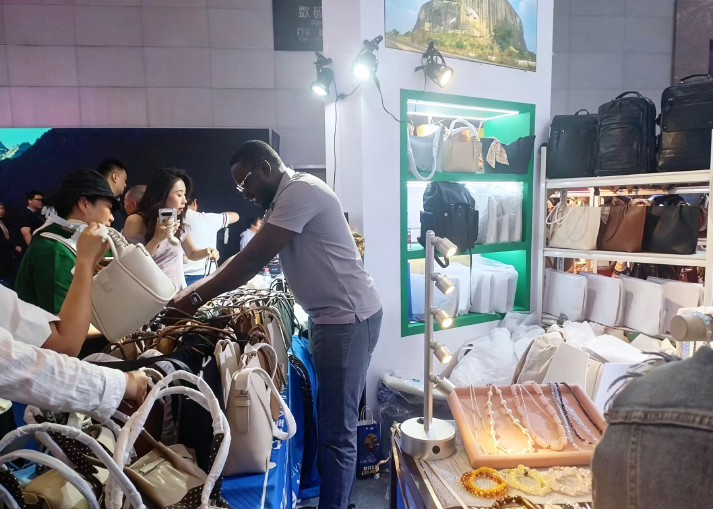
Inside one of the international pavilions at the Ninth China-Eurasia Expo, glass display cases sparkled with jewelry. Green jade bracelets, colorful gemstone necklaces and loose stones for custom-made rings were neatly arranged under the lights. A Chinese customer selected a jade bracelet and paid for it via Alipay, a mobile payment app popular in China.
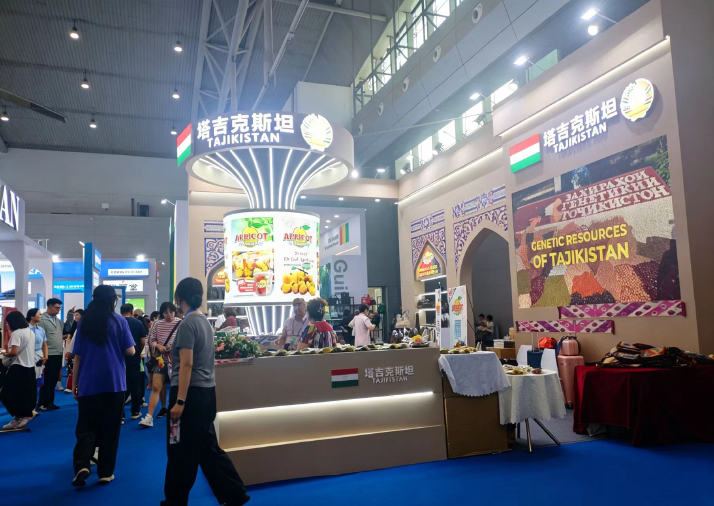
According to Li Hongqi, Deputy Director of the Department of Commerce of Xinjiang Uygur Autonomous Region, both the scale and profile of this year’s event reached record highs. Representatives from 49 countries, regions and international organizations participated in the expo, with 27 countries setting up national pavilions. The United Arab Emirates, the Republic of Korea, Russia and Thailand established national pavilions for the first time.
At a matchmaking event for Chinese companies seeking opportunities in Central Asian markets, some Kazakh buyers visited the expo remotely through livestreaming and cloud-based connections. They browsed products online, negotiated with suppliers and conducted business meetings in real time. Digital technologies are steadily breaking down geographical barriers and making trade and commercial exchanges across Eurasia more efficient and convenient.
Cutting-edge technologies, including intelligent biomimetic robots, large low-altitude aircraft and integrated computing infrastructure, drew crowds of visitors eager to watch demonstrations and experience new technologies firsthand. Application scenarios ranging from plateau transportation and energy inspection to emergency response, multilingual cross-border interaction and urban governance were recreated inside the exhibition halls.
The Green Development Zone and Green Services Zone brought together companies specializing in new energy, new materials, green building materials, green mining, green finance and high-efficiency energy-saving equipment manufacturing. Advanced environmental protection equipment, resource recycling technologies and ecological restoration solutions were among the products and technologies on display.
The main venue was powered entirely by clean electricity, consuming approximately 1.5 million kilowatt-hours of green power during the event. Organizers promoted modular and recyclable exhibition structures, paperless conference services, waste sorting and recycling, and low-carbon transportation. A Green Booth Award was also introduced to encourage exhibitors to use recyclable and renewable materials.
Xinjiang borders Central Asia and serves as an important gateway linking China with markets across Eurasia. As China’s major opening-up window to the west, the region has long stood at the forefront of economic and trade cooperation between China and Central Asian countries, while increasingly attracting businesses and entrepreneurs from Russia and other Eurasian countries eager to tap into the opportunities of the Chinese market.
At this year’s expo, an Export to China event dedicated to Kazakhstan drew broad participation from businesses. From food products and consumer goods to specialty items, a growing number of Kazakh companies are looking to use the platform to further expand their sales in China.
During the expo, Kazakhstan’s Deputy Prime Minister and Minister of National Economy Serik Zhumangarin described Xinjiang as:
He said Xinjiang has, for many years, been the principal hub for border trade, logistics and industrial cooperation between Kazakhstan and China. As a key logistics corridor connecting the two countries, it also helps facilitate transit transportation between Asia and Europe.
Such connections are increasingly extending beyond official exchanges and taking shape in vivid, practical ways.
For Van Svetlana, head of the Russian National Pavilion and a first-time participant in the China-Eurasia Expo, the strongest impression came from person-to-person interactions.