Editor’s Note
**Editor’s Note:** This piece highlights Tlacua’s six-year journey transforming costume jewelry into a personal art form in Guanajuato. We explore her creative process and the cultural influences shaping her work.
Between Beads and Wire, Tlacua Transforms Costume Jewelry into Her Own Artistic Expression from Guanajuato
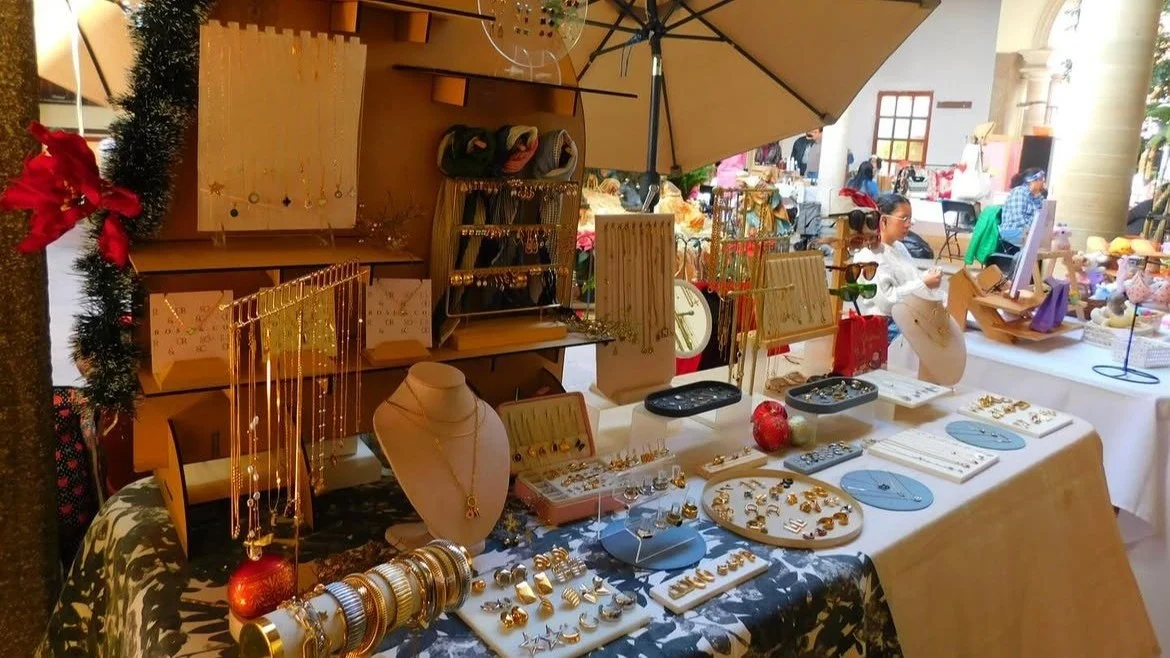
For six years, Tlacua has ventured into the world of costume jewelry, offering her creations at bazaars and exhibitions in the center of Guanajuato.
Francisco Meléndez
Monday, July 13, 2026
Guanajuatense by choice but originally from Guerrero, Tlacua is studying for a bachelor’s degree in Educational Inclusion.
Guanajuato, Gto. – Tlacua started her entrepreneurial journey in 2020 at the age of 17. She began by selling second-hand clothing and making her own alternative-style costume jewelry, which included harnesses, spike necklaces, and chains.
Guanajuatense by choice but originally from Guerrero, Tlacua is studying for a bachelor’s degree in Educational Inclusion and focuses on autism, an area she connects with personally, using the income from her business to fund her studies.
The transition to physical sales occurred between 2022 and 2023 when she joined bazaars. Because artisans began losing some spaces in the center of Guanajuato and faced difficulty accessing private venues, Tlacua and a group of exhibitors sought options until they found a private venue in the downtown area. Thus, the Del Ágora Bazar project began at the end of 2024, launching with four consecutive editions during the weekends of the Cervantino Festival and Day of the Dead.
The bazaar is held sporadically on Saturdays and Sundays at the Ágora del Baratillo, hosting an average of 12 exhibitors due to the limited space.
The process of making the pieces starts from ideas drawn while sleeping or by experimenting with materials while listening to music. Sale prices range between 100 and 300 pesos. Tlacua takes custom orders, such as a graduation necklace or special pieces for clients attending year-end music festivals. However, Tlacua denounced the constant theft of her work locally and on global e-commerce platforms.
The work of manual creation has served as a channel for emotions and a support for Tlacua, who recently designed a piece inspired by the grief of losing her cat, Miguel, who came to her home on a rainy day.
Looking to the future, Tlacua plans to continue the bazaar, which is preparing for its tenth edition in August, and aspires to manufacture her own charms to improve the quality of her brand, taking designer Daniel Espinosa as a reference.
