Editor’s Note
**Editor’s Note:** A chance visit to a local jewelry store led Philadelphia vintage dealer Danielle Turner to an extraordinary find. Her story highlights how expertise and serendipity can combine to uncover hidden treasures.
A Pennsylvania woman stumbled upon the find of a lifetime during a chance visit to a local jewelry store.
Danielle Turner, of Philadelphia, is the owner of Ivyland Homestead, a vintage business specializing in estate buyouts, vintage jewelry, and forgotten collections.
Turner’s work has given her a keen eye for spotting hidden gems. Yet this latest discovery owed as much to good fortune as it did to experience.
Modern Jewelry has been a fixture in South Philadelphia since it was founded by Neil Nigro in 1969. Today, the business is run by his son and grandson, Stanley and Matthew Nigro, and has quickly become Turner’s go-to shop for all things watch-related.
That relationship ultimately led to what may rank among her best finds yet.
Turner learned that the store originally operated as Modern Jewelry and Appliances.
In 1993, Stanley took over the family business and decided to drop the ‘Appliances’ portion of the name to focus exclusively on jewelry. The shift, however, left the company with a surplus of appliances and housewares.
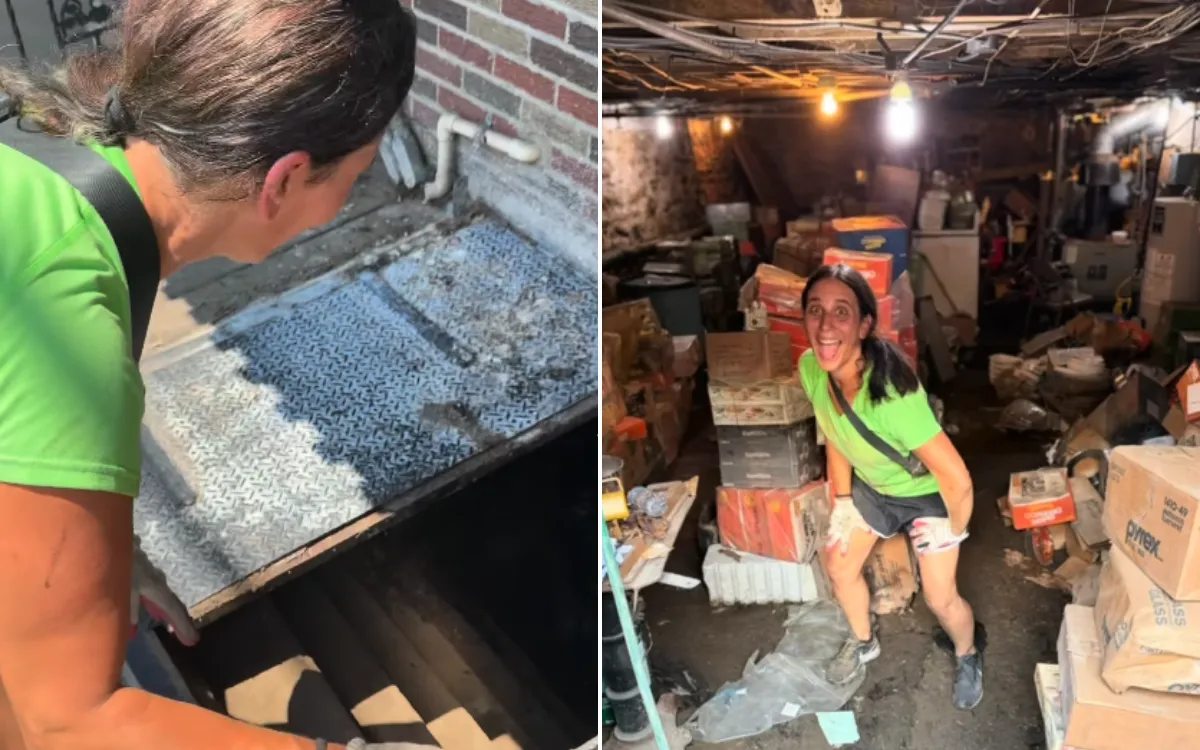
Rather than discard the remaining inventory, the family stored it in the basement. The unopened box containing the vintage Pyrex dish Turner spotted that day was just the tip of the iceberg.
When the basement was opened, Turner found herself face-to-face with a treasure trove of untouched merchandise.
Vintage Pyrex and CorningWare can command remarkable prices among collectors, particularly when rare patterns or promotional pieces come to market. One of the best-known examples is the elusive 1959 Pyrex ‘Lucky in Love’ dish, which sold at auction for $5,994, while other examples have fetched more than $4,000.
Rare Pyrex pieces have sold for even higher sums, including a Clouds and Stars baking dish that fetched about $7,300 and a 1963 Nemacolin Country Club Zodiac casserole that sold for roughly $3,700.
CorningWare can also attract significant interest, with scarce versions of the Spice of Life ‘La Romarin’ casserole dish marketed for thousands of dollars and rare patterns regularly selling for hundreds—or even thousands—of dollars, depending on condition and rarity.
The discovery carried special significance for Turner.
Finding such a massive collection felt ‘surreal,’ Turner said.
Turner purchased the collection, and while some of the pieces are relatively common, others appear to be far scarcer. For now, she is focused on researching and cataloging every item.