Editor’s Note
**Editor’s Note:** As gold prices climb and retail costs rise, more consumers are turning to jewelry transformation—reworking heirloom or unused pieces into modern designs. This trend reflects a shift toward personalization and value preservation in uncertain economic times.
Faced with rising gold prices and annual cost increases in high-end jewelry stores, the transformation of old or forgotten jewelry is becoming increasingly popular.
Grandma’s ring, the baptism chain, the signet ring passed down from father to son… Family jewelry is getting a makeover.
observes Caroline, manager of Europe Gold’Or, a family business based in Marseille for over 35 years, specializing in the purchase and resale of jewelry and precious metals, as well as restoration and transformation.
While transformation is not a new phenomenon, its development has accelerated in recent years.
at Europe Gold’Or, which has its own workshop.
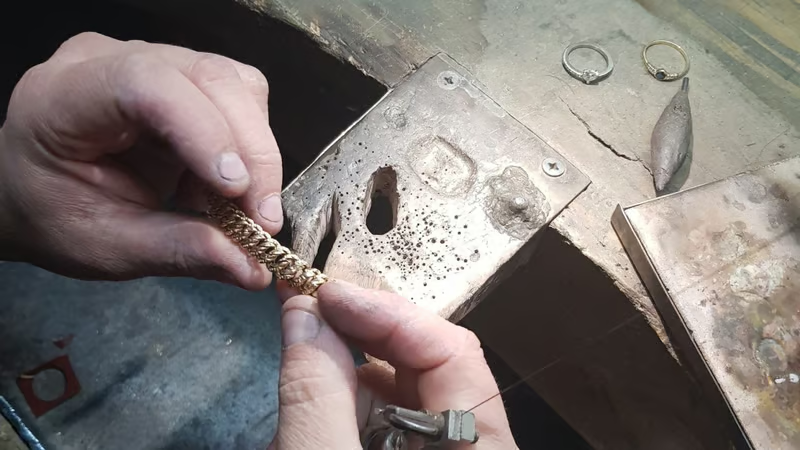
Caroline cites the case of a young man who came with his baptism chain. Lacking the budget to offer a new piece of jewelry, he chose to reuse his gold. Part of it was used to create a bracelet for himself, and the rest to make a necklace for his godson.
The practice has also grown among independent creators.
The young woman recalls, in particular, an old gold brooch set with sapphires and diamonds, which she had melted down and the stones removed before creating a ring and three necklaces for women from the same family:
The creator advocates a personal and artisanal approach.
Europe Gold’Or observes the arrival of a younger clientele, particularly those aged 30-35, who want either to resize a family ring or modernize an inherited piece.
By reusing their own gold, customers not only reduce manufacturing costs but can also finance part of their project through the buyback of the remaining metal. This eco-responsible solution is far from negligible for young people in the current times.
