Editor’s Note
**Editor’s Note:** This article explores the evolving landscape of men’s jewellery, highlighting the shift from traditional accessories to bold, gender-fluid bracelets that redefine modern style.
Forget everything you thought you knew about jewellery and add these brilliant men’s bracelets to your collection.
The last few years have seen somewhat of a U-turn in the realm of men’s jewellery. Where once any man worth his salt wouldn’t be caught dead wearing anything other than a wristwatch or basic silver cuff (save the subtle signet or sovereign ring, or, at a push, a crucifix dangling from a simple chain a la David Beckham), recently the lines of gender-specific accessorising have blurred, ushering in a new era of blokes in bling.
Of course, this is nothing new. Rings have been in for decades, and even dads who consider themselves the most masculine of masculine men were rocking chains in the late ’90s, but when it comes to arm candy, other than the woven friendship-style bracelets favoured by long-haired surfers from Devon, or festival wristbands that are long overdue the chop, the boys have been left in the lurch.
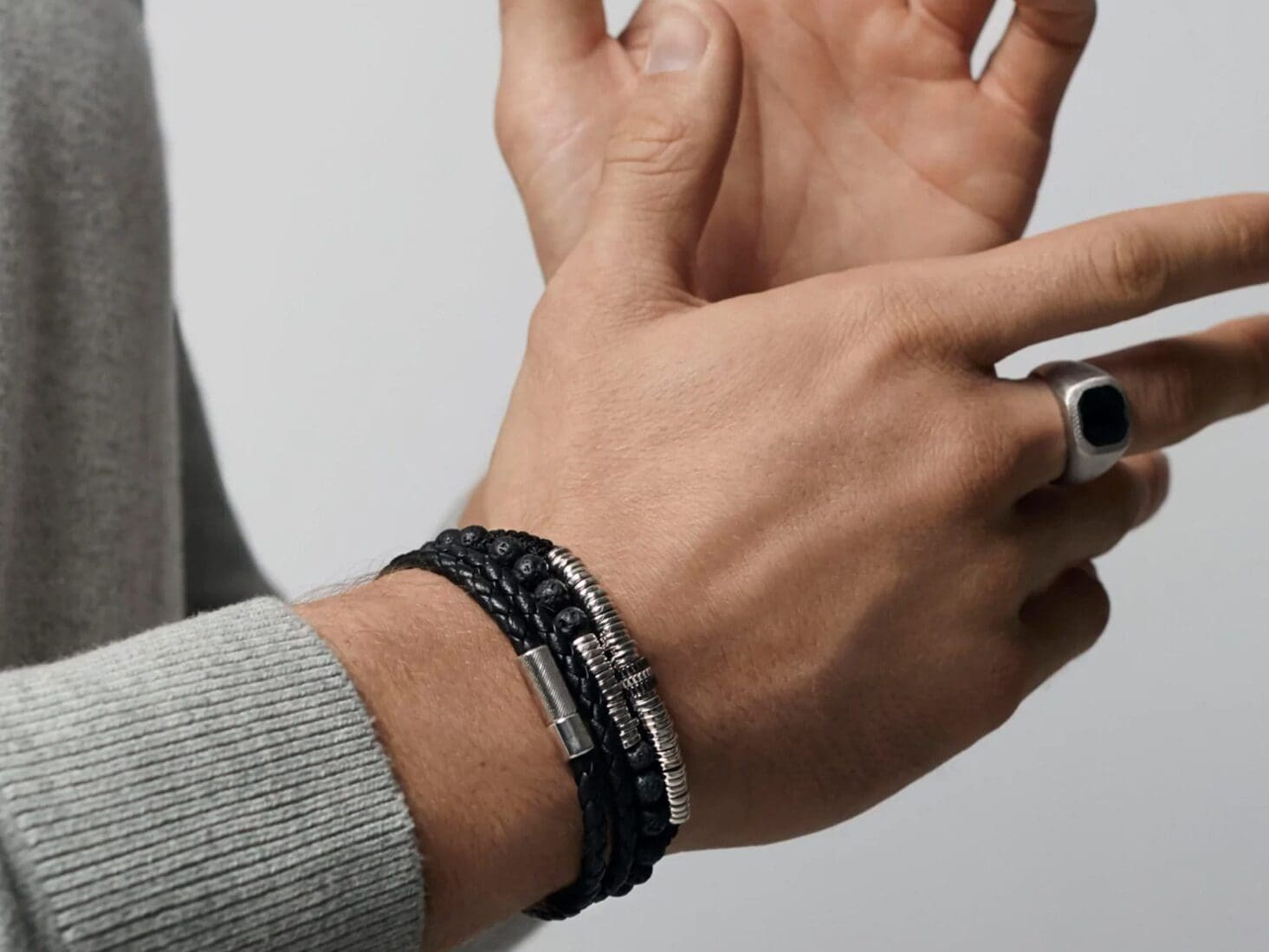
Nowadays, everyone from Premier League footballers and pop stars to TV presenters (looking at you, Jeremy Clarkson) and your regular man on the street is getting in on the action and dressing up their forearms with a bracelet or two (or three!). And whether you prefer 18-karat gold or sterling silver, gemstones aplenty or pared-back pieces with a hefty dose of attitude, there really are no rules when it comes to what you choose. With that in mind, here’s our pick of the best men’s bracelets to buy now and wear forever.
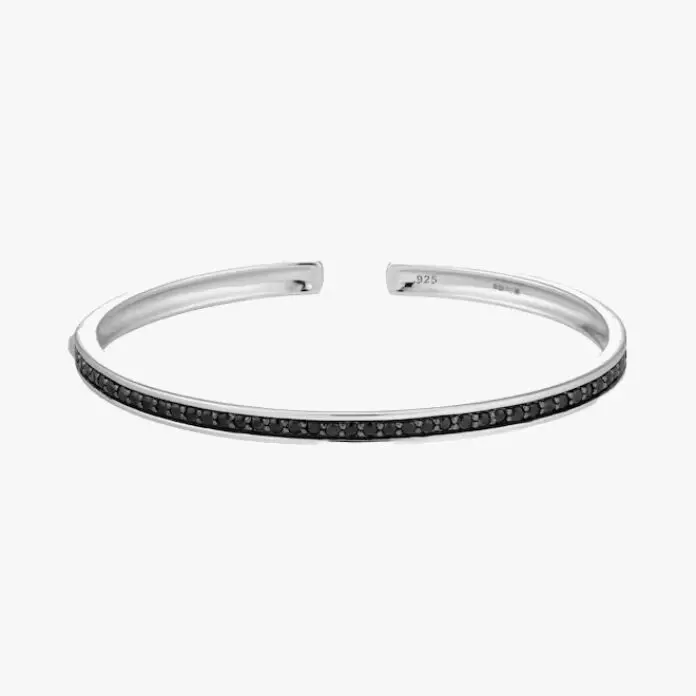
Simple yet sophisticated, Goldsmiths’ bangle doesn’t shout but is quietly luxurious. A sterling silver cuff design accented with round-cut black sapphires, it’s refined and alluring for a polished addition to your everyday jewellery collection. Wear solo or layer with other pieces.
£550
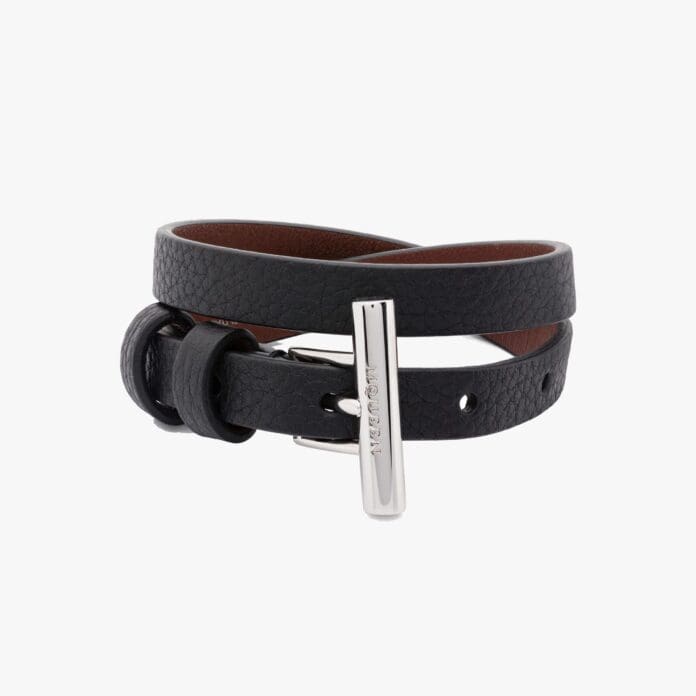
Ever the edgy brand, McQueen’s jewellery is just as darkly romantic as its ready-to-wear collections. Taking a more restrained approach, this double wrap bracelet is cut from black calfskin and features a silver-finish brass buckle with a statement T-bar engraved with the McQueen logo, ideal for days when you don’t fancy donning your diamonds.
£206
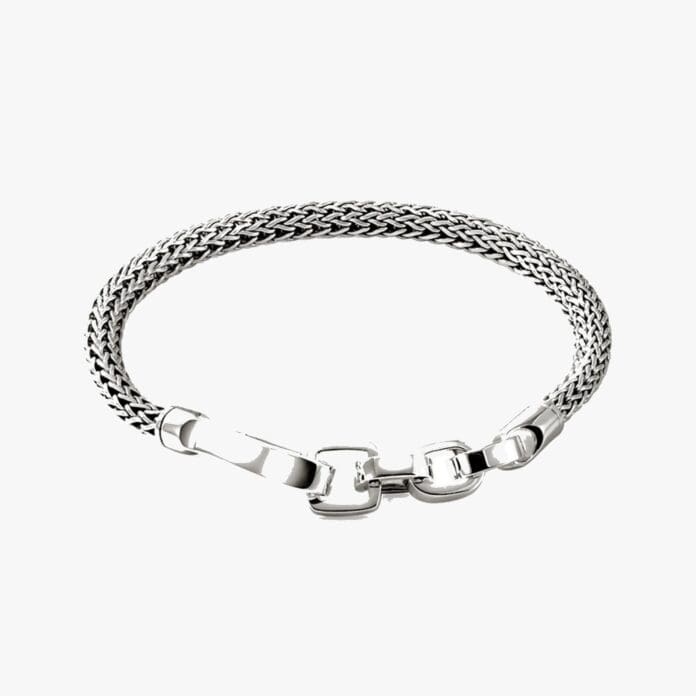
John Hardy’s classic chain collections have garnered a cult-like following. Conflict-free, sustainably sourced and ethically crafted by local artisans, each piece of jewellery is unique but timeless. Take this wheat-chain bracelet – made from 100 per cent reclaimed sterling silver with a lovely polished finish, it’s simple and effective.
£1,116
Brazilian jeweller Luis Morais is known for his beaded styles with a gothic edge. This bracelet may not be his classic design but has that rock and roll touch. A 14ct gold chain featuring six crosses with bezel-set lapis lazuli (associated with wisdom and truth), wear for medieval style with a modern, colourful twist.
£4,760
For a touch of colour, Peyote Bird’s Forest Grove bracelet will add instant vibrancy to your wrist. A handmade design honouring the traditions of Southwestern America, the sterling silver is threaded with jade, turquoise, onyx, chrysoprase, aventurine and pearl beads for a delicate but bright style.
£200
Parisian brand Le Gramme takes an industrial approach to design. Stamping each piece of its ethically-made jewellery with a unique serial number, its polished cable bracelets have become hero items. Featuring the brand’s trademark screw lock and engraved with the item’s weight, this minimalist 18ct gold bracelet is sure to become a staple of your collection.
£4,040
Ex-city financier turned King of Cufflinks, Robert Tateossian launched his eponymous men’s jewellery brand in Birmingham in 1990, quickly expanding its repertoire to include stacking bracelets and collaborations with Elton John and Zaha Hadid. This hand-crafted Sennit Box Evil Eye bracelet is half rhodium-plated sterling silver, half deep blue lapis, and features a singular evil eye in the middle (believed to ward off negative energy). Finished with the brand’s signature lobster clasp, wear for understated elegance whether everyday or special occasions.
£395
Understated and minimal, Tom Ford’s braided bracelet is crafted from a tonal grey-hued calf leather and finished with silver-toned hardware engraved with the fashion house’s name. Wear solo or layered with other neutral and silver styles. Consider this a grown up friendship bracelet that will last.
£430