Editor’s Note
**Editor’s Note:** This article highlights Bulgari’s latest high jewelry capsule collection, unveiled during Paris Haute Couture Week. Featuring 26 diamond-adorned masterpieces, the collection continues the brand’s “Eclettica” narrative with a focus on lace-like craftsmanship and radiant artistry.
As a new chapter following the latest high-end collection “Eclettica,” Bulgari presents a world of jewelry entirely adorned with diamonds during Paris Haute Couture Week.
Bulgari Japan LLC
July 15, 2026, 11:20 AM
Weaving diamonds like delicate lace—this artistic endeavor is the essence of the new capsule collection, born as a new chapter of Bulgari’s latest high-end collection “Eclettica.” Through 26 high jewelry masterpieces woven, draped, and shaped like lace, Bulgari expresses its unique artistry with diamonds. In the hands of Bulgari’s skilled artisans, diamonds are transformed into a supple material. Stones selected under uncompromising standards, contemporary design, and exceptional craftsmanship merge, turning diamonds into a “luminous fabric of gems.”
“Eclettica,” a living dialogue with art, draws inspiration from sculpture, painting, and architecture, blending artistic intuition with outstanding technique to elevate high jewelry into bold artistic expression. In this new chapter, Bulgari sublimates its creative expression and craftsmanship into the world of haute couture, embracing the art of lace as a new stage of expression.
Diamonds are not merely set in mounts but assembled into flexible, openwork structures reminiscent of the finest textile traditions. Like draped fabric worn directly on the skin, precious metals and gemstones trace flowing designs, swaying gracefully with the body’s movements. Just as a dress is tailored in a couture atelier, jewelry is sculpted three-dimensionally on a mannequin, with intricate joint structures hidden in invisible parts. This allows gold and diamonds to feel light and airy, like a second skin, radiating vibrant brilliance. This is the creative power of mastering diamonds, the true essence of Bulgari’s high jewelry.
“Gabarit en Ajour” Necklace, Pink Gold x Diamonds
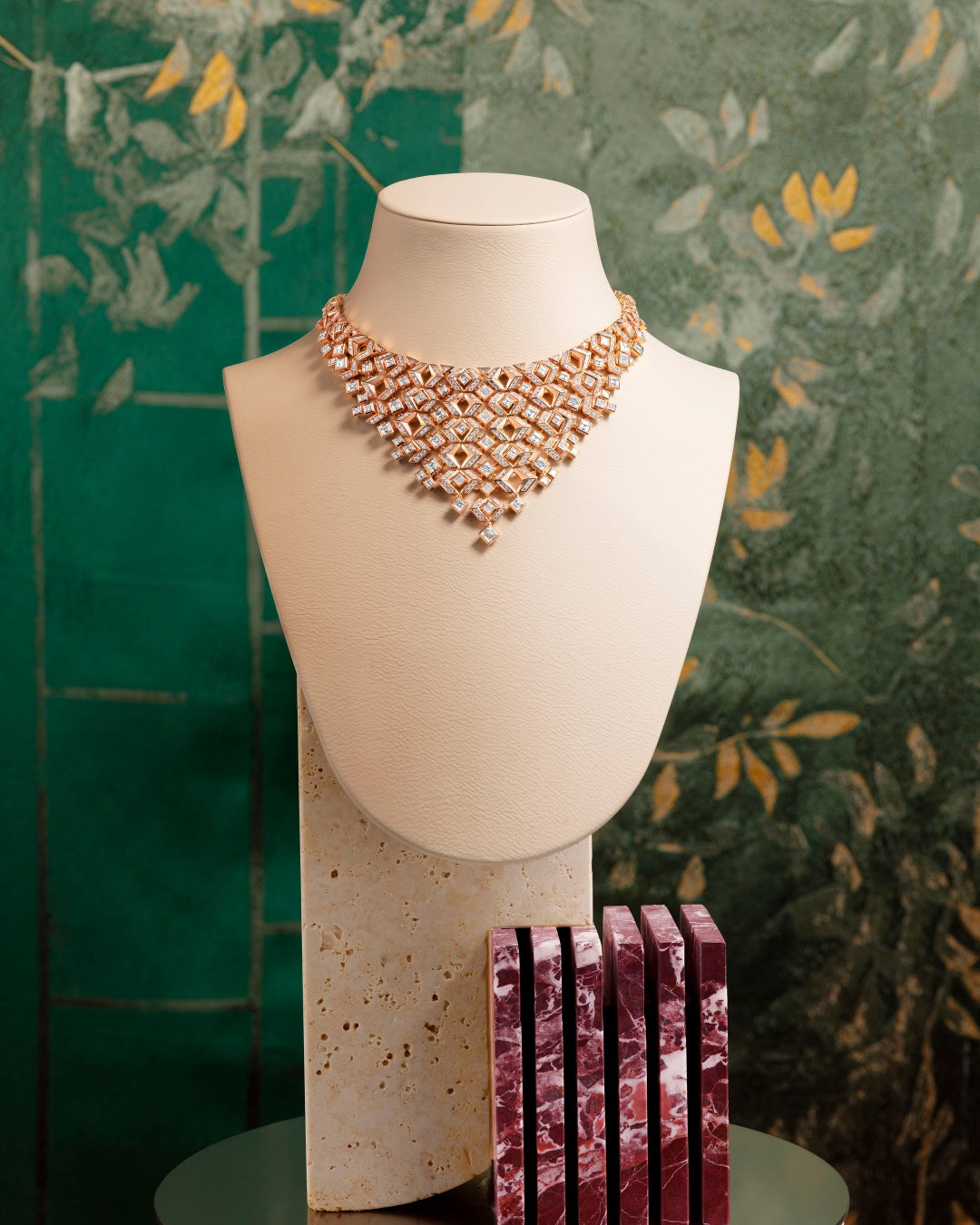
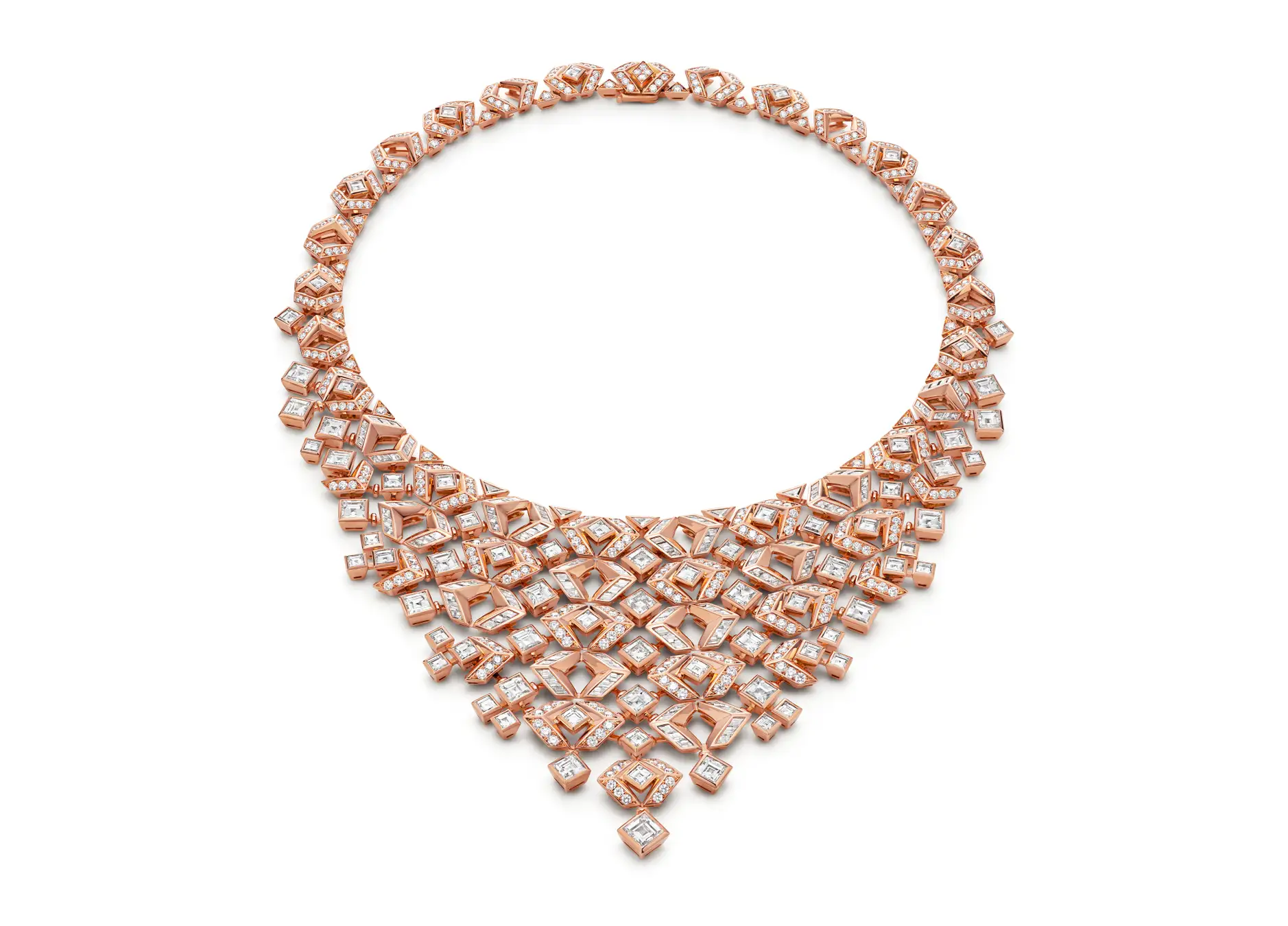
Celebrating the beauty of filet lace with its square mesh pattern, this necklace unfolds like a radiant geometric architecture. Square carré-cut and rectangular baguette-cut diamonds alternate with densely set pavé diamonds, creating a delicate harmony of metal frames, calculated spaces, and light reflections. Composed of 185 intricately linked parts, the design achieves a perfect balance of solid structure and surprising lightness. The warm pink gold setting enhances the diamonds’ brilliance, heightening the visual contrast. Like a couture dress, it gracefully covers the décolletage, adorning the wearer with flowing elegance.
“Mélange Précieux” Necklace, Platinum x Diamonds
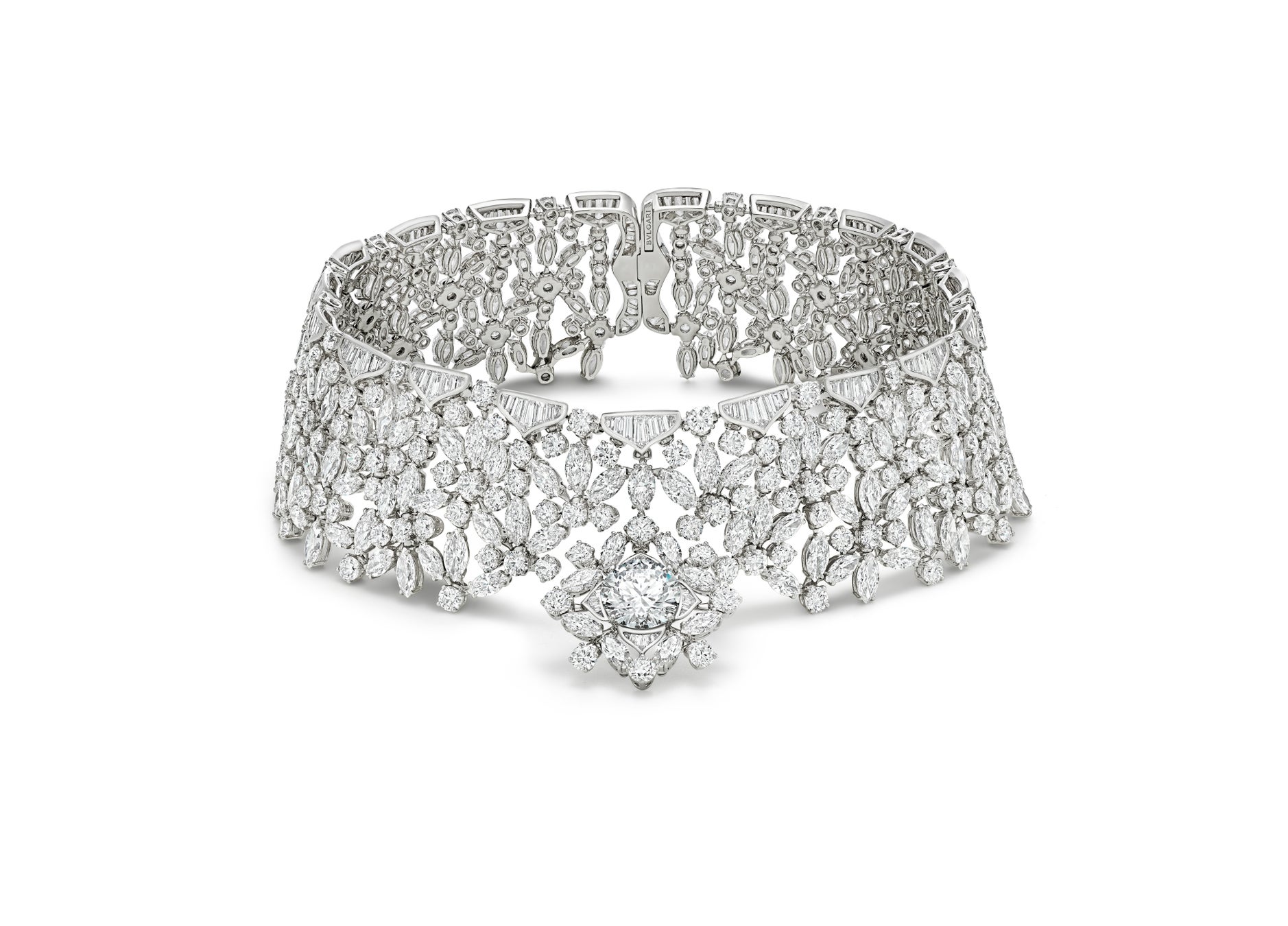
Inspired by the intricate artistry of macramé lace, which creates patterns with knots, this necklace embodies the dialogue between haute couture and Bulgari’s craftsmanship. At its center, a rare 6.20-carat diamond commands attention. Classified as Type IIa—representing less than 2% of the world’s diamonds—it boasts exceptional purity, top colorless clarity (D color, internally flawless), and a perfect cut. Surrounding it, diamonds of various cuts cascade like a waterfall, while 200 platinum parts form a supple mesh. Crafted like weaving ultra-fine threads, this structure offers remarkable softness and flexibility, gently wrapping the neck like a finest lace collar. Exceptional technique achieves the ultimate wearing comfort.
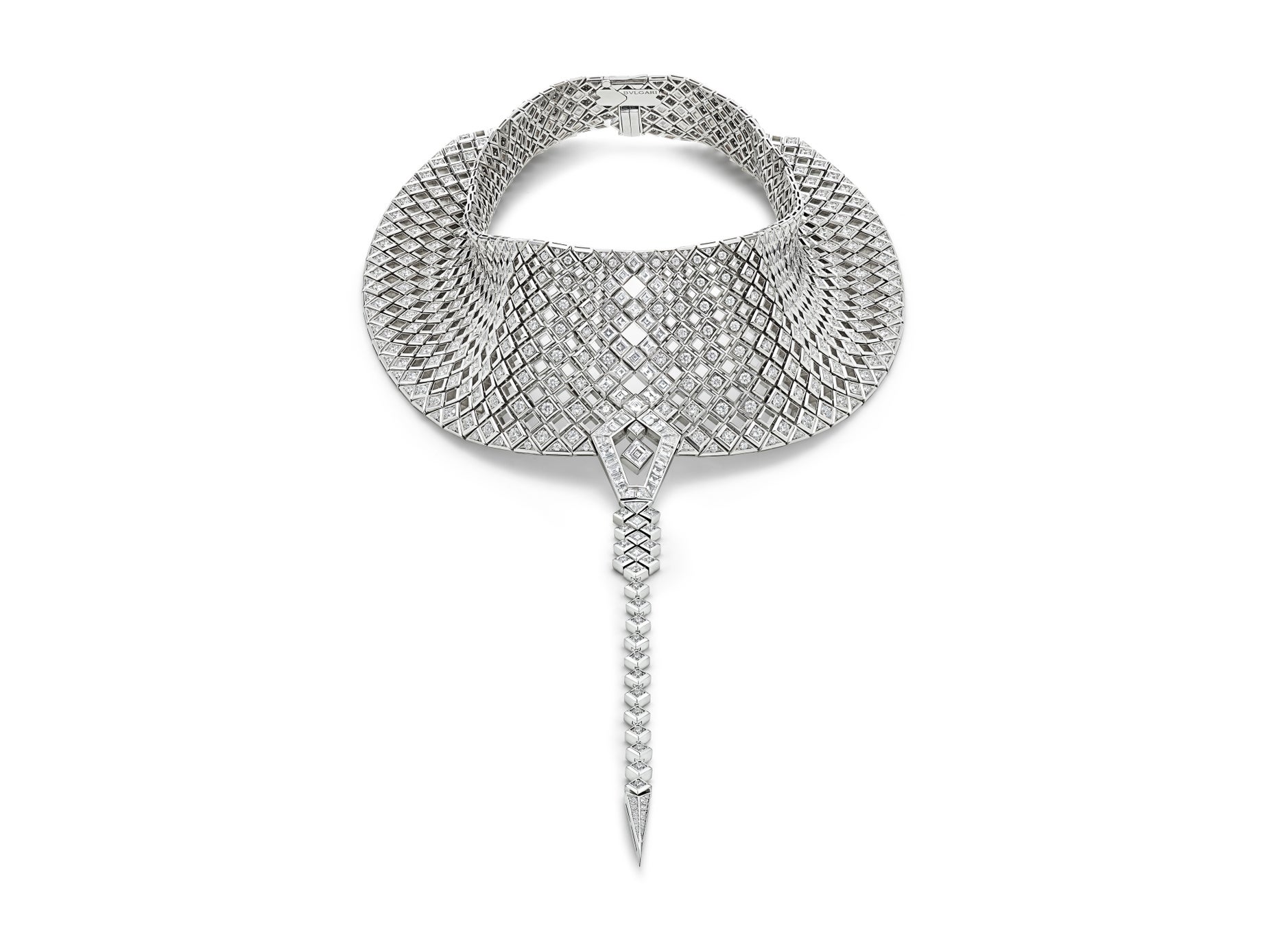
Reinterpreting the centuries-old Italian tradition of Burano lace with Bulgari’s modern sensibility, this necklace fuses Italian heritage with the brand’s iconic “Serpenti.” The geometric all-diamond design in white gold masterfully captures the transparency and intricate weave of tulle fabric. Created by precisely connecting 350 tiny parts, it achieves astonishing lightness and features openwork patterns through which light passes. The fabric-like, smoothly moving flexible structure conceals a removable chain in the back clasp. This chain can be worn hanging from the front or back of the necklace, allowing for free styling like a couture garment.
“Serpenti de Tulle” Necklace, White Gold x Diamonds
“Dentelle Lumineuse” Necklace, White Gold x Diamonds
“Dentelle Lumineuse” Earrings, White Gold x Diamonds
Drawing inspiration from the intricate patterns of bobbin lace, where threads are crossed and woven, diamonds perform a dance of light. The choker, composed of 475 parts, features a dramatic design with five large diamonds totaling over 8 carats aligned vertically at the center. Pavé diamonds trace lace-like, supple curves, fitting comfortably around the neck like a part of the skin. Additionally, the removable pendant top can also be worn as a bracelet, offering versatile use. Paired with a ring of equally flowing lines and earrings that shower light with every movement (featuring over 21 carats of diamonds), this completes an exquisite jewelry set that allows one to savor the soft, airy lightness of lace.
“Dentelle Lumineuse” Necklace, White Gold x Diamonds
“Dentelle Lumineuse” Ring, White Gold x Diamonds
“Dentelle Lumineuse” Earrings, White Gold x Diamonds
Contact: Bulgari Japan 0120-030-142
https://www.bulgari.com/ja-jp/
#ブルガリ
#bvlgari