Editor’s Note
**Editor’s Note:** This piece highlights Paraguayan designer Antonella Scavone’s journey from local artistry to international acclaim, as her river-inspired jewelry collection debuts at Germany’s Grassi Museum. It’s a story of cultural identity, resilience, and the power of craftsmanship to bridge continents.
Jimena Alejandra
·
Artists
·
14 hours ago
·
3 min read
**How Paraguayan Designer Antonella Scavone Brings Rivers And Resilience To Germany**
Paraguayan jewelry designer Antonella Scavone, founder of the contemporary jewelry label Toni Gie, has been selected to exhibit at “The Soul of Objects”, an international exhibition at the Grassi Museum of Applied Arts in Leipzig, Germany. Her collection, *¿Dónde estás ahora, kuñatai? Serie Realidad de Agua* (*Where Are You Now, Kuñatai? Reality of Water Series*), explores Paraguayan identity through jewelry inspired by rivers, memory, and the enduring resilience of women.
Created in partnership with artist Quirino Torres, the collection transforms metal into wearable sculptures that tell the story of a country shaped by its waterways. Scavone transforms jewelry into a medium for exploring Paraguay’s history, geography, and collective memory.
For Paraguay, rivers are more than geographical landmarks. They divide the country, define its borders, and have long influenced its economy, history, and culture. Scavone draws on this relationship to create what she calls a “reality of water.”
The collection also pays tribute to the *kuñatai*, a Guaraní term referring to young women, while evoking the generations of Paraguayan women who helped rebuild the country after the devastating losses of the nineteenth century. The pieces use flowing forms and organic structures to represent women as a quiet yet transformative force. This mirrors the rivers that continue shaping Paraguay.
The collection consists of four sculptural works that reinterpret the human body as a map of Paraguay.
*El Abrazo del Río* (*The River’s Embrace*) is a silver cuff whose flowing lines mimic the movement of a river wrapping around the arm. Instead of emphasizing rigid strength, it celebrates resilience through flexibility and adaptation.
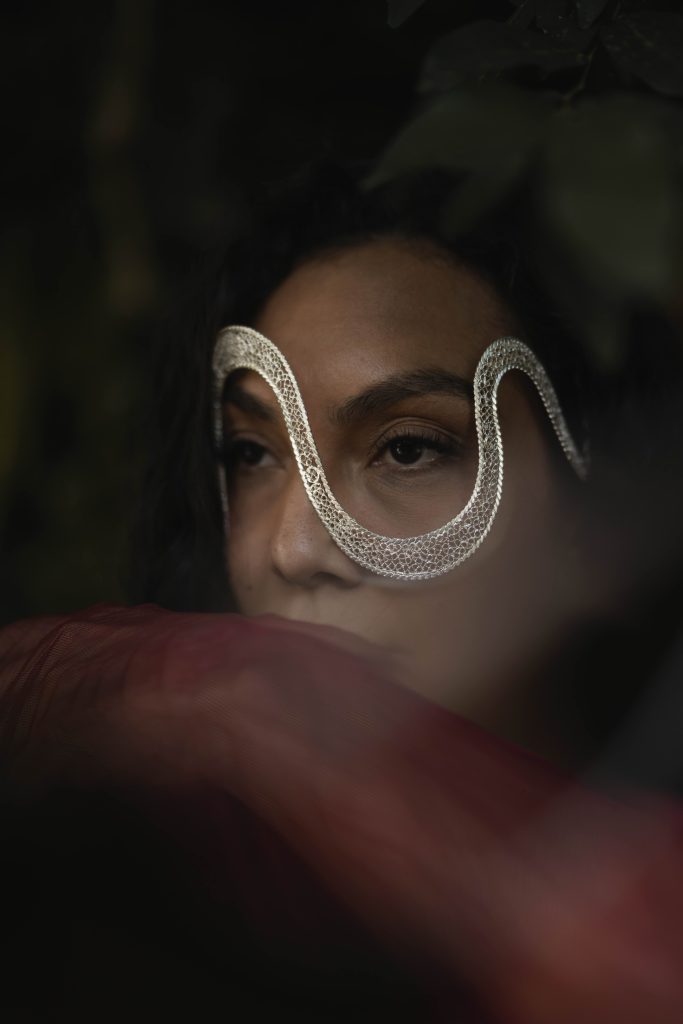
*Lágrimas en el Río* (*Tears in the River*) is an eye mask that transforms grief into a protective object. Framing the face with delicate silver forms, the piece reflects both personal loss and the collective endurance of Paraguayan women.
*Memoria en Meandro* (*Meandering Memory*) takes the form of a sculptural hair comb. Inspired by the curves of river meanders, it symbolizes memory passed from one generation to another, connecting natural landscapes with human history.
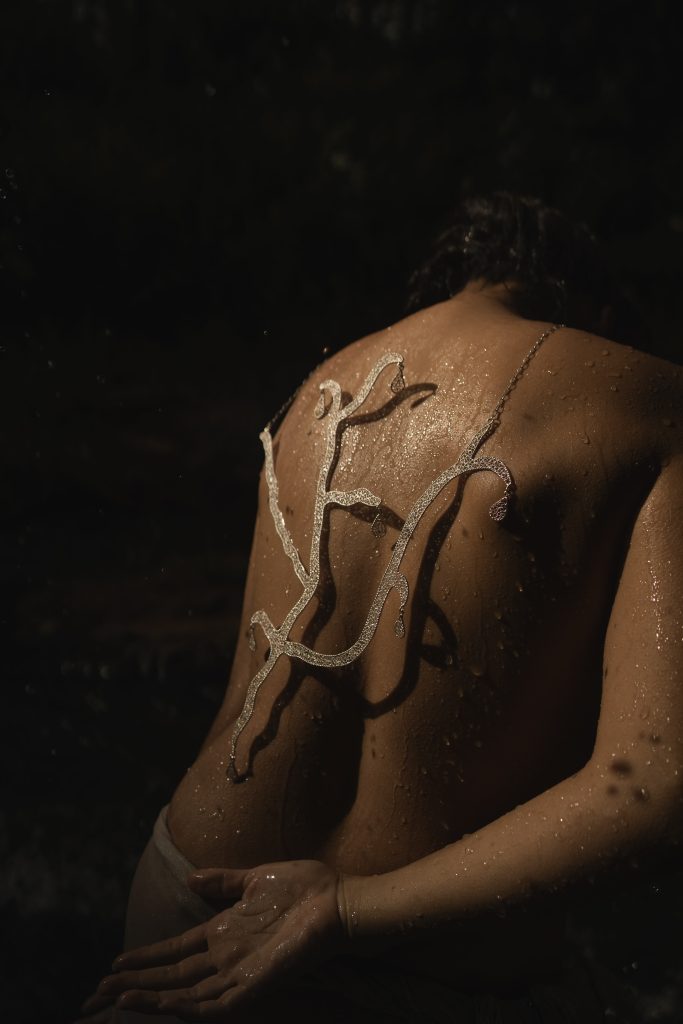
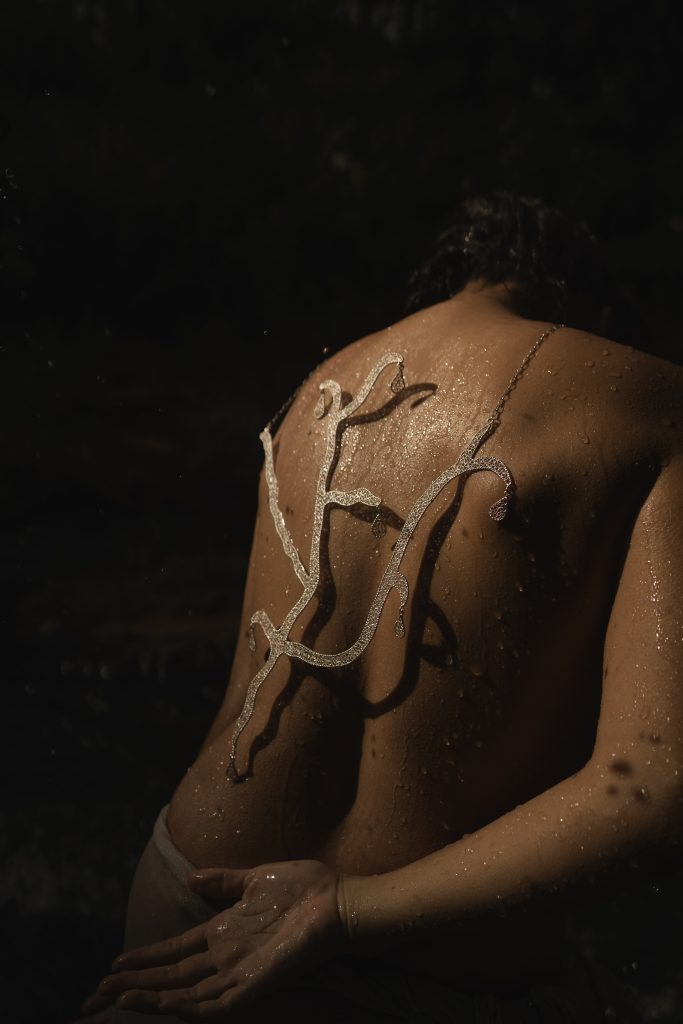
Completing the series is *Mapa de Pertenencia* (*Map of Belonging*), a dramatic necklace that traces the contours of Paraguay across the shoulders and upper back. By turning the country’s borders into wearable metal, the work questions how territory, identity, and the human body become intertwined.
The exhibition’s photography reinforces these ideas. The jewelry appears among river water, wet earth, and shadow, creating a connection between the pieces and their natural environment. The result makes the metal seem less like an accessory and more like an extension of the body itself.
The title of the collection poses a deeply personal question: *Where are you now, kuñatai?* It invites viewers to reflect on memory, belonging, and the role of women in preserving a nation’s identity. Throughout the works, water becomes both a physical presence and a metaphor for continuity, transformation, and survival.
By exhibiting at one of Europe’s leading museums for applied arts and design, Antonella Scavone brings Paraguayan jewelry to an international audience. Her work goes beyond aesthetics. Through precious metals, she tells stories of history, landscapes, and cultural memory.
Running until 27 September 2026, the exhibition features more than 300 works by 56 artists from 13 Latin American countries and marks the first major exhibition dedicated to Latin American applied arts and design in the museum’s history.