【London, UK】Luxury Instead of Mining: How De Beers Wants to Spruce Up for the Stock Market

Editor’s Note

De Beers, the storied diamond miner, is reportedly considering a London IPO, aiming to polish its image and operations in a bid to emulate luxury giants like LVMH. The potential listing could provide a welcome boost to the London Stock Exchange, with key decisions influenced by stakeholders in two African nations.

Luxus ist oft nur etwas für Wohlhabende, die Rendite der Unternehmen dahinter hingegen kann auch an Kleinanleger gehen
Potential IPO: How De Beers Wants to Spruce Up for the Stock Market

De Beers, the diamond-specialized mining company, wants to be a bit more like LVMH and may potentially go public in London. Two African countries could have a significant say in the matter.
This IPO could bring some shine back to the recently battered London Stock Exchange: The British capital is considered the preferred listing venue for a potential IPO of the diamond mining company De Beers. The current main owner, the mining company Anglo American, wants to divest holdings to fend off a hostile takeover by competitor BHP.
An IPO of the company, founded in 1888 in South Africa and now headquartered in London, would be one of the options for a separation. However, so far there is more speculation than concrete announcements, such as the appointment of an investment bank. The market often learns through “circles” that they have secured a lucrative mandate.

Pinzette mit einem ungeschliffenen Diamanten

For the London Stock Exchange LSEG, a listing of the prestigious company would be a win, after several companies recently moved to New York or, like Tui, to Frankfurt. However, it is unclear how large a De Beers IPO could even be. According to the “Financial Times,” the range of company value estimates spans from $1.5 to $7.5 billion.
The wide range results from analysts not knowing exactly how to value De Beers, as a mining or as a luxury company. Because mining is capital-intensive and risky, companies in this sector are valued significantly lower than those in the high-margin, capital-light luxury segment.

Repositioning as a Luxury Company

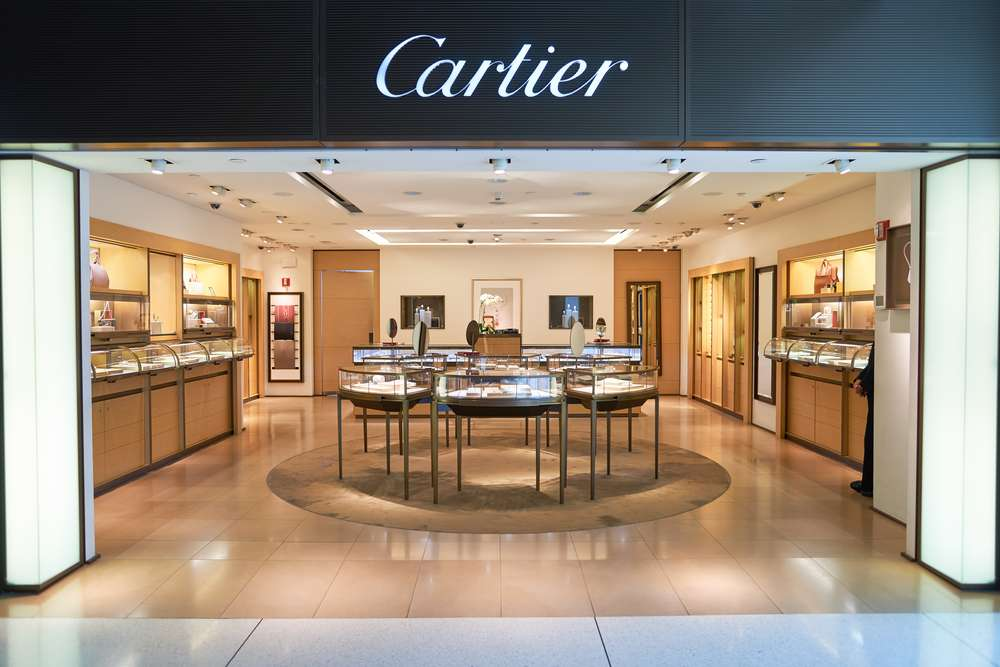
It’s no wonder, then, that De Beers’ management is currently trying to position the company as a luxury conglomerate to achieve a higher corporate value. This apparently includes reports that the company could enter the end-customer diamond business, including its own retail stores. De Beers would thereby enter direct competition with jeweler chains like Cartier or Tiffany. Through such a step, De Beers, which accounts for about one-third of global rough diamond production, could maintain its margins.

Was auf der „Carrera Plasma Diamant d’Avant-Garde“ von TAG Heuer funkelt, stammt nicht aus dem Erdinneren
“When I look at the future of diamonds, it goes far beyond mining,” CEO Al Cook recently told the “Financial Times.” “I’m really excited about the idea that we could use our entire strategy to create the world’s largest jewelry house that wouldn’t belong to a mining company.”
Pressure in the Core Business

In its core diamond mining business, however, the company is under pressure due to the ongoing price decline. The reason is the rise of artificially produced, cheaper diamonds for industrial applications, such as in drilling technology. The rough diamond index calculated by data provider Paul Ziminsky Diamond Analytics has fallen by six percent this year. Over a ten-year period, the decline is 16.5 percent.

Speculation About a Luxury Brand and Financial Challenges

De Beers has apparently sparked discussions in capital markets about the entry of a luxury conglomerate like LVMH, Kering, or Richemont. However, analysts are skeptical whether this would make sense for any of these companies. They operate a so-called “capital light” business model, achieving high margins with relatively low capital investment. De Beers, on the other hand, operates a very capital-intensive business and, according to the FT, has shouldered an average of $524 million in investments each year over the past six years.
Last year, De Beers achieved a free cash flow of $180 million, the FT cites analyst Tony Robson from Global Mining Research. The company itself has not published figures. According to Robson, De Beers would lack the funds to transform from a mining company into an end-customer and luxury-oriented company. Furthermore, liquid funds are too low to finance this through debt.

Full article: View original |
⏰ Published on: June 11, 2024