Editor’s Note
**Editor’s Note:** This article highlights an exclusive high jewelry event at Lake Como, hosted by Sotheby’s, The Lake Como EDITION, and Harper’s Bazaar Italia on August 1-2. It underscores the growing intersection of luxury hospitality and fine jewelry collecting.
Lake Como becomes the capital of jewelry for an exclusive weekend. Sotheby’s and The Lake Como EDITION, together with Harper’s Bazaar Italia, are hosting an event on August 1 and 2 that brings together the big names of international collecting.
By Redazione Harper’s Bazaar Italia
Published: 15/07/2026
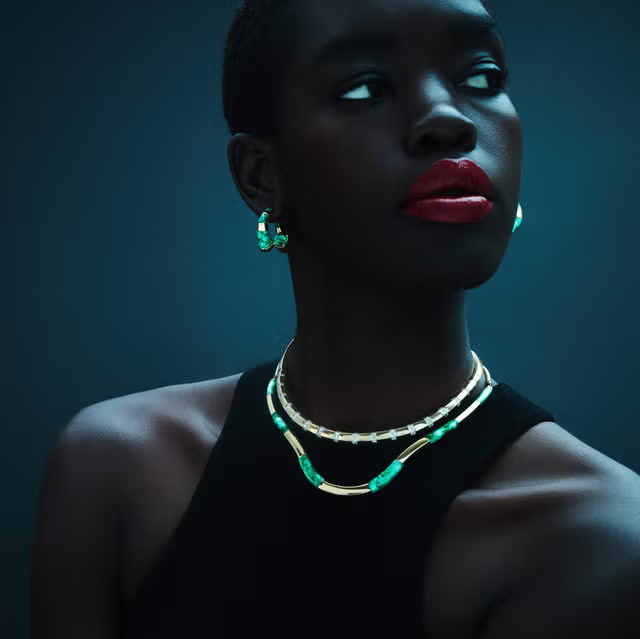
Dyne / Courtesy of The Lake Como EDITION press office
The Lake Como EDITION and Sotheby’s have announced a new collaboration that will bring a dedicated high jewelry event to Lake Como. The Lake Como Jewellery Weekend will take place on August 1 and 2, 2026, in the hotel’s spaces, with the heart of the program hosted in the Penthouse Cadenabbia. Harper’s Bazaar Italia participates as a media partner, closely following the story of an event designed for experienced collectors and for those approaching the world of international-level jewelry for the first time.
The program includes two days of conversations, exhibitions, private consultations, and meetings with industry specialists. Leading the experience is Frank Everett, Vice Chairman of Jewellery at Sotheby’s, who has long worked on the intersection of craftsmanship, collecting, and new forms of contemporary luxury expression. The initiative resumes and expands a collaboration already started between the two entities last year during New York Luxury Week, when Sotheby’s and EDITION Hotels proposed a special lot combining a jewel by designer Sarah Narici with an exclusive stay at Cadenabbia.

Everett described the evolution of the project:
Dyne / Courtesy of The Lake Como EDITION press office
Anton Moore, General Manager of The Lake Como EDITION, also commented on the agreement, highlighting the connection between the territory and the initiative:
Among the expected guests are Sarah Narici, founder of the jewelry brand DYNE; American fashion critic journalist Lynn Yaeger; and Sara Miconi, Head of Department Jewellery Italy at Sotheby’s. The media partnership with Harper’s Bazaar Italia will also involve Massimo Russo, Editor-in-Chief of the magazine, in the context of the scheduled talks.
Participants can take part in technical masterclasses, panel discussions, and free jewelry appraisal sessions—a service that allows them to obtain a professional opinion on family heirlooms or recent purchases.

For more information on the event and accreditation: [email protected]