Editor’s Note
**Editor’s Note:** This piece spotlights artists Shimada Sayaka and Okuyama Shin, exploring how Shimada’s work as a fireworks artist reveals the scientific and historical layers behind pyrotechnic displays—from flame color reactions to Japan’s saltpeter production—offering a fresh perspective on a familiar spectacle.
Sayaka Shimada, who also works as a fireworks artist, focuses on flame color reactions and the metallic elements contained in gunpowder. Fireworks are often discussed as symbols of celebration or mourning, but behind them lies a material culture of light emitted by metallic elements and Japan’s unique history of saltpeter production. Shimada excavates these scientific and historical backgrounds, illuminating the spectacle we gaze up at from a different perspective.
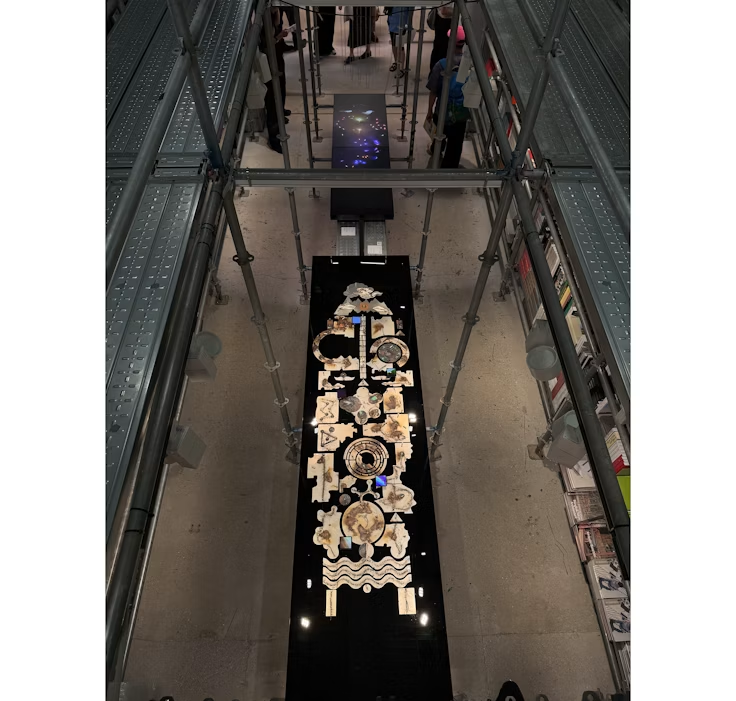
Shimada Sayaka, “Flying Humanoid: Anatomical Chart” (2026). Photo: Editorial Department
Jewelry designer Shin Okuyama presents an intimate relationship between metal and the body through his metal forging techniques. Chains and forms suspended in space transcend the framework of ornaments, expanding into the exhibition space like sculptures imbued with physicality. This installation, which scales up jewelry meant to be worn into an entire spatial experience, brings a quiet tension to the exhibition.
Okuyama Shin’s scenography is composed of a single long chain. © Nacása & Partners Inc./ Courtesy of Fondation d’entreprise Hermès
Another feature of this exhibition is that it does not end with “visual viewing.” A variety of events are held during the exhibition period, including metal forging experiences, making sparklers, crafting with metal tools, and artist talks. Including the display of results from spring workshops, the exhibition positions “moving the body, using hands, and engaging in dialogue with materials” itself as a form of learning, not just “acquiring knowledge.”
Metal is one of the most familiar materials supporting our daily lives, yet we rarely have the opportunity to be conscious of its existence. This exhibition traverses different fields such as science, craft, contemporary art, and architecture, providing a space to experience the rich potential hidden in this material through the five senses.
Skill Academy “Learning from Metal, Thinking with the Five Senses: Summer Open Class”
Duration: July 15, 2026 – August 16, 2026
Venue: SKAC (SKWAT KAMEARI ART CENTRE)
Address: 3-26-4 Nishi-Kameari, Katsushika-ku, Tokyo
Opening Hours: 11:00 – 19:00
Closed: Monday and Tuesday (open on public holidays)
Admission: Free
Editorial Department
