Editor’s Note
A new study reveals that iron rings found in Mycenaean and Minoan tombs were crafted from meteorites, confirming that ancient Greek elites wore jewelry made from celestial metal.
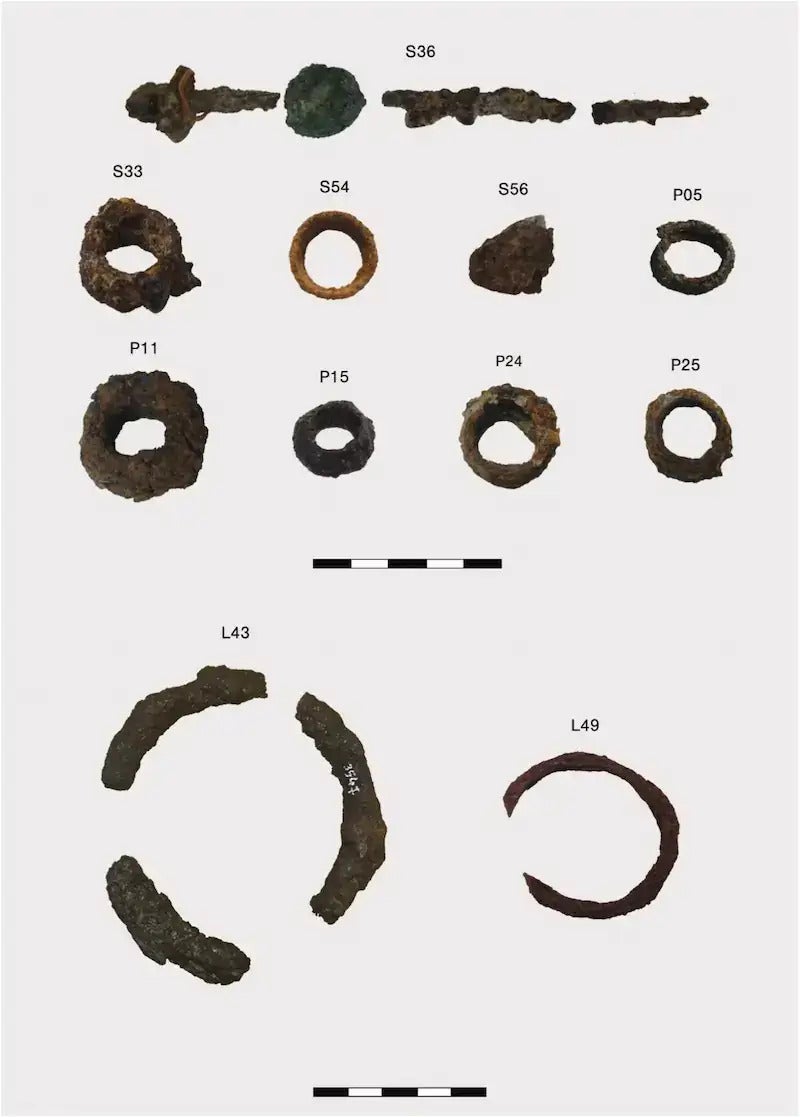
For centuries, archaeologists have viewed with suspicion the strange iron rings found in the tombs of the Mycenaean and Minoan elite. In an era where bronze reigned supreme, what sense did it make to craft jewelry from such a coarse and difficult-to-work metal?
The answer, as often happens with ancient enigmas, was not beneath our feet, but fell directly from the sky. A study published in the Journal of Archaeological Science has confirmed what seemed like a legend: Greek nobles wore pieces of stars on their fingers.
An international team of researchers, led by Matthieu Gounelle and Eleni Mantzourani, embarked on a detective mission across 33 sites and 19 Greek museums. Their goal was simple but ambitious: to analyze 91 Bronze Age jewelry pieces without damaging them.
Using X-ray fluorescence technology, they were able to scan the molecular composition of each piece. The key was nickel. While terrestrial iron has almost none, meteoric iron possesses an unmistakable chemical signature loaded with this element.
We are not talking about market trinkets. These rings appeared in tholos-type tombs, true funerary monuments reserved for the most powerful figures in the social hierarchy. They shared space with gold, amber, and carved stone seals.
One of these pieces was even found on the finger of a high-ranking priest in Crete (yes, we also wonder what kind of power they felt carrying a fragment of the cosmos on them). For the artisans of the time, this material was not just iron; it was a divine raw material.
But how did meteorites reach the hands of Greeks 3,000 years ago? Logic points to Bronze Age trade routes. Egypt, with its vast and desert landscapes, has historically been a magnet for finding meteorites that remain intact in the sand.
It is highly likely that this sacred iron was an object of luxury import, a trophy that connected the land of the pharaohs with the Mycenaean palaces. It was, essentially, the cutting-edge technology of the ancient world.
The study reveals a fascinating historical curiosity. While normal iron was used for useful tools, meteoric iron was reserved exclusively for status. However, this use ended abruptly with the collapse of the Minoan and Mycenaean civilizations.
Perhaps due to economic crisis or simply because the fashion for the celestial died along with its kings, meteorite iron ceased to be the ultimate symbol of power. Today, thanks to modern science, we have recovered this story, confirming that millennia ago, the ancients already knew that the universe had much to offer them.
What other surprises might the tombs we have yet to open hold? History, definitively, always has an ace up its sleeve.